Baby-Proofing Cords: Blind Cords, Wires, and Cable Safety

This post may contain affiliate links. Read our policy.

There is a cord in your house you have walked past ten thousand times without ever really looking at it. It hangs beside a window at roughly the height of a toddler's chin, it has been there since you moved in, and it is quietly the most dangerous object in the room.
Some of the links below are affiliate links, and we may earn a small commission — at no extra cost to you — if you buy through them. Here is the short version: baby proofing cords is two jobs, not one. A window blind cord is a strangulation hazard, and the only real fix is getting rid of it. Electrical and appliance cords are a pulling, tipping and mouthing hazard, and those you manage. Do the blinds first.
Most guides to baby-proofing your home bury cords in a bullet near the bottom of the list, between drawer latches and toilet locks. That ordering is backwards.
Why blind cords get a section of their own
The U.S. Consumer Product Safety Commission has identified window coverings with cords as one of the top five hidden hazards in the home, and recommends cordless window coverings in every home where children live or visit. In its window covering safety alert, the CPSC states that about once a month a child between 7 months and 10 years old dies from window cord strangulation, and another child suffers a near strangulation. One line in that alert has stayed with me since: these incidents happen quickly and silently.
That is what separates this from every other hazard in your house. A baby who pulls a lamp off a table makes a crash you hear from the kitchen. A child caught in a blind cord makes no sound at all, in a room where they were alone because it was nap time.
The scale has been measured. Research from the Center for Injury Research and Policy at Nationwide Children's Hospital, published in Pediatrics, estimated that almost 17,000 children under six were treated in U.S. emergency departments for window blind-related injuries between 1990 and 2015, and about one child a month dying over that stretch — 271 deaths in 26 years, most of them strangulations after a child became entangled by the neck in a cord. Nationwide Children's notes the danger peaks between one and four years of age. More recently the CPSC has put the toll at approximately nine children age five and younger dying each year from strangulation involving window covering cords, and has said strangulation can occur in under 60 seconds.
What cordless actually means, and why it is the real answer
Every major safety body I checked lands in the same place, and none of them hedge. The American Academy of Pediatrics' home safety guidance says plainly: avoid window coverings that have cords to prevent strangulation. Nationwide Children's frames it as an instruction — the best way to keep your children safe is to replace all blinds that have cords with cordless blinds, blinds with inaccessible cords, or other cordless window coverings. The CPSC adds the inspection step most people skip: check that there are no accessible cords on the front, side, or back of the product.
"Cordless" is broader than it sounds: a lift mechanism you push up by hand on the bottom rail, a motorised shade on a remote, cords permanently enclosed in a rigid shroud — or skipping blinds altogether for curtains on a rod, or shutters.
The industry standard has moved that way too. According to the Window Covering Safety Council, the revised standard ANSI/WCMA A100.1-2022 took effect on June 1, 2024, and continues to require all stock products sold in stores and online to be cordless or to have inaccessible cords. It also tightened made-to-order custom products, eliminating free-hanging operating and tilt cords and prohibiting continuous cord loops and bead chains on horizontal slatted custom products. Custom has historically been the looser category — a separate federal CPSC rule aimed at custom coverings was vacated by the U.S. Court of Appeals for the D.C. Circuit in September 2023, as the Window Covering Manufacturers Association announced at the time.
What that means in practice: a stock blind bought off the shelf today should not have a dangling pull cord, while a custom made-to-measure blind may still arrive with a cord system. And no standard does anything at all about the blinds already hanging in your house. Those are your job.
Baby proofing blind cords when you can't replace them: cleats, cord winders and their limits
Sometimes the swap is not happening this week. You rent, there are eleven windows, good blinds cost more than the crib did. So you do the interim work, with your eyes open about what it buys you.
The CPSC's advice for households that cannot go cordless yet is specific: make the pull cords as short as possible, make loose cords inaccessible, check that cord stops are installed properly and adjusted to limit the movement of inner lift cords, and install tension devices to keep looped bead chains or nylon cords taut. Continuous-loop cords should be anchored to the floor or wall.
Cord winders and wraps live in this tier. The Cardinal Gates Blind Cord Holders stick on in seconds with adhesive rated for glass, painted wood, vinyl and metal, three to a pack for about 10 dollars as of August 2026. The Dreambaby wraps do the same job in transparent plastic, four to a pack.
Now the honest part, and it comes from the CPSC rather than from me. Even if cleats are used to wrap excess pull cords, the agency states, cords above a cleat installed within a child's reach still present a hazard. Mounting height is not a detail; it is the entire mechanism. Nationwide Children's names the other failure mode: retrofit devices can provide a false sense of security if they are not used correctly all of the time by everyone who lives in or visits your home. Every nap. Including the babysitter, and you at 11pm with a baby on your shoulder.
If your blinds are old, one more job. The CPSC notes that most window blinds sold before November 2000 have inner cords a child can pull into a loop, and its current guidance is to replace those blinds immediately; the Window Covering Safety Council offers free retrofit kits at 800-506-4636. The CPSC also says out loud that those kits do not address the dangling pull cord hazard on many common blinds.
The crib, the bed, and everything a child can climb
This is the free step, and all three sources agree on it. The CPSC's guidance is not to place cribs, beds and furniture close to windows, because children can climb on them and gain access to the cords — and to move cribs, beds, furniture and toys away from windows and window covering cords, preferably to another wall. The AAP is equally direct: do not place a crib, or any other child's bed, near a window, and do not let strings or cords dangle in or anywhere near the crib. Nationwide Children's adds couches, for the same climbing reason.
Window blind cord safety is also the one baby-proofing job with no waiting period. Nearly everything else on the checklist is triggered by mobility — you latch cabinets when a baby can reach them, you gate the stairs when a baby can approach them. A cord beside a crib does not require a crawler; it requires a baby who can push up on the rail and reach, and that arrives earlier than most of us plan for. If you are sequencing the rest of the house, our timeline for when to start baby-proofing covers each stage — but move the crib before you read it.
Baby proofing wires: lamps, chargers and appliance cords
Electrical cords are a different problem with a different fix. A cord on the floor is three things at once: something to chew, something to trip over, and a handle attached to whatever sits on the other end.
The AAP's home safety guidance is a single line, and it is the whole strategy: keep electrical cords out of reach and sight. A cord a baby cannot see is a cord a baby does not go looking for.
In practice that means running cords behind furniture rather than across open floor, and taking up the slack. The Safety 1st Outlet Cover with Cord Shortener is the tidiest version: it covers the whole outlet plus the plug in it and stores up to four feet of excess cord inside, so the loop that used to lie on the rug is gone. It is built for outlets in use rather than empty ones.
The socket behind it is a separate decision — plug caps, sliding plates and box covers are not interchangeable — and our guide to the best outlet covers and plug protectors works through which belongs where.
Then there is the half no cord cover touches: what the cord is attached to. A lamp cord trailing off a side table, a TV cable hanging off a media unit — a toddler pulls, and the object on the other end comes down on them. The AAP's guidance is to anchor bookcases, dressers and TV stands to the wall, and to keep computers out of reach so children cannot pull them down or get tangled in the cords. Managing the cord is half the fix; anchoring the furniture it feeds is the other half, and only one of the two stops a falling object.
The baby monitor cord is its own hazard
The one cord we put beside a crib on purpose deserves naming separately. The CPSC has warned that cords on baby audio and video monitors present a strangulation hazard when placed too close to a crib. In its 2012 warning, the agency reported that since 2002, seven infants and toddlers had strangled in baby monitor cords and three more had nearly strangled, with victims as young as six months old.
The recommendation is a number worth measuring rather than eyeballing: place cords at least three feet away from any part of the crib, bassinet, play yard or other safe sleep environment. Never put a monitor inside or on the edge of a crib, and check every product with an electrical cord near the crib, including wall-mounted ones. Ours was 26 inches from the rail and I would have sworn it was fine.
Power strips and the tangle behind the TV
Every house has one: a knot of power strip, charger bricks and one cord nobody can identify, behind the TV at crawler height. Enclosure beats tidying, because tidying does not survive a week. The Wappa Baby Power Strip Cover Box shuts a strip inside a locking box with side openings for the cables — but check yours first, because it fits strips up to 11 in long and 2.75 in wide. The D-Line Cable Management Box is the larger option, 16.5 by 6.5 by 5.25 in externally. Both have real size limits, so spend two minutes with a tape measure before you order.
While you are back there: the Electrical Safety Foundation International advises never running extension cords under rugs or carpets or through doorways and windows, and treats an extension cord as a temporary solution rather than a permanent extension of a home's wiring. If a room only works with a cord running across it, that is an electrician conversation, not a baby-proofing one.
A one-evening cord sweep, room by room
Do this on your knees, at crawling height.
- Nursery. Cordless at the window, crib away from it, monitor cord three feet from every part of the crib, humidifier across the room.
- Your bedroom. Same window check — this is where early-morning toddlers end up. Charger cables off the low edge of the nightstand.
- Living room. Blind and drapery cords first, then the power strip behind the TV, then lamp cords on side tables. Sofas pulled back from windows so nobody climbs to the cord.
- Kitchen and dining. Kettle, slow cooker and air fryer cords pushed back from the counter edge. A trailing appliance cord is a handle attached to something hot.
- Bathroom and home office. Hair dryers and straighteners put away after every use, cord and all. Box the strip under the desk and band the cables.
The bottom line
- Go cordless at the windows, starting with bedrooms and any room where a child is ever alone.
- Move the furniture. Cribs, beds, couches and toys away from windows and cords, preferably to another wall. Free, immediate, and endorsed by the CPSC, the AAP and Nationwide Children's alike.
- If you cannot replace yet, shorten the pull cords, use cord stops and tension devices, and mount any winder or cleat well above a child's reach.
- Get electrical cords out of reach and sight, using cord shorteners and cable boxes run behind furniture.
- Anchor whatever the cord is plugged into, and measure three feet from the crib to the nearest monitor cord.
One caveat belongs on every page of this site: no device here makes a room safe. A wrap, a cleat, a box or a cover buys delay, and none replaces adult supervision or a sleep space with nothing dangling near it. On blind cords the safety bodies are unusually united, and I would rather repeat their conclusion than soften it — the only true fix is removing the cord.
For the rest of the house, work through our full baby-proofing guide room by room. But do the windows tonight. For a lot of houses reading this the fix is free: walk into the nursery and move the crib.
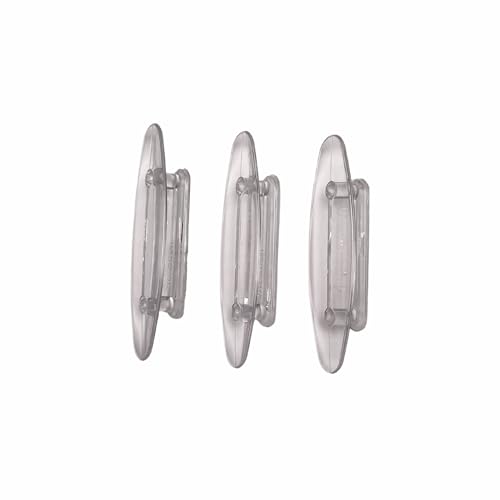
Cardinal Gates Window Blind Cord Holders, 3 Pack
Adhesive holders that keep a dangling blind cord wrapped and out of reach, which Cardinal Gates positions as reducing entanglement risk for children and pets. They install in seconds with a premium adhesive that the maker says bonds to glass, painted wood, vinyl, metal and most smooth surfaces, so there is no drilling and no tools. Three come in a pack, and they are made by Cardinal Gates, a family-owned child- and pet-safety company operating since 1993. Mounting height is the whole game here: a wrapped cord is a mitigation, not a replacement for going cordless.
- Brand
- Cardinal Gates
- Category
- Our Pick
I stuck one high above each window in the nursery and the loop finally stopped hanging at crawling height.

Dreambaby Blind Cord Safety Wraps for Dangling Window Cords - Model L865
Four wraps with prongs you wind the excess blind cord around to take up its length, designed to help prevent strangulation by keeping cords out of reach of children. The transparent body is meant to be virtually unnoticeable on a wall or window frame, and Dreambaby says they fit most blinds and curtains. Four to a pack makes this the cheapest way to cover several windows in one afternoon. Like every wrap, it only does anything when the cord is actually wound onto it, by everyone, every time.
- Brand
- Dreambaby
- Category
- Best Budget
Four wraps did our whole living room for less than the cost of lunch, and you genuinely cannot see them from the sofa.

Wappa Baby Power Strip Cover Box with Patented Dual Lock
A box that encloses a power strip so a small child or toddler cannot tamper with the outlets, using a double-lock mechanism the maker says most young children cannot open but adults can work easily. Side openings let cords and cables run out, and it can sit on the floor, tuck behind a desk or mount on a shelf. Measure before you buy: it is designed to hold power strips up to 11 in long and 2.75 in wide, which is a standard six-outlet strip, and the box itself is 13.3 in long, 4.7 in wide and 5.2 in tall.
- Brand
- Wappa Baby
- Category
- Best for Power Strips
I measured our strip first, which I would tell anyone to do, and the whole tangle behind the TV disappeared into it in about a minute.

D-Line Cable Management Box, Large, Black
A larger box that contains a power strip along with the nest of excess cord around it, making the electrics less accessible to curious pets and infants. Three rear cable entry and exit slots keep the run of cable tidy, and D-Line notes it also reduces a trip and spill hazard. It is made in the UK from electrically safe ABS plastic. Check your strip against the external dimensions before ordering: 16.5 in long, 6.5 in wide and 5.25 in tall.
- Brand
- D-Line
- Category
- Best Cord Concealer
It swallowed the power strip and about a metre of spare cable, and the floor behind the console is finally just floor.

Safety 1st Outlet Cover with Cord Shortener
This is the one for an outlet that always has something plugged into it, which is exactly the situation a plug cap cannot help with. It covers the entire outlet and stores up to four feet of excess appliance cord inside, which Safety 1st says prevents entanglement and keeps cords up off the floor. Removal takes a dual-press operation that is easy for parents and harder for children. Note the intended use: it is made for outlets that are in use rather than empty ones.
- Brand
- Safety 1st
- Category
- Best for Lamp & Appliance Cords
The lamp cord behind the glider used to loop across the rug like a jump rope, and now it lives inside the cover.
- 01Cardinal GatesOur PickCardinal Gates Window Blind Cord Holders, 3 Pack
- 02DreambabyBest BudgetDreambaby Blind Cord Safety Wraps for Dangling Window Cords - Model L865
- 03Wappa BabyBest for Power StripsWappa Baby Power Strip Cover Box with Patented Dual Lock
- 04D-LineBest Cord ConcealerD-Line Cable Management Box, Large, Black
- 05Safety 1stBest for Lamp & Appliance CordsSafety 1st Outlet Cover with Cord Shortener
Are cordless blinds really necessary, or is a cleat enough?+
What do I do if I rent and cannot replace the blinds?+
At what age do blind cords stop being a risk?+
Are cord covers enough for electrical cords?+
Where should the baby monitor go?+
What about the cord on a humidifier or lamp near the crib?+
Sammie Seelbach
Sammie is a mom of two and the lead reviewer at Smart Baby Reviews. Since becoming a parent she has become obsessed with researching the safest, smartest baby gear on the market — testing thermometers at 2 a.m., wrangling baby gates, and sterilizing more bottles than she can count. She shares what actually works so other parents can make confident, informed decisions for their little ones.