Heavy Metals in Baby Food: What the Rules Actually Require Now

This post may contain affiliate links. Read our policy.
Heavy metals in baby food are soil and water contaminants, not ingredients a manufacturer adds. Lead, inorganic arsenic, cadmium and mercury get into fruit, vegetables and grain because plants take them up from the ground they grow in. That is why organic does not fix it, why no brand can promise zero, and why the most useful thing you can change is what your baby eats repeatedly. Some of the links below are affiliate links, and we may earn a small commission, at no extra cost to you, if you buy through them.
I found this topic the way most parents do: a headline, at 11pm, about metals in a brand already in my cupboard. I spent two hours comparison-shopping labels before realising it was the wrong task. Nothing on a jar of carrots tells you what is in that jar, because the variable is the field it grew in.
So this is the other version of the article: what the rules actually require, what you can now look up that you could not five years ago, and the habits that lower cumulative exposure more than any purchase. If you are at the start of all this, starting your baby on solids covers the wider ground, and the readiness signs come first.
Where the Heavy Metals in Baby Food Come From
The four metals occur naturally in the earth's crust, and a century of leaded fuel, pesticides, mining and industry spread them further. Plants do not distinguish. Two consequences follow.
Manufacturers are not adding anything. They buy crops that already carry what the soil gave them. A company can test, reject high lots and choose growing regions — real work, worth rewarding — but it cannot grow a carrot that took up no lead.
The organic label is about inputs, not contaminants. Consumer Reports tested 48 baby food products from 11 brands in September 2026: lead detected in 85%, cadmium in 80%, inorganic arsenic in 77%, no meaningful difference between organic and conventional, and 96% below Consumer Reports' own level of concern — the half of that picture which gets quoted far less often.
So the lever is not the brand. It is the crop, and the frequency.
What the Rules Actually Require Now
Most coverage muddles this, so I will be pedantic about dates.
Lead. On January 6, 2025 the FDA issued final guidance setting action levels for lead in processed food intended for babies and young children under two. Per the Federal Register notice: 10 parts per billion for fruits, vegetables other than single-ingredient root vegetables, mixtures including grain- and meat-based ones, yogurts, custards and puddings, and single-ingredient meats — and 20 parts per billion for single-ingredient root vegetables and for dry infant cereals.
Inorganic arsenic. One older, narrower number. In August 2020, four years after proposing it, the FDA finalised an action level of 100 parts per billion for inorganic arsenic in infant rice cereals, citing the association between inorganic arsenic exposure and neurodevelopmental effects. It applies to that category only.
Now the distinction that matters. An action level is not a legally binding maximum. The FDA describes these as the levels at which it may regard a food as adulterated under the Federal Food, Drug, and Cosmetic Act, and says plainly that although the guidance is not binding, the agency would consider the action levels along with other information when deciding whether to bring an enforcement action. Read it as a benchmark the FDA can build a case on, not a speed limit with an automatic ticket. Baby food is not "legally capped" at 10 ppb, and the number is not meaningless either.
Both sit inside Closer to Zero, the programme announced in April 2021 that commits the FDA to reducing dietary exposure to contaminants in foods eaten by babies and young children to as low as possible over time, while keeping nutritious foods available. It has moved slowly, one metal at a time. The FDA's 2026 Human Foods Program priority deliverables list establishing action levels for cadmium and inorganic arsenic in baby and toddler foods — so as of this writing there is no finalised federal level for cadmium, and the arsenic one covers rice cereal only.
Baby Food Testing Laws: the Part You Can Actually Use
This is the genuinely new thing: in several states, the box now tells you.
- California, AB 899. Signed October 2023. Monthly testing of a representative sample of each production aggregate of finished baby food for arsenic, cadmium, lead and mercury began January 1, 2024; since January 1, 2025 manufacturers have had to publish those results on their websites and put a QR code on the label pointing to them. It covers food packaged in jars, pouches, tubs and boxes for children under two, excluding infant formula and — since a 2025 amendment — dietary supplements. Consumer Reports has since checked how brands comply, and compliance is uneven.
- Maryland, House Bill 97 — "Rudy's Law." Enacted in 2024, named for a toddler poisoned by lead in recalled cinnamon applesauce pouches. Testing started in 2025; website disclosure and the on-pack code took effect January 1, 2026.
- Virginia, the Baby Food Protection Act. Virginia Code 3.2-5125.1 took effect January 1, 2026, with retailers free to sell through inventory already in stock. Covered labels must carry the statement "For Information About Toxic Element Testing on This Product, Scan the QR Code" plus the code, and products over the FDA limits may not be sold, distributed or offered for sale in the state.
- Illinois, Senate Bill 73. The fourth state to act. Monthly testing began January 1, 2026; public results and the QR code arrive January 1, 2027.
What this looks like in the aisle. Scan the code with your phone camera and you land on a manufacturer page listing the toxic elements found and their levels for that production run. Three caveats: national brands generally print one label for the whole country, so you may find the code outside those four states; a non-detect is not zero; and the result describes a batch, not the jar in your hand. Treat it as evidence about how seriously a company tests, not a certificate for one container of pears. Still a real shift — five years ago the honest answer to "how much lead is in this" was "nobody will tell you."
Which Foods Carry Which Metal
Two bodies of published testing make this specific. The House Subcommittee on Economic and Consumer Policy's February 4, 2021 staff report, working from internal test results from Nurture, Beech-Nut, Hain and Gerber, reported significant levels of the four metals concentrated in rice cereals, sweet potato purees, juices and sweet snack puffs. Healthy Babies Bright Futures tested 168 products for its October 2019 report, finding one or more of the four metals in 95% and all four in one in four — rice-based products the leading source of inorganic arsenic, and four of seven infant rice cereals above the FDA's then-proposed 100 ppb.
| Category | The actual concern | Rotate in instead |
|---|---|---|
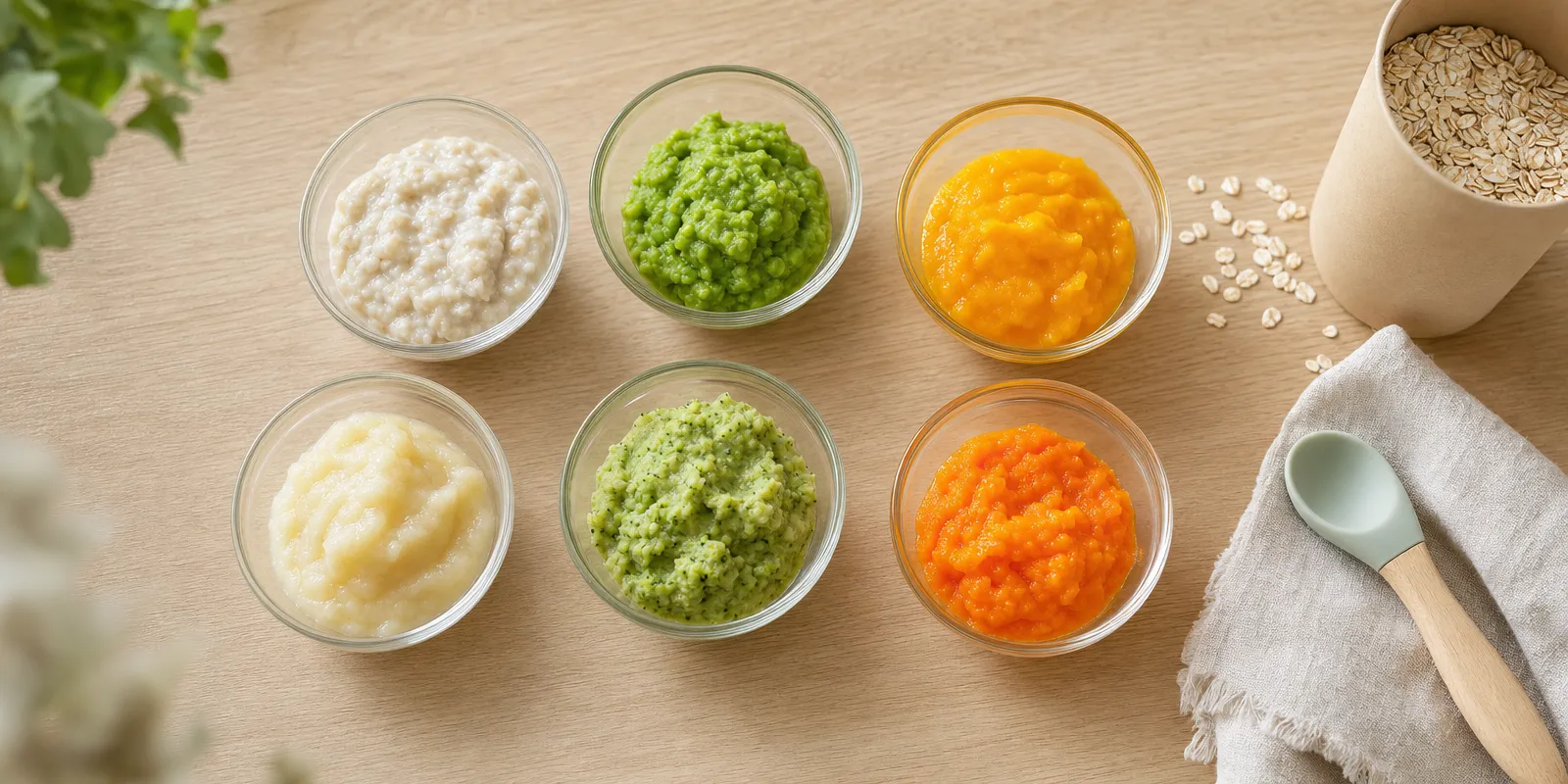
| Infant rice cereal | Inorganic arsenic; rice takes up more than other cereal crops | Oat, barley or multigrain infant cereal |
| Rice puffs and rusks; brown rice syrup as a sweetener | Inorganic arsenic, concentrated in rice syrup | Rice-free snacks; unsweetened foods |
| Puffed snacks, melties, biscuits, teething wafers | Consumer Reports found higher arsenic, cadmium and lead in snacks than in purees | Soft whole fruit, steamed vegetable strips |
| Single-ingredient root vegetables — carrot, sweet potato, beet | Lead and cadmium from soil; the FDA's action level here is double the one for other vegetables | Keep them, cap the frequency; alternate peas, green beans, squash, broccoli |
| Fruit juice | More metals than plain water, and no fibre | Tap water, whole fruit |
Healthy Babies Bright Futures put numbers on three of those swaps: oatmeal or multigrain cereal instead of rice cereal lowered exposure by 84% in its analysis, rice-free snacks instead of rice puffs by up to 93%, tap water instead of fruit juice by 68%. The largest free wins available, and none requires a different brand. Our guide to the first foods to offer is where to build that variety in from the start.
Arsenic in Baby Rice Cereal, and Why Iron Is the Catch
Rice is singled out for a reason you can picture. It is usually grown in flooded paddies, and the flooding chemistry plus rice's own biology mean it takes up more arsenic from soil and groundwater than wheat or barley, as the FDA lays out in its supporting document for the rice cereal action level. Infants then eat roughly three times as much rice as adults relative to body weight, according to the FDA. Same contaminant, much smaller body.
The AAP's guidance on reducing arsenic is measured, and worth quoting closely: iron-fortified rice cereal is a good source of nutrients, but since rice tends to absorb more arsenic from groundwater than other crops, it should not be the only cereal and does not need to be your baby's first one. It names oat, barley and multigrain as alternatives, and says to avoid brown rice syrup as a sweetener because the arsenic in rice is concentrated in it. On rice drinks the AAP is firmer: do not use rice milk as a dairy substitute for cow's milk.
And here is the part scare coverage leaves out. Fortified infant cereal is a standard iron source in the second half of the first year, so "stop feeding cereal" is not safe generic advice. Infants aged 7 to 12 months need about 11 mg of iron a day, and the AAP's clinical report on iron deficiency in young children names iron-fortified cereals alongside meats as the complementary foods that get them there; an analysis of the Feeding Infants and Toddlers Study found breastfed and mixed-fed infants who skip infant cereal are at risk of inadequate iron. Worse, iron deficiency is associated with higher blood lead levels in children, so under-feeding iron to dodge metals can work against you.
The move is lateral, not subtractive. Swap the grain; keep the iron.
That is the whole case for Gerber Organic Oatmeal Cereal, 17.40 dollars as of October 2026 for five 8 oz boxes against a 21.35 dollar list price. Plain single-grain oat, labelled 6 months and up; Gerber states 60% of the daily value of iron per serving plus 14g of whole grains, and states a Clean Label Project certification and 100-plus quality checks. Those are the maker's claims, not an independent finding about this box — I have no test data for it and will not call it low in heavy metals. What I can say is that oat is the grain the AAP points toward, and the iron is there.
Else Plant-Based Baby Cereal leaves the rice-and-oat question behind entirely, built on buckwheat and other plant ingredients, at 39.99 dollars as of October 2026 — by far the most expensive option here, and stock was thin when we sourced it. Else states it holds the Clean Label Project's Purity Award, is independently tested for more than 400 contaminants and toxins including heavy metals, and carries 50% of the daily value of iron per serving. Know what that award is: the Purity Award is a nonprofit programme that buys products at retail, tests them at accredited labs, and recognises those in the top third of their category. Not a government standard and not an FDA endorsement — a published testing programme, which is what the money buys.
Why Rotation Beats Brand-Picking
One jar is not the risk. The arithmetic is exposure multiplied by repetition, and babies are the most repetitive eaters in the house — the same cereal every morning, the same orange vegetable every lunch, for months. If a sweet potato puree appears five days a week for a season, the field it came from matters far more than if it appears once. Knowing roughly how much solid food by age your baby should be getting makes that concrete: see the week whole, and you can see where one ingredient has quietly taken over.
My rule of thumb, which is mine and not a published guideline: no single grain and no single vegetable more than about twice a week, and not the same two in combination daily. It costs nothing, and the logic holds whether you spoon-feed or do baby-led weaning.
Past a year, a multigrain cereal spreads grain exposure rather than concentrating it. Gerber Hearty Bits Multigrain is 17.40 dollars as of October 2026 for five 8 oz boxes, and Gerber states 55% of the daily value of iron and 8g of whole grains per serving. Gerber labels it for children 12 months and older — it is not for a baby starting solids. Note it for later.
Homemade Does Not Mean Less Lead in Baby Food
The most common assumption in the comments, and it is wrong. For its December 2022 report, Healthy Babies Bright Futures tested 288 foods bought at stores and farmers markets across the US and found 94% of homemade and family-food options carried one or more of the four metals — no evidence that homemade levels were lower than store-bought. Levels tracked the ingredient, not the kitchen.
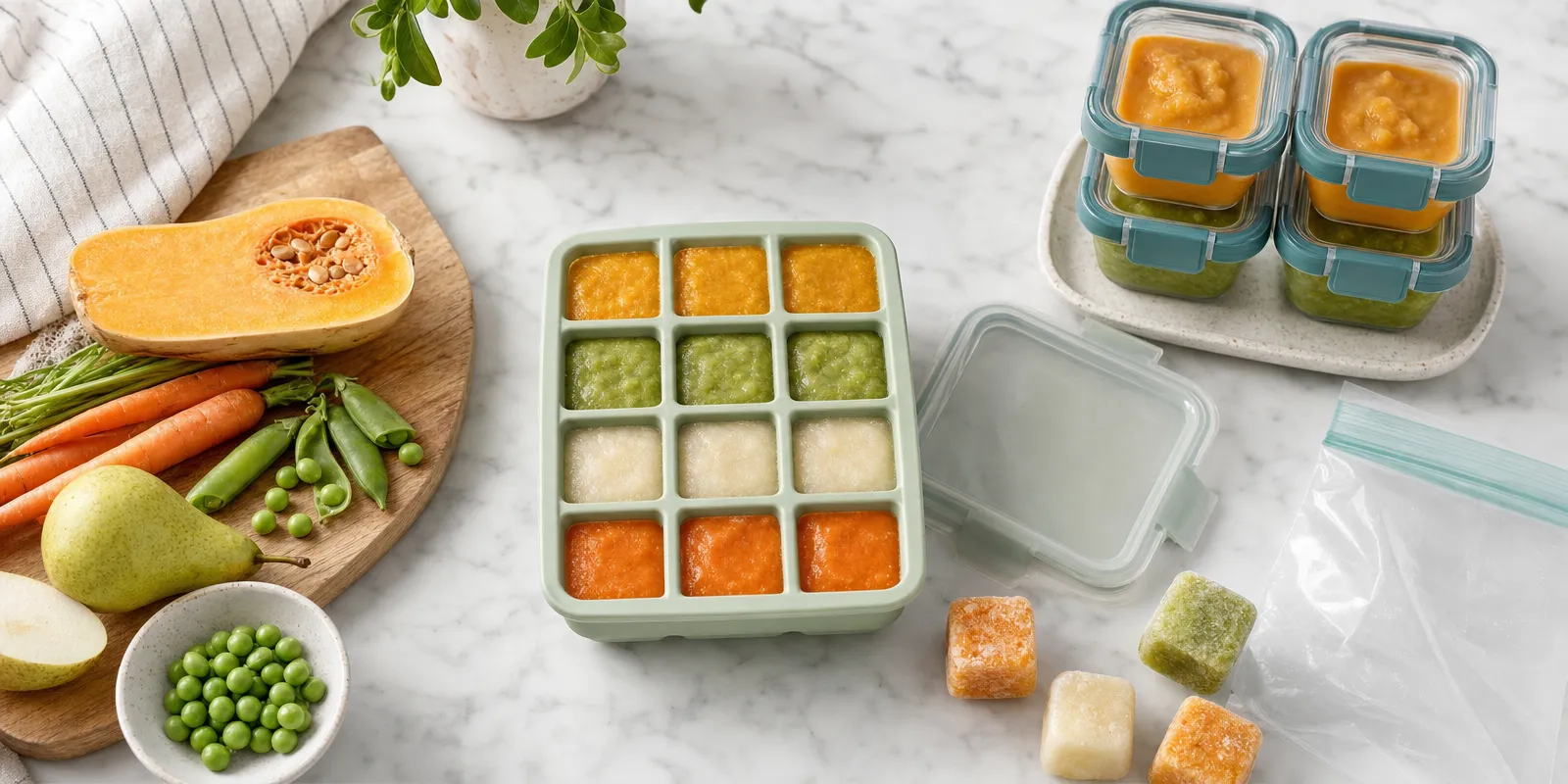
What cooking your own buys is control over variety, which is the thing that matters here. Batch-cooking four vegetables on a Sunday and freezing them in portions is the practical face of rotation, and much easier to sustain with decent baby food storage containers than a drawer of mismatched tubs. We have guides coming on baby food pouches and on whether a baby food maker earns its counter space; neither changes the contamination picture, and both change how often you cook.
"Safest Baby Food Brands" Is the Wrong Search
Here is the honest answer rather than a dodge: there is no credible brand ranking by heavy metal content, and anyone publishing one as a fixed list is selling certainty they do not have. Contamination varies by crop, growing region and production run — which is exactly why the state laws report per batch.
Two things you can use instead. Published independent tests, with dates: Consumer Reports' September 2026 round named specific results, including an average 63 ppb of inorganic arsenic in Gerber Rice Cereal — below the FDA's 100 ppb action level, though above CR's own stricter one. Read tests like that as snapshots of a product at a point in time. Disclosure behaviour: a company publishing per-batch results for every product, in every state, is telling you something; one that complies only where it must is also telling you something.
Brand loyalty is the least powerful tool here.
What Lead in Baby Food Actually Does
The CDC's position is that no safe blood lead level in children has been identified, and that even low levels have been associated with developmental delays, difficulty learning and behavioural problems, including effects on IQ, attention and academic achievement. Its blood lead reference value, lowered to 3.5 micrograms per deciliter in 2021, is a statistical marker used to trigger follow-up — explicitly not a threshold of safety.
What none of that licenses is the leap from a jar of carrots to a specific amount of harm in your child. Food is one route alongside paint, dust, water and soil, and population modelling is not an individual prognosis. If you are worried, or want to discuss blood lead testing, your pediatrician is the person to ask.
What to Actually Do on Monday
Three things, in order of how much they are worth.
- Move off rice as the default grain. Oat, barley or multigrain instead — and keep iron-fortified cereal in the diet rather than dropping it. No rice milk as a dairy substitute, and skip brown rice syrup.
- Rotate, and watch the repeats. Vary the vegetables — not sweet potato and carrot daily — vary the grains, favour purees and soft whole foods over puffed snacks, and offer water rather than juice.
- Scan the code, once. Look up the brands you actually buy, read a result, and see who publishes everything versus the bare minimum. Then stop shopping and go back to cooking.
That is the whole protocol. Unglamorous, free, and more effective than switching to a pricier label — the opposite of what the headline that brought you here implied. For the rest of the first year of eating, our guide to starting solids is the place to go next.

Gerber Stage 1 Organic Oatmeal Cereal, 8 oz, 5-Pack
Oatmeal rather than rice is the single easiest swap a parent can make, because the arsenic concern is specific to rice and not to grains generally. This is a plain single-grain oat cereal labelled for 6 months and up, which Gerber states carries 60% of the daily value of iron per serving plus 14g of whole grains and 14 vitamins and minerals. It mixes with breastmilk or formula, and the iron matters: fortified cereal is one of the standard ways of meeting a six-month-old's iron needs.
- Brand
- Gerber
- Category
- Our Pick
It mixes smooth with no lumps at the first try, which is more than I can say for the organic brand I bought before it.

Else Plant-Based Organic Baby Cereal, 6+ Months, Vanilla
A grain-light alternative built on buckwheat and other plant ingredients rather than rice, for parents who would rather step outside the rice-and-oat question entirely. The reason it belongs in this particular article is the testing: Else states the product carries the Clean Label Project's Purity Award and is independently tested for more than 400 contaminants including heavy metals. It is also the most expensive option here by a wide margin, and stock was thin when we sourced it.
- Brand
- Else Nutrition
- Category
- Best Independently Tested
Paying more for a cereal only makes sense if you are buying something specific, and here you are buying a published contaminant-testing programme rather than a nicer box.
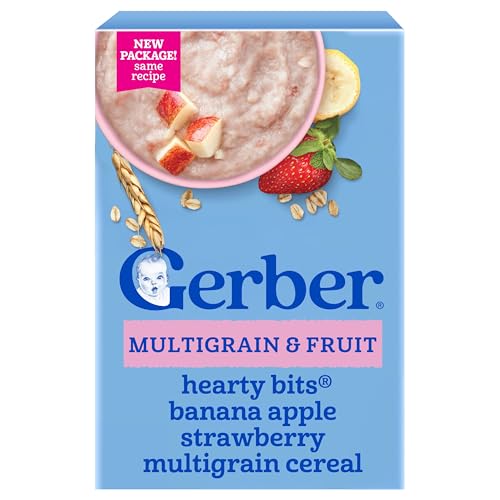
Gerber Hearty Bits Multigrain Banana Apple Strawberry, 8 oz, 5-Pack
IMPORTANT: Gerber labels this one for children 12 months and older, not for a baby just starting solids. It earns a place here because grain variety is the actual strategy once a child is eating a wider diet — a multigrain cereal spreads exposure across several grains instead of concentrating it in one. Gerber states 55% of the daily value of iron and 8g of whole grains per serving. Treat it as the twelve-month option, not the six-month one.
- Brand
- Gerber
- Category
- For Rotating Grains Later
The texture is deliberately lumpier than a stage-one cereal, which is the point at a year old — it is a chewing exercise as much as a breakfast.
- 01GerberOur PickGerber Stage 1 Organic Oatmeal Cereal, 8 oz, 5-Pack
- 02Else NutritionBest Independently TestedElse Plant-Based Organic Baby Cereal, 6+ Months, Vanilla
- 03GerberFor Rotating Grains LaterGerber Hearty Bits Multigrain Banana Apple Strawberry, 8 oz, 5-Pack
Does organic baby food have less lead?+
Is homemade baby food safer than jarred?+
My baby has eaten a lot of rice cereal. Has she been harmed?+
Sammie Seelbach
Sammie is a mom of two and the lead reviewer at Smart Baby Reviews. Since becoming a parent she has become obsessed with researching the safest, smartest baby gear on the market — testing thermometers at 2 a.m., wrangling baby gates, and sterilizing more bottles than she can count. She shares what actually works so other parents can make confident, informed decisions for their little ones.