When to Start Solids: Age, Readiness Signs, and Why Not Sooner

This post may contain affiliate links. Read our policy.
The signs a baby is ready for solids are physical, not calendar entries: steady head and neck control, the ability to sit up with support, swallowing food instead of pushing it back out with the tongue, and obvious interest in what is on your plate. Most babies get there around six months. The age is a floor, not a target — a baby who turns six months tomorrow but cannot hold their head steady is not ready yet. Some of the links below are affiliate links, and we may earn a small commission, at no extra cost to you, if you buy through them.
Here is the week that taught me. My daughter was five months old and had started tracking my fork from plate to mouth like a spectator at a tennis match, then leaning — not reaching, leaning, with her whole body, out of my lap toward the table. My mother-in-law watched this for about ninety seconds and said, entirely reasonably, that the baby was telling me something.
The baby was. But leaning is one sign, and I had no idea what the others were or which ones mattered. So here is the version I wanted then: what the health bodies actually say about the age, the readiness signs they publish and the ones people invent, and the half nobody writes well — why starting too early is a real risk rather than an arbitrary rule, and where the evidence is thinner than the confidence. The full walk-through of starting baby on solids is a separate guide. This one is about whether it is time.
When to Start Solids: Around Six Months, and Not Before Four
Three major bodies, three phrasings, one number.
The AAP. HealthyChildren.org, the American Academy of Pediatrics' parent site, says the AAP "recommends providing your baby only breast milk for approximately 6 months after birth," and that you "should continue breastfeeding after introducing foods at 6 months for as long as you and your child wish, for 2 years or beyond."
The CDC is the blunt one, and the only one that names a hard floor. Its guidance on introducing solid foods reads: "Your child can begin eating solid foods at about 6 months. Introducing foods before 4 months is not recommended."
The WHO agrees. Its infant and young child feeding fact sheet recommends infants "breastfeed exclusively for the first 6 months of life" and that "nutritionally adequate, safe complementary (solid) foods are introduced from six months," because "around the age of 6 months, an infant's need for energy and nutrients starts to exceed what is provided by breast milk."
Notice what is missing. Nobody says six months exactly — the AAP says approximately, the CDC says about, the WHO says from. The one genuinely firm line is the CDC's four-month floor, because it has safety behind it rather than nutrition.
Most American families land near the middle. A CDC analysis of the 2016-2018 National Survey of Children's Health, published in MMWR, put the mean age at introduction of complementary foods at 5.7 months, with 15.6% of children started before four months and 21.1% not until seven months or later. If you are convinced you are the only person getting this wrong, you are in a very large crowd.
The Signs Your Baby Is Ready for Solids
Here is the actual list, short enough to run in one evening at your own table. Every sign is something you can watch, and all of it comes from published guidance rather than a group chat.
| Readiness sign | What it looks like at your table | Who publishes it |
|---|---|---|
| Controls their head and neck | Head stays steady and upright, no bobbing or slumping | CDC, AAP, NHS |
| Sits up alone or with support | Holds a propped sitting position without folding forward | CDC, NHS |
| Opens their mouth when food is offered | Mouth opens as the spoon approaches, rather than you prying it | CDC, AAP |
| Swallows food rather than pushing it back out | Food goes back and down, not straight onto the chin | CDC, AAP, NHS |
| Brings objects to their mouth | Fists, toys, your sleeve — everything gets tasted | CDC |
| Tries to grasp small objects such as toys or food | Deliberate reaching and closing the hand, not batting | CDC |
| Coordinates eyes, hands and mouth | Looks at the food, picks it up, puts it in | NHS |
The seven-item version is the CDC's. HealthyChildren asks a shorter set that maps onto the same abilities — can they hold their head up, do they open their mouth when food comes their way, can they move food from a spoon into their throat, and is your baby big enough. The NHS compresses it to three: stay in a sitting position and hold their head steady, coordinate eyes, hands and mouth to look at food, pick it up and put it in their mouth, and swallow food rather than spit it back out.
All three describe the same underlying thing: a baby who can hold themselves up, aim a hand at their mouth, and move food backward instead of forward. And none of the three readiness lists mentions teeth. Teeth are not on the checklist.
You want most of the signs, not a clean sweep — and you take what you see to your pediatrician. That is the one place I will be prescriptive: the go-ahead comes from the person who has weighed your baby.
Head Control and Supported Sitting Matter Most
If you track only two signs, track these. They do a safety job rather than a nutrition one, and the bar is supported sitting, not independent sitting. The CDC's wording is "sits up alone or with support." The NHS asks that your baby can "stay in a sitting position and hold their head steady." Propped upright with a hand on the chest counts. Slumped sideways in a car seat does not.
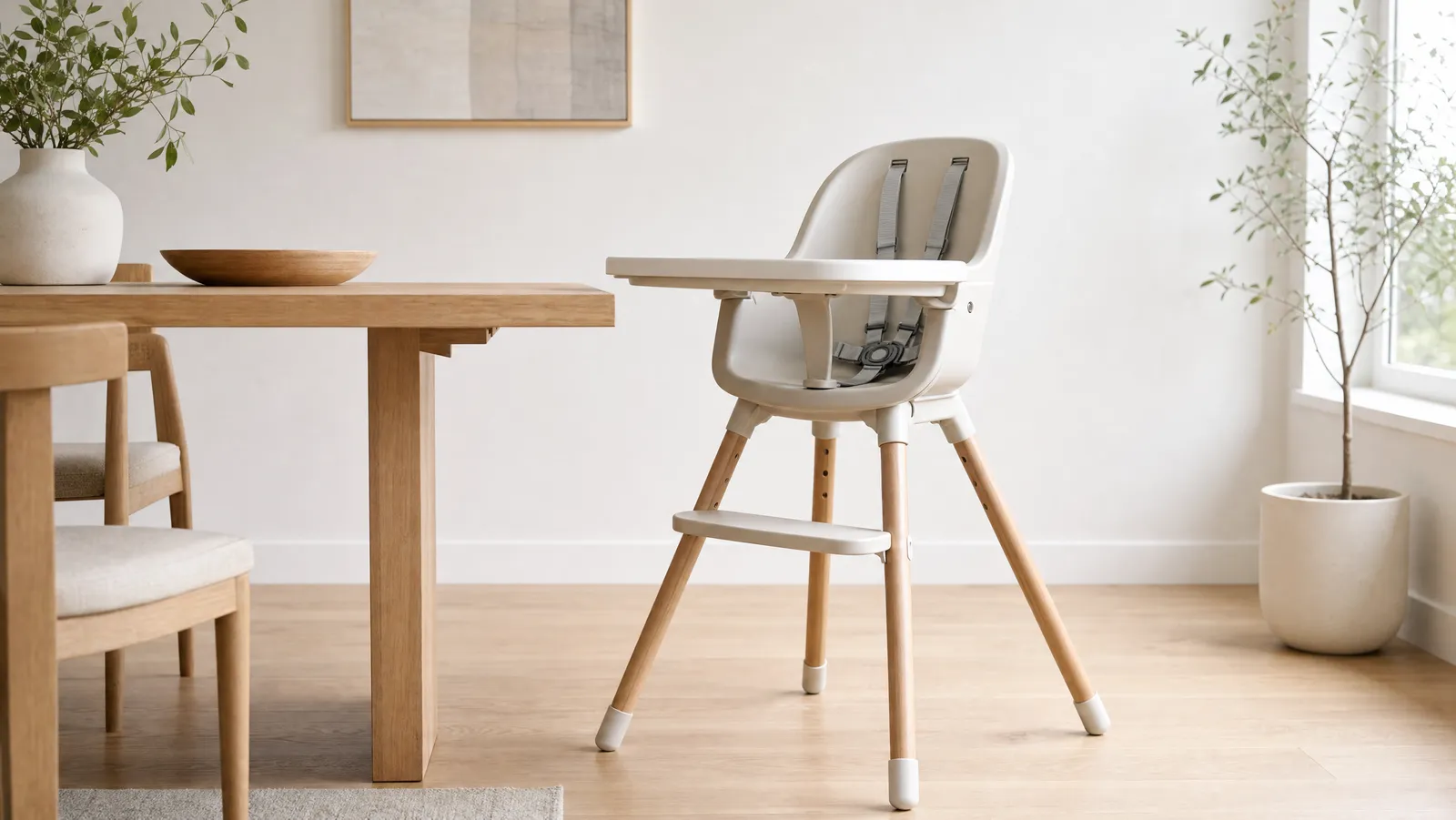
This is also the whole argument for a real chair. An upright back, a snug harness and somewhere for the feet to rest do the postural work, so your baby spends their effort on food instead of on staying vertical. Our roundup of the best high chairs for starting solids covers what matters. If the seat makes your baby slump, that is a chair problem, not a readiness problem.
The Tongue-Thrust Reflex, and Why a Rejected First Spoon Proves Nothing
Newborns come with an extrusion reflex: put something solid on the tongue and the tongue pushes it straight back out. It is protective by design, and it has to fade before a spoon is any use.
The CDC's MMWR report on complementary feeding puts it this way — infants show outward signs of readiness "when they can sit up on their own with good head control, show interest in mealtimes, are hungry in between feedings, and no longer have 'tongue-thrust' or extrusion reflex, usually at approximately age 4-6 months." Note the "usually." It is a range, and your baby has not read it.
Which makes for the most reassuring line on this page. If the first three spoonfuls come straight back out onto the chin, that is not rejection or a verdict on your cooking. It is a reflex that has not finished going away. Wipe it up, stop, try again in a week or two.
What Is Not a Sign Your Baby Is Ready for Solids
This is the section I wish someone had handed me at five months, because nearly every piece of pressure I got came from something on it.
The NHS names three behaviours that look like readiness and are not, describing them as normal baby behaviours that are not necessarily signs of hunger:
- Chewing their fists. Babies mouth everything, long before and long after they can eat.
- Waking up in the night more than usual. Sleep changes for a dozen reasons at this age.
- Wanting extra milk feeds. The NHS suggests extra milk may tide your baby over until they are developmentally ready — the answer to more hunger at five months is more milk, not earlier food.
A fourth is mine rather than anyone's guidance: watching you eat is not the same as being able to eat. My daughter was fascinated by my dinner at four months and could not hold her head up unaided. Interest shows up well before the machinery does, and the machinery is what keeps food out of an airway.
The "Doubles Their Birth Weight" and "13 Pounds" Figures
You will hear this from a nurse, a relative or a hospital handout, and the version that circulates is more confident than the original.
The figure is real and it is on HealthyChildren.org: "Generally, when infants double their birth weight (typically at about 4 months of age) and weigh about 13 pounds or more, they may be ready for solid foods."
Count the qualifiers — generally, typically, may. And look at where it sits: HealthyChildren lists "Is your baby big enough?" as one question among several, alongside head control and moving food from a spoon into the throat. It is one item in a checklist, not a green light. A thirteen-pound four-month-old with no head control is not ready. Weight is a floor under the other signs, not a substitute for them.
Why Starting Solids Too Early Is a Real Risk, Not Just a Rule
Here is the part most articles skip, because "the AAP says so" is easier to write. The four-month line exists for reasons — some well established, some genuinely contested.
The developmental argument is the strongest. The CDC's MMWR report states that younger infants lack the physiologic development needed to safely consume complementary foods. That is the whole tongue-thrust, head-control, swallow-coordination package above. Not a preference — a set of abilities a young infant does not yet have.
The displacement argument is second. Early solids take up room milk was supposed to fill. HealthyChildren is explicit that even after you start, "your baby will still be getting most of their nutrition from breast milk, formula or both," which is why the glass baby bottles or nursing routine you already have is still doing most of the work for months. The same CDC report notes that early introduction prevents infants from meeting the recommended six months of exclusive breastfeeding, and points to associations with gastrointestinal infection.
The obesity argument is where honesty is required. You will read, stated flatly, that early solids cause childhood obesity. The evidence does not support that confidence. A 2025 systematic review of 17 studies in Cureus concluded that "early introduction of solid foods (before four months) appears to be associated with increased childhood obesity risk, particularly in the absence of breastfeeding" — then immediately added that "due to variability and methodological limitations across studies, findings should be interpreted with caution." The CDC's language is similarly hedged, describing a potential rather than an established link. Caution, not panic. If you started at fifteen weeks on a pediatrician's advice, this is not a thing to lie awake about.
The allergy argument has actually reversed, and here the old advice was wrong. Parents used to be told to delay allergenic foods. NIAID's addendum guidelines for the prevention of peanut allergy, issued in 2017, go the other way: infants with severe eczema and/or egg allergy should be evaluated for peanut sensitization and, depending on the results, have peanut products introduced as early as 4 to 6 months of age. That is a reason to raise allergens early with your pediatrician — not a reason to start the whole enterprise before four months.
Two more topics, baby-led weaning and purees, and gagging and choking, are big enough to get their own articles rather than three lines here.
Cereal in a Bottle: A Direct Answer
Someone is going to tell you to put rice cereal in the bedtime bottle — your mother, your mother-in-law, or a very confident stranger at a baby group. They are not trying to hurt your baby. They are trying to help you sleep.
On safety, the AAP is unambiguous. HealthyChildren says: "Do not put baby cereal in a bottle because your baby could choke." The same page adds that it may increase the amount of food your baby eats and can cause your baby to gain too much weight. A baby who cannot yet manage a spoon is being handed something harder, not easier.
There is one real exception, and it is a prescription rather than a loophole. The same page notes that cereal in a bottle may be recommended if your baby has reflux, and says to check with your child's doctor. That is a medical instruction with follow-up attached, not a bedtime shortcut.
On sleep, the claim is weaker than its reputation. The NHS states that starting solid foods will not make your baby any more likely to sleep through the night. The strongest evidence pointing the other way is a secondary analysis of the Enquiring About Tolerance randomized trial, published in JAMA Pediatrics, which followed 1,303 exclusively breastfed three-month-olds and found early introduction of solids associated with longer sleep, less frequent waking and fewer reports of very serious sleep problems.
That is a real randomized trial and it does show something. Now the size: the peak difference was 16.6 minutes more sleep per night at six months, and night wakings fell from 2.01 to 1.74. Roughly a quarter of a wake-up and a quarter of an hour. And it tested allergenic and non-allergenic solid foods introduced into the diet under close dietetic direction (EAT trial protocol) — not cereal poured into a bottle.
So the honest answer to your relative is that the sleep benefit is real, small, and was not achieved the way they are suggesting.
The Pressure Is Real, and It Is Not a Character Flaw
Almost nobody starts early out of carelessness. They start because a formula shortage made the feeding schedule feel impossible, or because a beloved grandparent raised four children on cereal at eight weeks and finds the new advice insulting, or because they have not slept properly since March and someone offered them a lever to pull.
If that is where you are, two things are true at once. The guidance stands, and you have not failed at anything.
What helps most is one sentence rather than an argument. "Our pediatrician wants us to wait until she can sit up and hold her head steady" ends the conversation better than any study I could cite. It is not a debate about evidence; it is a decision already made by someone with a medical degree.
What You Actually Need on Day One
Very little, which is the good news in an article full of caveats. The registry lists are enormous. The first month of solids needs three things.
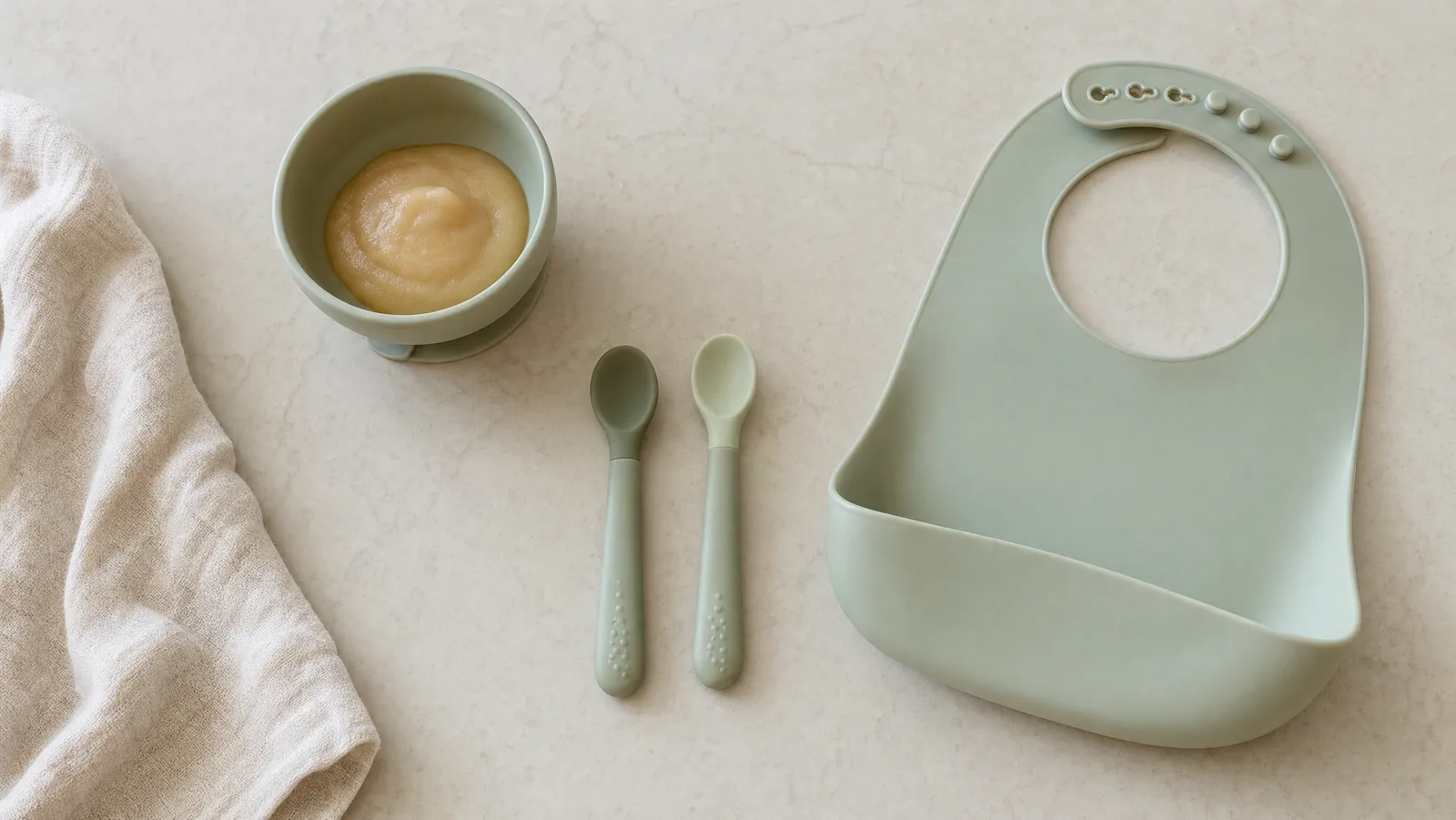
A soft first spoon. The Olababy training spoon is 100% FDA-grade silicone with no hard plastic anywhere on it, which matters when a baby is steering a spoon into their own mouth. The ribbed stem gives small hands something to hold, and the flexible leaf-shaped tip handles thin purees and thicker second-stage food alike. About $9.97 as of September 2026 for a two-pack — one in the dishwasher, one on the tray.
A bowl that stays put. The Eascrozn set is three suction bowls and three soft spoons in food-grade silicone, around $9.95 as of September 2026. The suction base is the point: it anchors the bowl so the first enthusiastic arm sweep does not put dinner on the floor. The easy-release tabs matter just as much, because a bowl that truly sticks is miserable to get off again otherwise.
A bib with a real pocket. The Moonkie silicone bibs have a 9 by 2 inch pocket that holds its shape instead of collapsing flat, so what a beginner drops gets caught rather than landing in their lap. Adjustable neckband, rated for 3 to 36 months, wipe clean or dishwasher. About $8.99 as of September 2026 for two, and a 2025 National Parenting Product Award winner.
Under $30 all in as of September 2026. The mesh feeders, freezer trays, divided plates and blender attachments can wait until you know whether your baby has any interest, which takes several weeks.
A Checklist You Can Run Tonight
Sit your baby up at the table while you eat, and answer these:
- Is their head steady and upright, no bobbing, for the length of a meal?
- Can they hold a propped sitting position without folding forward?
- Do they bring things to their mouth on purpose — fists, toys, a spoon?
- Do they open their mouth when something edible comes toward them?
- When you offer a taste, does it go backward rather than straight back out?
- Are they around six months, and at minimum past four?
Mostly yes? Bring it to the next well visit and ask your pediatrician. Mostly no, or a clear no on the first two? Wait two weeks and run it again. Nothing is lost by waiting.
Start When Your Baby Says So
The number on the calendar is the least interesting part of this decision. Six months is where the guidance points and four months is the floor beneath it, but the useful information is coming from your baby: the steady head, the propped sit, the hand that finds the mouth, the food that goes backward instead of forward.
Watch for those, take what you see to your pediatrician, and let the birthday be a coincidence rather than a trigger. When the answer is yes, our complete guide to starting solids picks up with first foods, portions and the first few weeks.
And if you are five months in with a baby leaning toward your dinner plate and a relative in your ear — that was me, on a Tuesday, feeling like I was failing a test nobody had given me the syllabus for. You are not behind. You are watching. That is the job. You've got this.
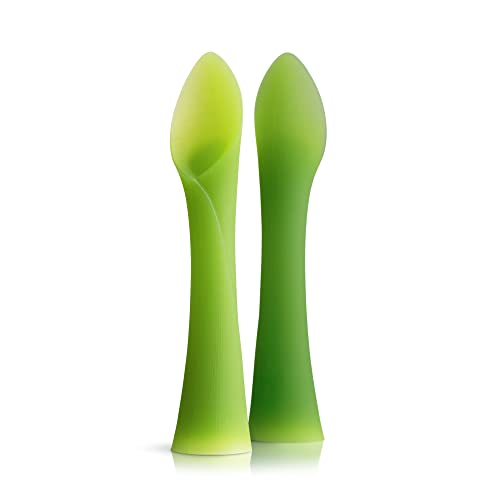
Olababy Silicone Baby Training Spoons, 2-Pack
A soft-tip first spoon made entirely of FDA-grade silicone with no hard plastic parts, which matters when a baby is learning to bring a spoon to their own mouth and will inevitably bump gums and erupting teeth. The ribbed stem gives small hands something to grip, and the flexible leaf-shaped tip works for thin purees and thicker second-stage food alike. Comes as a two-pack, which in practice means one in the dishwasher and one on the tray.
- Brand
- Olababy
- Category
- Our Pick
The ribbed stem is the whole trick — it is the first spoon our daughter could actually hold onto rather than fling.

Eascrozn Silicone Suction Baby Bowls and Spoons, Set of 3
Three suction bowls and three soft spoons in food-grade silicone. The suction base with release tabs is the point: it anchors the bowl to a tray or table so the first swipe of an arm does not put dinner on the floor. Bowls come in three colours, are heat resistant and unbreakable, and go in the microwave, fridge and dishwasher.
- Brand
- Eascrozn
- Category
- Best Suction Bowls
The release tab matters as much as the suction. Bowls that truly stick are miserable to get off again unless the designer thought about it.
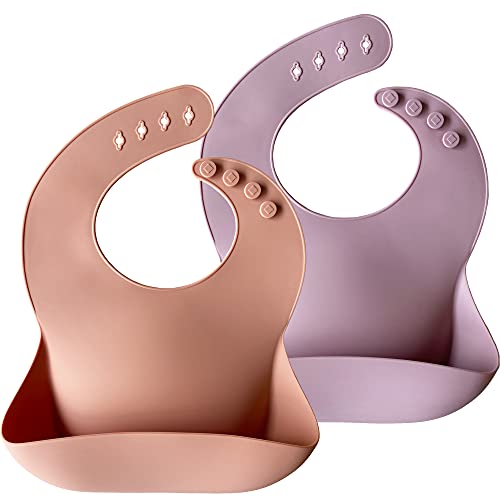
Moonkie Silicone Baby Bibs with Food Catcher Pocket, Set of 2
A food-grade silicone bib with a 9 by 2 inch pocket that stays open rather than collapsing flat, so the food a beginner drops is caught instead of landing in their lap. The neckband adjusts, the bib is rated for 3-36 months, and it wipes clean or goes in the dishwasher. It won a 2025 National Parenting Product Award.
- Brand
- Moonkie
- Category
- Best Bib
A pocket that holds its shape is the difference between a bib and a decoration. This one catches about half of what she drops.
- 01OlababyOur PickOlababy Silicone Baby Training Spoons, 2-Pack
- 02EascroznBest Suction BowlsEascrozn Silicone Suction Baby Bowls and Spoons, Set of 3
- 03
What are the signs my baby is ready for solids?+
Can I start solids at 4 months instead of 6?+
Does starting solids help a baby sleep through the night?+
Is it safe to put cereal in my baby's bottle?+
My baby is waking more at night and chewing their fists. Is that hunger?+
How much do I need to buy before we start?+
Sammie Seelbach
Sammie is a mom of two and the lead reviewer at Smart Baby Reviews. Since becoming a parent she has become obsessed with researching the safest, smartest baby gear on the market — testing thermometers at 2 a.m., wrangling baby gates, and sterilizing more bottles than she can count. She shares what actually works so other parents can make confident, informed decisions for their little ones.