Sleep Sack TOG Ratings and How to Dress a Baby for Sleep
This post may contain affiliate links. Read our policy.
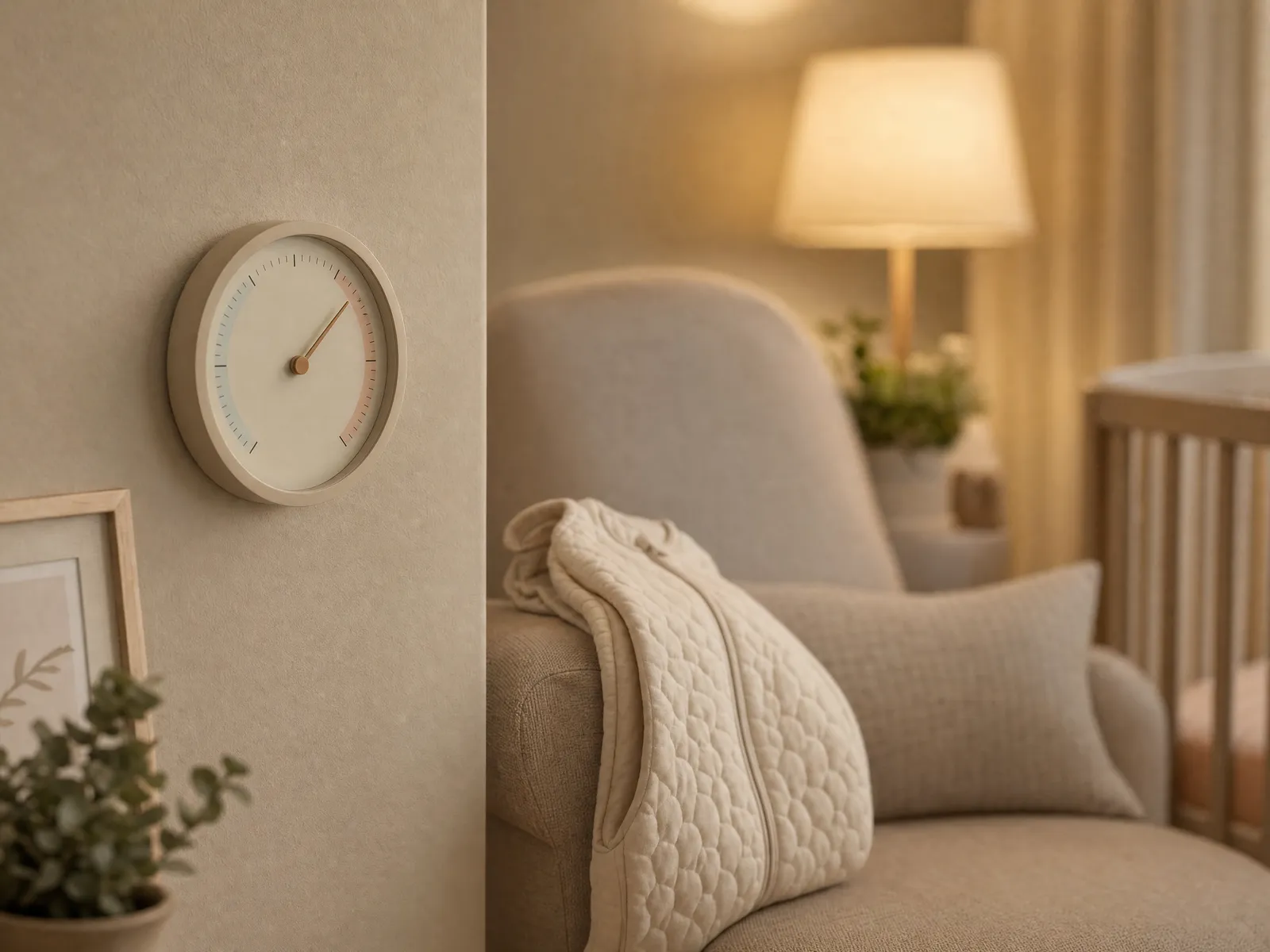
A sleep sack TOG rating measures how much warmth the fabric traps, and on its own it tells you almost nothing. The number only works once you pair it with the room temperature and what your baby is wearing inside the bag. Roughly: 0.5 TOG for a warm room, 1.0 for average, 2.5 for cold. Some of the links below are affiliate links, and we may earn a small commission, at no extra cost to you, if you buy through them.
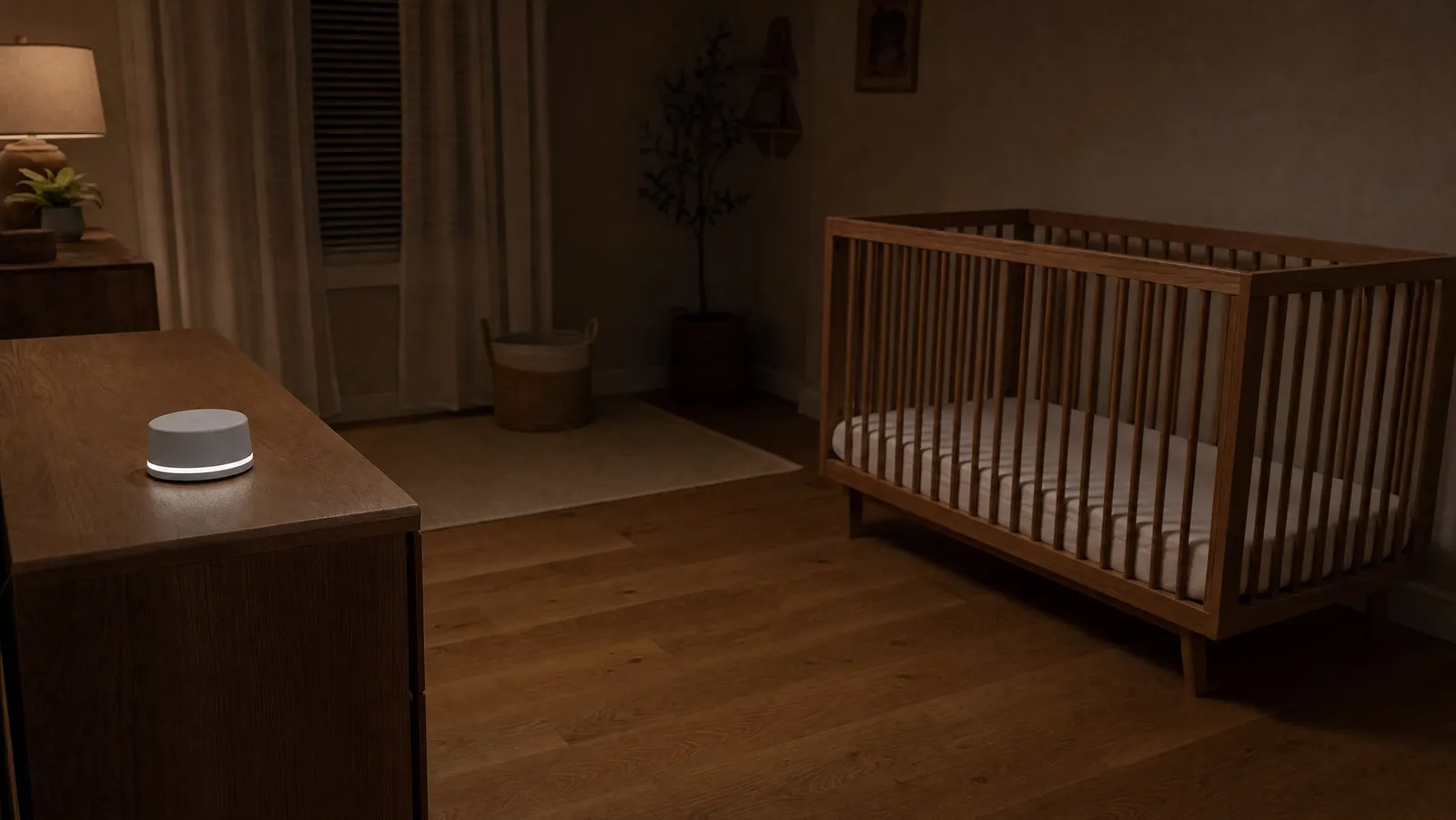
Here is the mistake I made. I bought a 2.5 TOG sack in October because it was the warmest one on the shelf, put my daughter in it over a footed sleepsuit, and spent three nights wondering why she woke up damp and furious at 1 a.m. The sack was not the problem. The room was 71 degrees. I had dressed her for a house I did not live in.
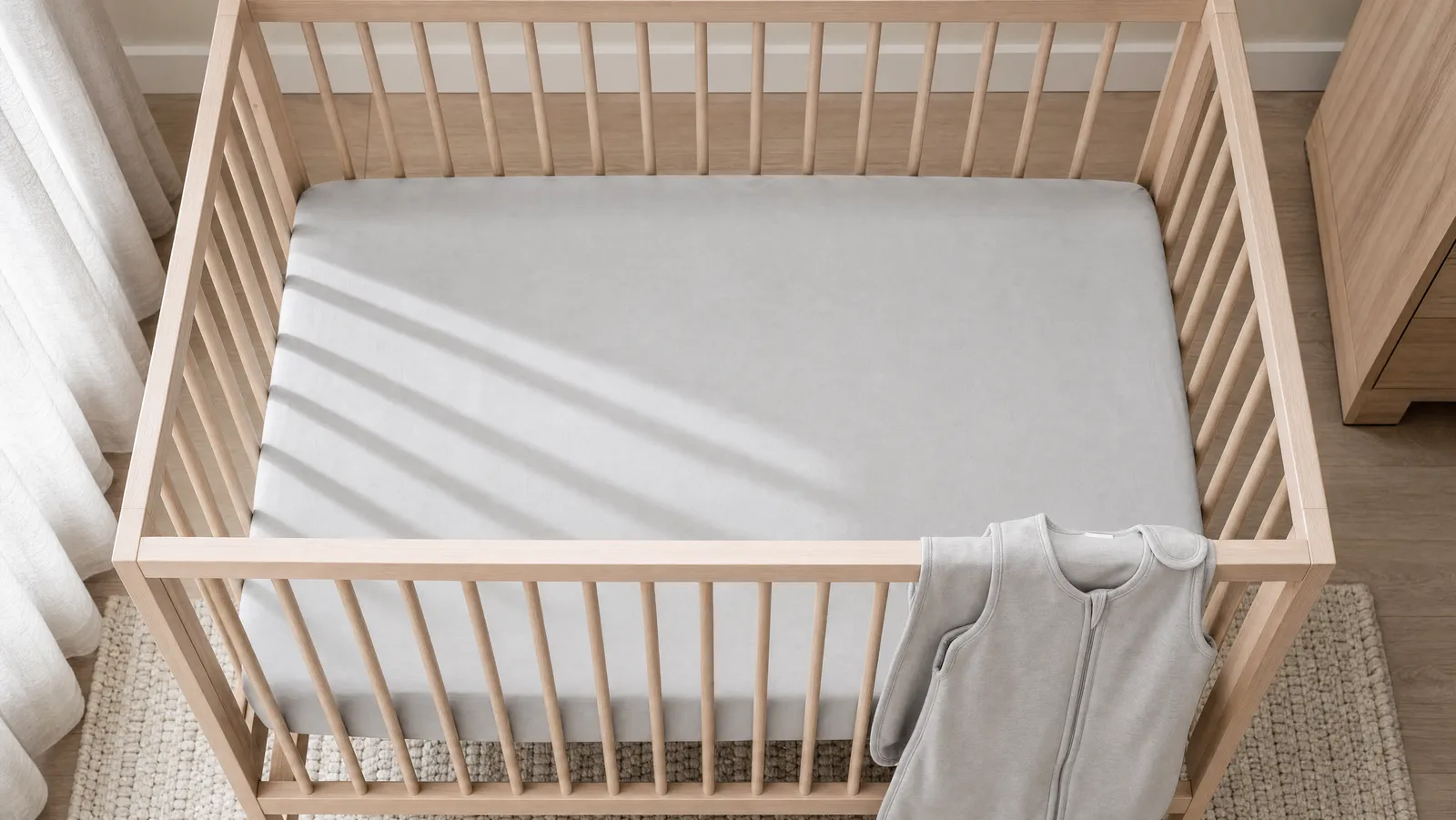
TOG is the half of the equation printed on the label. The other half is the thermometer on the nursery wall and what goes on underneath it. This guide covers both halves and ends with a temperature-to-layers table you can use at bedtime. It assumes the basics of setting up a safe sleep space are already handled: on the back, firm flat surface, nothing loose in the crib.
What a Sleep Sack TOG Rating Actually Measures
TOG is a genuine unit rather than marketing shorthand: one tog equals 0.1 square metre kelvin per watt of thermal resistance. It was developed in 1946 by F. T. Peirce and W. H. Rees at the Shirley Institute in Manchester, England, as a friendlier way to talk about insulation than the SI unit, and it has been stamped on British duvets, carpet underlay and sleeping bags ever since. You will see it expanded everywhere as "thermal overall grade," and that turns out to be a backronym rather than the origin — Peirce and Rees never explained their choice of word, which most likely came from "togs," the old informal term for clothes. The Lullaby Trust's definition is the plainest: tog is "a measure of insulation (warmth)" used for baby sleeping bags and blankets.
Higher number, more trapped air, warmer baby. That is the whole concept.
What creates the number is construction, not fabric name. PurComfy states it flatly for its own range: the 1.0 and 2.5 TOG bags contain a wadding layer, and the 0.5 TOG does not. Same brand, same idea, three warmths — the difference is whether there is a batting layer sewn between the outer and the lining, and how thick it is.
Now the part that gets misreported constantly. TOG is a textile industry convention, not a US federal safety rating. Nothing requires a manufacturer to publish a TOG value or dictates how it must be tested for a baby product sold in the States. The first US voluntary standard written specifically for these products, ASTM F 3735, was approved on February 1, 2026, and covers wearable sleep products for infants and toddlers up to 2 years — but it addresses suffocation, strangulation and choking through design, sizing, labeling and testing requirements. It does not set thermal ratings. Consumer Reports suggests shopping for a new sack that meets it.
So: use TOG to compare products. Use the room and the layers to keep your baby comfortable.
The Three TOG Weights You Will Actually See
Sleepwear TOGs run from about 0.2 up to 3.5, but the market has settled on three numbers, and you can furnish an entire first year with two of them.
0.5 TOG — the summer weight. A single unpadded layer, usually cotton or bamboo, that mostly exists to replace the loose blanket the AAP says does not belong in the crib. The Burt s Bees Baby Beekeeper is the plainest version of the idea: 100% organic cotton, a bottom-opening zipper for night changes with an interior zipper guard, sized from 0-6 months up to 18-24 months, and about $11.99 as of August 2026. At that price it is the one I hand people at showers, because you want three of anything a baby sleeps in.
1.0 TOG — the one you will use most. Mid-weight, with a thin wadding layer, and the weight that covers the widest band of ordinary indoor temperatures. The PurComfy Supersoft is a good example of what you are paying for at this tier: 96% viscose and 4% spandex over a polyester wadding certified to Oeko-Tex Standard 100 Class 1, the tier for baby products, with a two-way J-shaped zipper that opens like a book. Around $30.59 as of August 2026, sized 6-15 months. If your house sits at a steady temperature year-round, this is very possibly the only TOG you need.
2.5 TOG — the winter weight. Thick wadding, and genuinely warm. The BubblePanda at 97% bamboo viscose and 3% spandex, about $35.00 as of August 2026, is worth looking at for two design details rather than the warmth. According to BubblePanda, it uses a deeper, narrower neckline intended to prevent loose fabric near the face, and a zipper protector at the chin. Those are the features I would compare between winter sacks, along with the extra leg room for the frog-legged position.
If you want a shortlist rather than three examples, our roundup of the best baby sleep sacks goes weight by weight.
Nursery Temperature for a Baby: The Sources Genuinely Disagree
This is where most articles quietly pick a number and pretend everyone agrees. They do not.
The AAP declines to name a temperature at all, and says so explicitly. Recommendation 9 of the 2022 safe sleep policy reads: "Although studies have demonstrated an increased risk of SIDS with overheating, the definition of overheating in these studies varies. Therefore, it is difficult to provide specific room temperature guidelines to avoid overheating." It is an honest position, and it is worth knowing that the most-cited pediatric body in the country will not name the number every sleep sack chart is built on.
The UK bodies do name one, and it is cooler than most American homes. The NHS advises keeping the room "at a temperature between about 16 to 20C" and monitoring it with a room thermometer. The Lullaby Trust says the same, and its temperature factsheet describes 16-20°C as a UK consensus view. That is roughly 61 to 68°F — which, as the Lullaby Trust concedes, "feels quite cold to a lot of people."
The commonly repeated American figure is 68 to 72°F (20 to 22°C). The Sleep Foundation is one of many sources citing it. It is a reasonable, widely used range — but trace it back and it comes from sleep and consumer sources, not from a pediatric body that has published a number.
The two ranges overlap only at 68°F. So the honest summary is a band of about 61 to 72°F (16 to 22°C), cooler rather than warmer, with a thermometer in the room because guessing is unreliable. Overheating is why any of this matters: the AAP lists avoiding overheating among its recommendations, and the NHS states plainly that overheating can increase the risk of SIDS.
How to Dress a Baby for Sleep by Temperature
Here is the table. Read the two caveats under it before you print it.
| Room temperature | TOG the charts point to | Typical layer underneath |
|---|---|---|
| 75-81°F (24-27°C) | 0.5 | Short-sleeve bodysuit, or a diaper alone at the very top |
| 69-74°F (21-23°C) | 1.0 | Short-sleeve bodysuit |
| 64-68°F (18-20°C) | 1.0 or 2.5 | Long-sleeve bodysuit, or a light footed sleepsuit |
| 61-63°F (16-17°C) | 2.5 | Bodysuit plus a footed sleepsuit |
| Below 61°F (16°C) | 2.5 | Bodysuit and sleepsuit, and warm the room if you can |
Caveat one: these bands are the industry convention, not health guidance. Manufacturers' own charts vary, sometimes by several degrees at the same TOG, so check the one that came with your sack. The Lullaby Trust refuses to publish a TOG-to-temperature chart at all, and its reasoning is the most useful thing on this page: every product uses different materials in different proportions, the air trapped between layers changes the insulation significantly, and every baby is different.
Caveat two: notice where the guidance and the chart disagree. The Lullaby Trust pairs the whole 16-20°C band with "light bedding or a lightweight well-fitting baby sleep bag" and says a baby "should only need to wear a nappy, vest and sleep suit to sleep in." Manufacturer charts put 2.5 TOG squarely in that same band. Both cannot be exactly right, which is another way of saying the chart is a starting point and your baby is the instrument.
One detail from the same factsheet: a folded blanket provides twice the insulation. Layers compound in ways one number cannot capture.
The One-Layer Rule Is Real, and It Comes From the AAP
I assumed for years that "one more layer than you would wear" was folk wisdom. It is not. It is in the policy, and it is a ceiling rather than a target.
The AAP's 2022 wording: "In general, dress infants appropriately for the environment, with no >1 layer more than an adult would wear to be comfortable in that environment." The parent-facing version: "Your baby only needs one more layer than you would wear in the same environment to be comfortable."
Count the sleep sack as one of those layers. That is the step people skip. If you are comfortable in a t-shirt, your baby is in a bodysuit and a sack — not a bodysuit, a sleepsuit, and a sack.
How to Check Whether Your Baby Is Too Warm
Hands and feet are the wrong test, and almost everyone reaches for them first.
The NHS is direct: "Check your baby's temperature by feeling their chest or the back of their neck. Do not worry if their hands or feet feel cool, this is normal." The Lullaby Trust says the same, adding that hands and feet will always feel cooler than the rest of the body, and that a too-hot baby's skin feels hot, slightly clammy or sweaty.
The AAP's signs list is short and specific: sweating, flushed skin, or the infant's chest feeling hot to the touch. Safe to Sleep, the NICHD campaign, names the same three and adds the underlying failure mode — over-bundling, meaning too many layers of clothes and bedding for the room temperature.
Two more things from the guidance. The Lullaby Trust notes that babies who are unwell with a fever need fewer bedclothes, not more, which is the exact opposite of the instinct. And the usual reason given for checking is that a cold baby tends to protest while a baby who is too warm may not — that one is a widely repeated rule of thumb rather than a figure any of these bodies publish, but it costs nothing to act on. Check once, an hour or so after bedtime.
No Hats Indoors, Even in Winter
This one surprises people who were handed a newborn in a knitted hat at the hospital.
The AAP's 2022 policy advises "not to place hats on infants when indoors except in the first hours of life or in the NICU," weighing the questionable benefit of hats for preventing hypothermia against the risk of overheating. Safe to Sleep says it in one line: "Wearing hats while indoors can make baby too hot, so take off baby's hat when inside," and to keep a baby's head and face uncovered during sleep. The NHS adds the travel version — remove hats and extra clothing as soon as you come indoors or into a car, bus or train, even if it means waking your baby.
The Lullaby Trust supplies the mechanism, which is the part that makes it stick: a baby's head is important for releasing heat and maintaining body temperature. Cover it and you have removed the radiator.
If the nursery is genuinely cold, the Lullaby Trust suggests an extra layer rather than the heating, and if you do run heat overnight, keeping it low and no higher than 20°C.
What a TOG Rating Will Not Do for You
A TOG number tells you about warmth. It tells you nothing about the three things that make a sleep sack safe.
Fit, especially at the neck and armholes. The Lullaby Trust's guidance is that sleeping bags should be well fitted, particularly around the neck and arms, so a baby cannot wriggle down inside, and that most are sized by weight rather than age. A too-big 1.0 TOG sack is a worse buy than a well-fitting 2.5.
What the sack replaces. The AAP's line is that dressing an infant in layers of clothing is preferable to blankets and other coverings, because it keeps the baby warm while reducing the chance of head covering or entrapment, and that wearable blankets can also be used. A sleep sack earns its place by getting the blanket out of the crib, not by being warm.
Weight. The AAP recommends that weighted blankets, weighted sleepers, weighted swaddles or other weighted objects not be placed on or near a sleeping infant. That includes weighted sleep sacks, whatever TOG they carry.
And no TOG rating substitutes for the rest of the room being right, which is a different job — the same way baby-proofing your home is a different job from picking out a stair gate.
The Bottom Line
- Put a thermometer in the room. Every source above says to measure rather than guess.
- Aim cool. Somewhere in 61-72°F (16-22°C), acknowledging that the UK bodies sit at the bottom of that band and the common US figure sits at the top.
- Pick the TOG for the room you actually have, not the season on the calendar. For most centrally heated American homes that is 1.0 TOG for most of the year.
- Adjust with the layer underneath, not the sack. One bodysuit either way is a bigger change than you would think, and it costs nothing.
- No more than one layer more than you would wear, counting the sack, and no hat indoors.
- Check the chest or the back of the neck, never the hands or feet.
The chart on this page is a starting point, and I would rather say that out loud than let it read as a prescription. The AAP will not name a room temperature. The Lullaby Trust will not publish a TOG chart. Both of them, for the same reason: the materials vary, the layers vary, and your baby varies. So use the number on the label to get close, then use your hand to finish the job.
When you are ready to pick a specific bag, the best baby sleep sacks works through the weights and sizes. And if the rest of the nursery is still a work in progress, our guide to your baby's sleep space covers everything the sack sits inside.
Tonight, do the free part: read the thermometer and feel the back of her neck. You've got this.

Burt s Bees Baby Beekeeper Wearable Blanket (0.5 TOG, Organic Cotton)
A 100% organic cotton wearable blanket at 0.5 TOG, built around the idea that a sleep bag replaces the loose blankets the American Academy of Pediatrics says do not belong in a crib. The zipper opens from the bottom for late-night changes and comes with an interior zipper guard and a pull cover. Sizes span 0-6 months (from 10 lbs) up to 18-24 months (to 36 lbs), and it machine washes cold and tumble dries low.
- Brand
- Burt s Bees Baby
- Category
- 0.5 TOG Example
This is the one I hand new parents at showers — it is cheap enough to buy three, it washes forever, and the bottom-opening zipper is the feature you appreciate at 3 a.m.
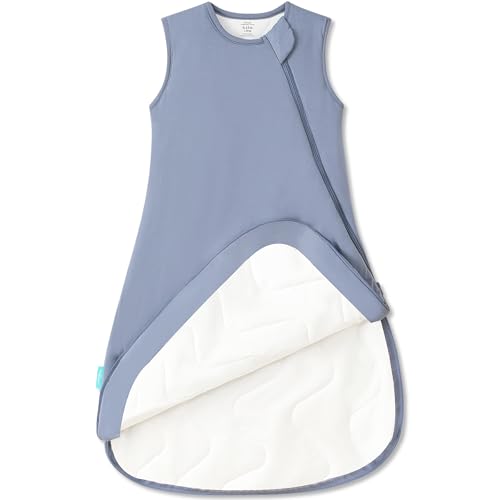
PurComfy Supersoft Sleep Sack (1.0 TOG, Bamboo Viscose, 6-15 Months)
A mid-weight 1.0 TOG bag in 96% viscose and 4% spandex with a 100% polyester wadding certified to Oeko-Tex Standard 100 Class 1 (the tier for baby products). PurComfy notes the construction difference plainly: the 1.0 and 2.5 TOG versions carry wadding and the 0.5 does not. The two-way J-shaped zipper opens like a book for changes. Sized 6-15 months.
- Brand
- PurComfy
- Category
- 1.0 TOG Example
1.0 TOG turned out to be the weight we reached for most of the year, and the book-style zipper is genuinely faster than a straight one when you are half asleep.

BubblePanda Bamboo Viscose Sleep Sack (2.5 TOG, 6-12 Months)
The warm end of the range at 2.5 TOG, in 97% rayon made from bamboo with 3% spandex. Two design details are worth noting for safety: a deeper, narrower neckline meant to keep loose fabric away from the face, and a zipper protector at the chin. The two-way side zipper handles changes, and the extra leg room allows the frog-legged position. Sized 6-12 months.
- Brand
- BubblePanda
- Category
- 2.5 TOG Example
We only needed 2.5 TOG for the coldest stretch of winter, but on those nights it was the difference between one wake-up and four.
- 01Burt s Bees Baby0.5 TOG ExampleBurt s Bees Baby Beekeeper Wearable Blanket (0.5 TOG, Organic Cotton)
- 02PurComfy1.0 TOG ExamplePurComfy Supersoft Sleep Sack (1.0 TOG, Bamboo Viscose, 6-15 Months)
- 03BubblePanda2.5 TOG ExampleBubblePanda Bamboo Viscose Sleep Sack (2.5 TOG, 6-12 Months)
What TOG sleep sack do I need for 20 degrees Celsius (68°F)?+
Is TOG a regulated safety rating in the United States?+
What should my baby wear under a sleep sack?+
How do I know if my baby is too hot in a sleep sack?+
Can my baby wear a hat to sleep in a cold room?+
Do I need three sleep sacks in three different TOGs?+
Sammie Seelbach
Sammie is a mom of two and the lead reviewer at Smart Baby Reviews. Since becoming a parent she has become obsessed with researching the safest, smartest baby gear on the market — testing thermometers at 2 a.m., wrangling baby gates, and sterilizing more bottles than she can count. She shares what actually works so other parents can make confident, informed decisions for their little ones.