Logic Toys That Give Your Baby a Head Start

This post may contain affiliate links. Read our policy.
The first time my daughter dropped a ball into her object-permanence box and then leaned over the side to wait for it to roll back out, I actually got a little teary in the kitchen. She was working something out — quietly, seriously, with her whole face scrunched in concentration. There was no screen, no flashing app, just a baby and a problem she wanted to solve. That little moment is the whole reason I love what people loosely call "logic toys," and it is also why I want to be straight with you about what they can and cannot do.
What "logic toys" really are (and what they aren't)
"Logic toy" is a fuzzy, marketing-friendly label that covers stackers, shape sorters, sorting games, and Montessori classics — anything that asks a baby to notice a pattern, fit two things together, or figure out cause and effect. They are first cousins to the developmental toys we cover here, with a little more emphasis on problem-solving.
Here is the honest part, because I would want a friend to tell me: there is no strong scientific evidence that any toy makes a baby smarter or gives them a measurable head start in IQ. Researchers who study infant brain development are pretty blunt that the "smart toy" boom is built more on hopeful marketing than on data. Babies learn language, for example, from talking and listening with real people — not from a gadget. So if a box promises to "boost intelligence," read that as wishful thinking.
What these toys do offer is genuinely worthwhile: lots of cheerful, low-pressure practice with fine motor skills, hand-eye coordination, focus, and cause-and-effect reasoning — the understanding that "when I do this, that happens." That is real, useful learning. It just comes from your baby's effort and your presence, with the toy as a happy excuse.
What to look for in a baby logic toy
After buying (and quietly donating) more toys than I care to admit, these are the factors I actually weigh now.
Age-appropriateness and safety first
This is non-negotiable. The age range printed on a toy isn't a suggestion — for babies it reflects choking-hazard testing, and a toy sized for a three-year-old can be dangerous for a six-month-old. For little ones who still mouth everything, favor pieces too big to swallow and skip anything with small detachable parts. Check secondhand and hand-me-down toys for cracks or loose bits before they go in the rotation.
A clear skill, not a hundred blinking lights
The best logic toys do one thing well. A toy that teaches sorting should make sorting satisfying; it doesn't also need to sing the alphabet, play three songs, and glow in the dark. Montessori design leans into this idea on purpose — simple, open-ended toys that let a baby explore and master one concept at a time. That focus is part of why they hold attention.
Material and durability
Babies are rough, and they chew. Look for sturdy construction and non-toxic, baby-safe finishes — good wooden toys use water-based paints, and good fabric toys wash easily. Wood feels lovely and lasts; quality plastic is fine too and often easier to wipe down. You don't need to pick a side, you just need it to survive a few hundred drops.
Open-ended play that grows with your child
My favorites are the ones a baby can keep returning to as they get older — first mouthing and banging, later sorting and pretend play. A toy with a long runway is better value than a flashy one that gets old in a week, no matter what either one costs.
Our six picks, and where each one shines
I kept this list small on purpose. A tight rotation a baby can actually master beats a toy bin they ignore.
The all-rounder we reach for first
The BEST LEARNING Stack & Learn Interactive Stacking Toy is our overall pick because it bridges two worlds. Underneath it's a classic graduated-ring stacker — pure size-sorting and fine motor work — but it adds three play modes that name numbers, colors, animal sounds, and instruments. Stacking a ring and hearing the toy respond is cause and effect in its simplest, most delightful form, and the 6-month-to-3-year span means it sticks around. If your baby already loves a plain ring stacker, this is a natural, slightly more interactive step up.
A Montessori sorter that feels good in the hand
If you want the quiet, screen-free end of the spectrum, the Wdmiya Montessori Wooden Carrot Harvest Sorting Toy is a charmer. Babies pull graduated carrots out of their "garden" and work out which one fits back in which hole — open-ended problem-solving and fine motor practice rolled into a game they find genuinely funny. It's made from New Zealand pine with water-based paint, so it has that solid, natural feel I look for in wood, and it suits curious sitters from around 6 to 12 months and up.
The classic that taught my daughter "it comes back"
The Adena Montessori Object Permanence Box with 3 Balls is the toy from my kitchen story. A baby drops a ball in the top, it rolls down a ramp and reappears, and slowly the idea sinks in that things still exist when they vanish from view. Psychologists from Piaget onward generally place the firmest grasp of object permanence around 8 to 9 months, though glimmers of it may start earlier — and this box turns that big abstract concept into a hands-on game your baby controls. The full-size balls are easy to grip and, importantly, too big to be a swallowing risk.
A sensory pull that saves your real tissues
Every baby goes through a phase of yanking tissues out of the box one by one. The teytoy My First Baby Tissue Box Sensory Toy is the mess-free, money-saving answer: a soft fabric box stuffed with high-contrast crinkle scarves they can pull out endlessly while you tuck them back in. It's lighter on "logic" and heavier on sensory and fine motor play, but that pulling-and-grasping motion is exactly the kind of small-muscle work that sets up later sorting and stacking. The bold patterns are easy for young eyes to track, much like the high-contrast cards we love in our developmental-toys guide. And because everything goes straight in the mouth at this age, it's worth keeping a reliable thermometer handy too — here's the baby thermometer I can't live without for the inevitable fussy days.
The cause-and-effect crowd-pleaser
When you want lights, sound, and a payoff, the VTech Sort & Discover Drum earns its spot. It's a shape sorter that recognizes each block as it drops in, then responds with shapes, numbers, animal names, music, and lights — every correct drop is rewarded, which is cause and effect a baby can feel. Shape sorting is one of the most reliable little workouts for problem-solving, hand-eye coordination, and the "try, fail, try again" loop, and the 6-to-36-month range means it grows from baby banging into real toddler sorting. It is the noisiest toy on this list, so it's the one I keep out of the bedtime basket.
A quick note on babyproofing your play space
One thing I've learned: the more independent and mobile your baby gets while playing, the more your floor-level safety matters. Once they're crawling toward every cabinet and staircase, a little setup goes a long way — our guide on choosing and placing a baby gate walks through where they belong and the rules for the top of stairs. Safe space to explore is half of what makes independent play possible in the first place.
The bottom line
Logic and Montessori toys won't turn your baby into a genius, and any toy that promises otherwise is overselling. What a good one will do is give your little one happy, repeatable practice with problem-solving, focus, and fine motor skills — and give you a few precious minutes to watch them concentrate. Start with one or two from this list that match your baby's age and interests, sit on the floor nearby, and let them lead.
If you're still building out the nursery basics around playtime — from feeding gear like the best glass baby bottles to the rest of our toys and learning reviews — browse around, and as always, pick what fits your baby and your home, not the loudest box on the shelf.

BEST LEARNING Stack & Learn Interactive Stacking Toy
An interactive stacking toy with five colorful rings and three play modes that introduce numbers, colors, animal sounds, and instruments. Designed for babies and toddlers from about 6 months to 3 years, it pairs classic stacking with sound feedback to build fine motor skills and an early sense of cause and effect. The graduated rings give little hands a hands-on way to practice sorting by size.
- Brand
- BEST LEARNING
- Category
- Our Pick
My 10-month-old lights up every time a ring lands and the toy 'talks' back — it's the one stacker that has actually kept her busy past the two-minute mark.
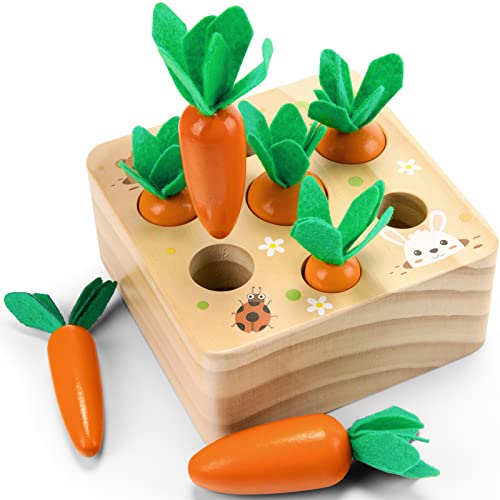
Wdmiya Montessori Wooden Carrot Harvest Sorting Toy
A Montessori-style harvest game made from New Zealand pine and finished with water-based paint, so it feels solid and natural in little hands. Babies pull and replace graduated carrots, matching each one to its hole to practice size-sorting, fine motor control, and simple problem-solving. It suits curious sitters from roughly 6 to 12 months and up.
- Brand
- Wdmiya
- Category
- Best Wooden Sorter
The wood feels lovely and the 'pulling carrots' game is weirdly mesmerizing for my son — he figures out which carrot goes where and is so proud of himself.

Adena Montessori Object Permanence Box with 3 Balls
A classic Montessori object-permanence box with a ramp and three balls a baby drops in the top and watches roll back out. It gives little ones a hands-on way to explore the idea that things still exist when they disappear, along with cause and effect. The full-size balls are easy to grip, making it a good fit for babies from around 6 months.
- Brand
- Adena Montessori
- Category
- Best Montessori Classic
Watching my daughter's face the first time the ball 'came back' was the cutest thing — now she drops it in, leans over to wait for it, and giggles every single time.
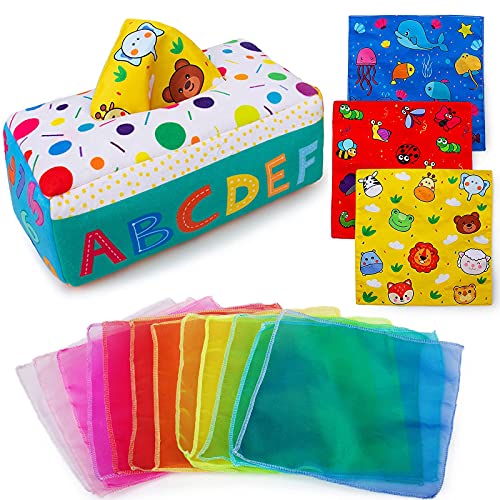
teytoy My First Baby Tissue Box Sensory Toy
A soft fabric "tissue box" filled with high-contrast crinkle scarves that babies can pull out again and again — a safe, mess-free answer to the real tissues they always want to grab. The bold patterns and crinkle sounds support sensory play while the pulling motion works fine motor skills. It is a gentle, screen-free way to keep busy hands happy.
- Brand
- teytoy
- Category
- Best Sensory
It saved an entire box of real tissues a week. My baby pulls the scarves out, I tuck them back in, repeat forever — and the crinkle sound never gets old to her.
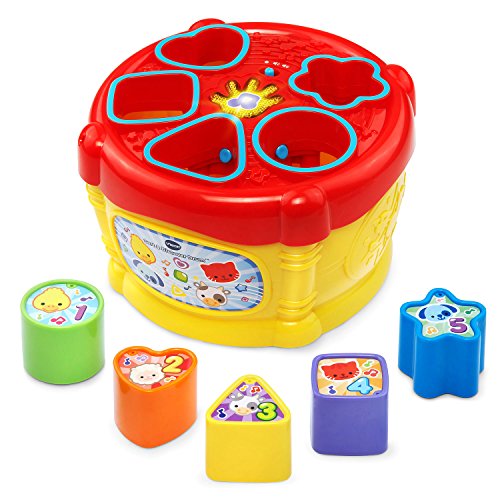
VTech Sort & Discover Drum
A shape sorter and light-up drum in one that recognizes each block as it drops in and responds with shapes, numbers, and animal names plus music and lights. Aimed at babies and toddlers from about 6 to 36 months, it rewards every correct drop with feedback that reinforces cause and effect. The mix of sorting and sound also builds fine motor skills and hand-eye coordination.
- Brand
- VTech
- Category
- Best Cause-and-Effect
The instant lights-and-sound payoff when a block drops in keeps my toddler coming back, and he's genuinely getting better at matching the shapes to the holes.
- 01BEST LEARNINGOur PickBEST LEARNING Stack & Learn Interactive Stacking Toy
- 02WdmiyaBest Wooden SorterWdmiya Montessori Wooden Carrot Harvest Sorting Toy
- 03Adena MontessoriBest Montessori ClassicAdena Montessori Object Permanence Box with 3 Balls
- 04teytoyBest Sensoryteytoy My First Baby Tissue Box Sensory Toy
- 05VTechBest Cause-and-EffectVTech Sort & Discover Drum
Do logic or Montessori toys actually make my baby smarter?+
What age should I start using logic toys?+
What is an object permanence box and why does it matter?+
Are wooden Montessori toys better than plastic electronic ones?+
How many logic toys does a baby really need?+
How do I keep logic toys safe and clean?+
Sammie Seelbach
Sammie is a mom of two and the lead reviewer at Smart Baby Reviews. Since becoming a parent she has become obsessed with researching the safest, smartest baby gear on the market — testing thermometers at 2 a.m., wrangling baby gates, and sterilizing more bottles than she can count. She shares what actually works so other parents can make confident, informed decisions for their little ones.