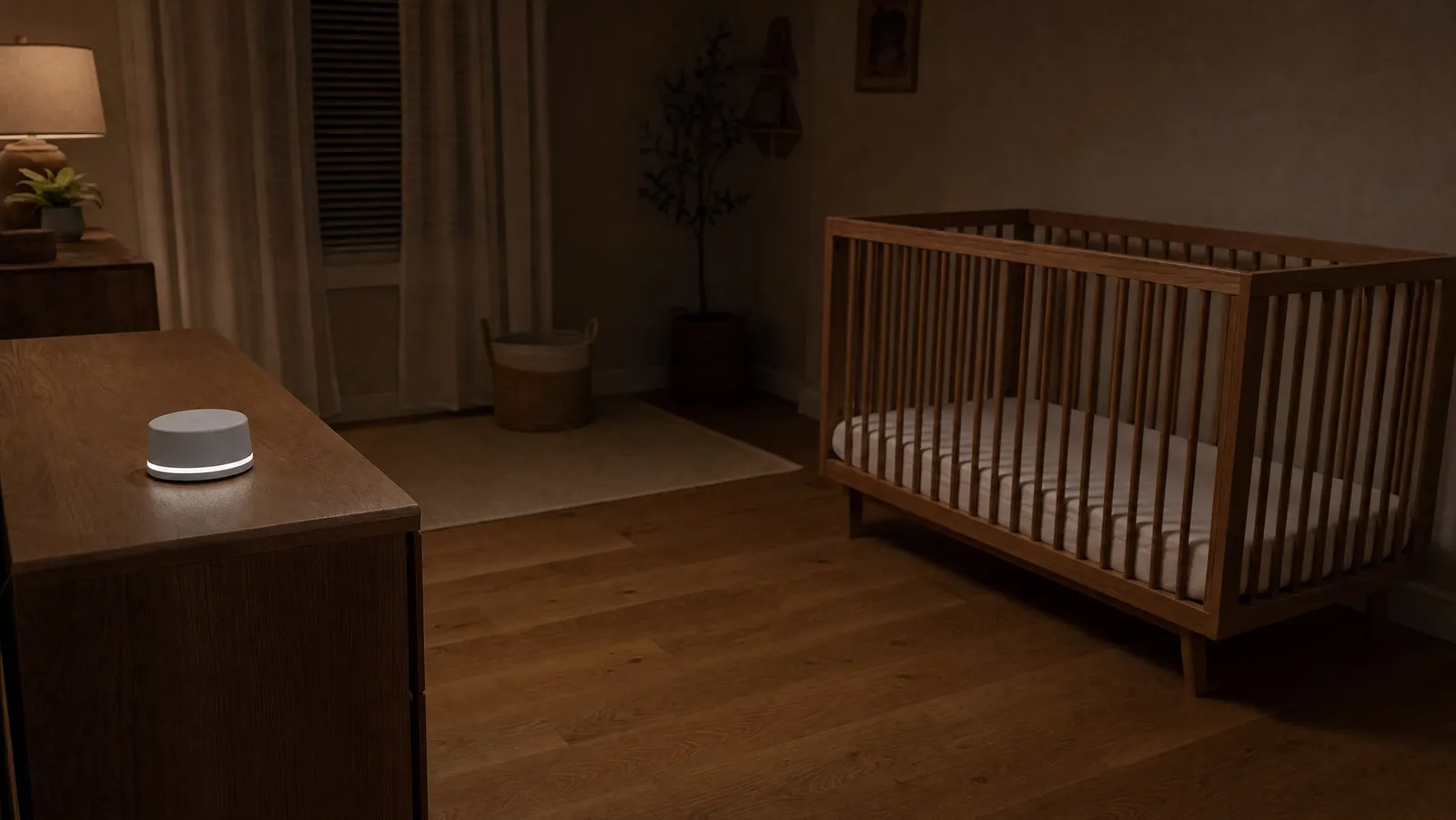
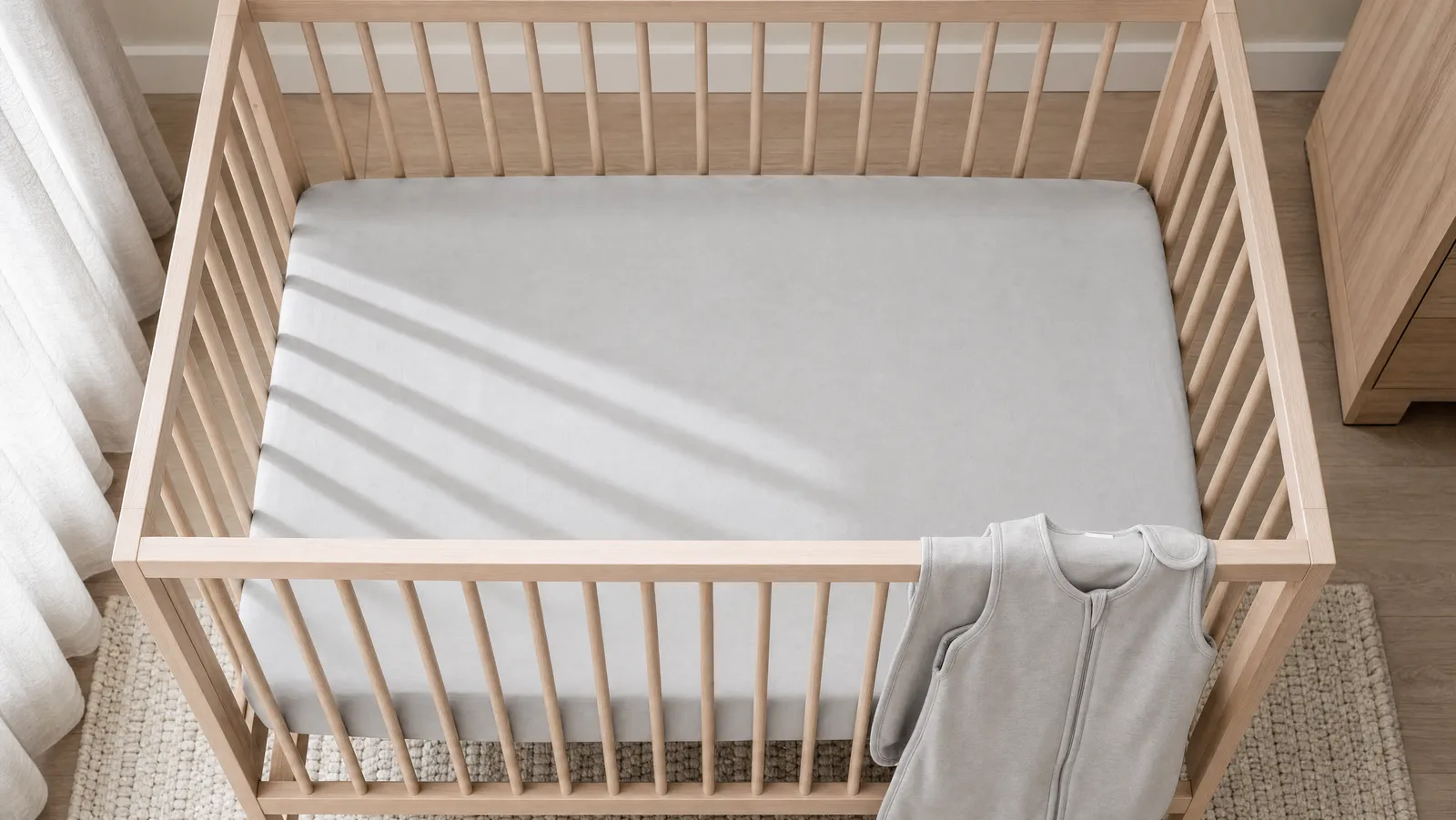
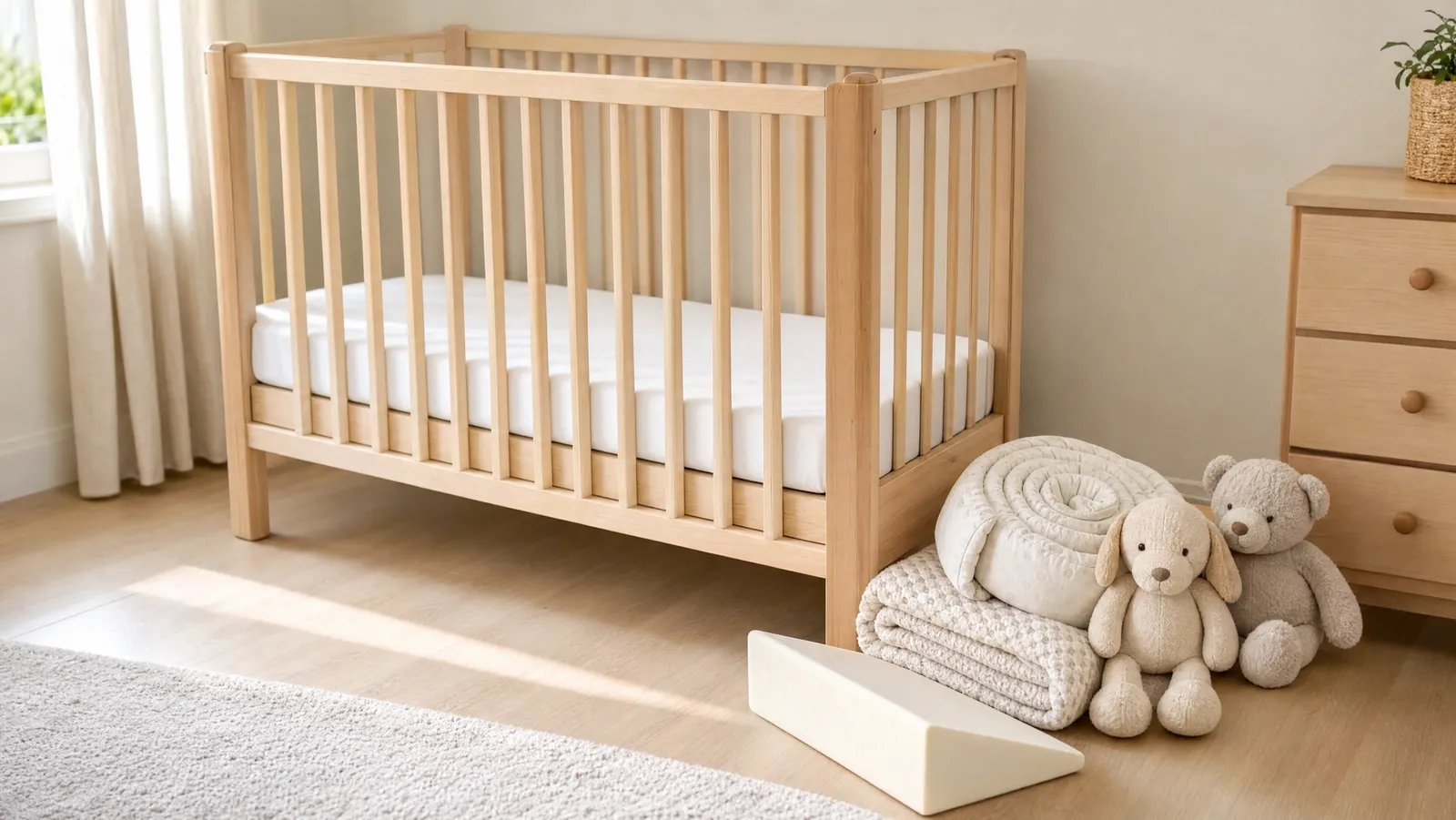
Bassinet vs Crib vs Play Yard: Where Should a Newborn Sleep?

This post may contain affiliate links. Read our policy.
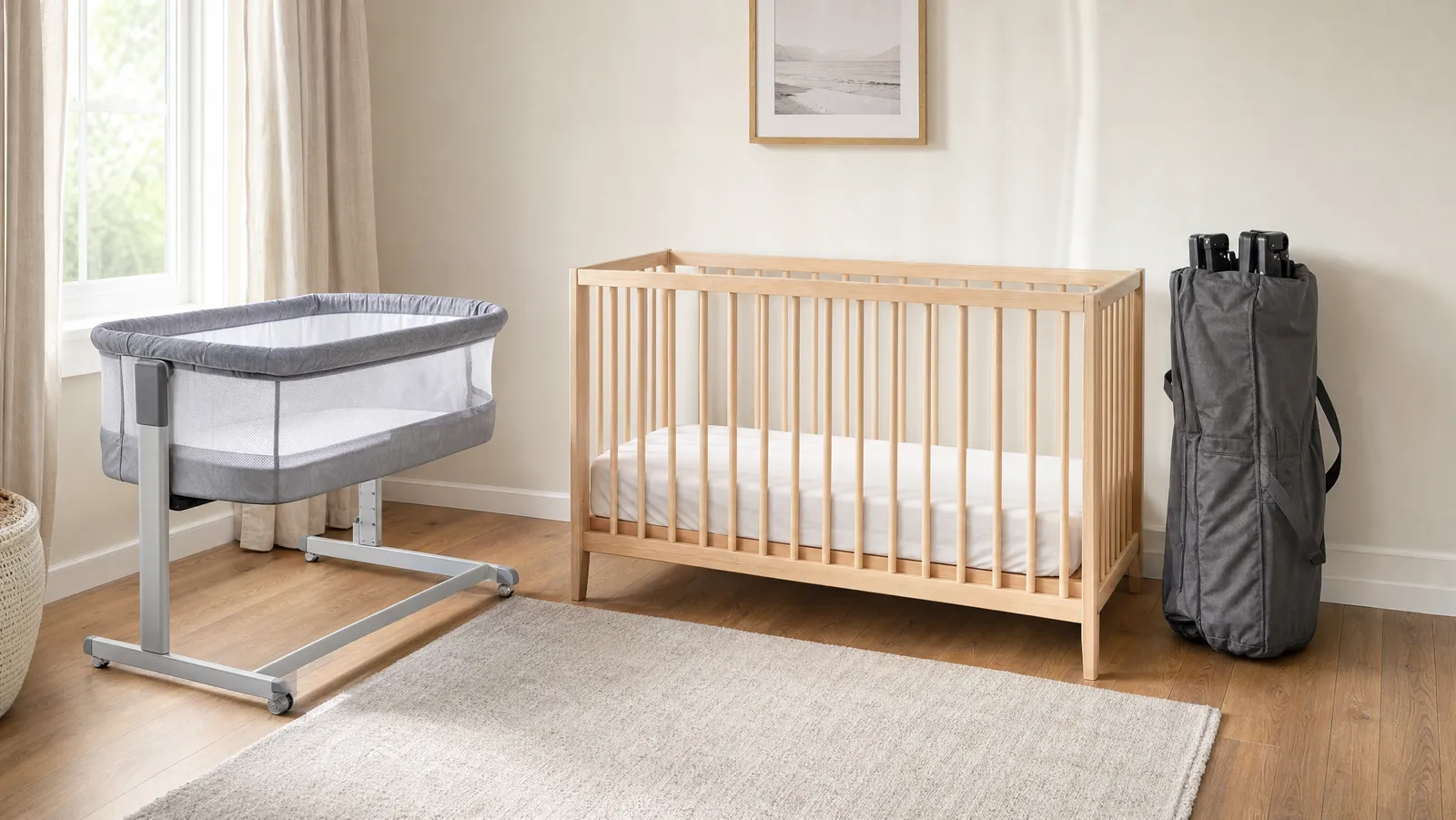
A newborn can sleep safely in a bassinet, in a full-size crib, or in a play yard. All three are acceptable to the American Academy of Pediatrics, provided the surface is firm, flat and not inclined and the product meets the federal safety standard for its category. So the real question behind bassinet vs crib is not which is safest. It is which one fits your bedroom, your budget and the next six months. Some of the links below are affiliate links, and we may earn a small commission, at no extra cost to you, if you buy through them.
We bought a bassinet three weeks before our daughter arrived, after a pregnancy spent trying to decide whether the bassinet was the safe choice or the crib was. Nobody told me the answer, which is that it did not matter. What mattered was that our bedroom is small and I did not want to cross ten feet of cold floor six times a night. That is a furniture problem, and I was treating it as a medical one.
This is a comparison, not a ranking, and it assumes the basics of a safe sleep space are settled — back sleeping, firm flat surface, fitted sheet, nothing else in there.
Bassinet vs Crib vs Play Yard: What the Guidance Actually Says
The AAP does not rank these three. The 2022 technical report behind its safe sleep policy says it in one sentence: "A crib, bassinet, portable crib, or play yard that conforms to the safety standards of the CPSC is recommended." The AAP's parent guide repeats it in plainer words.
The same report is unusually direct about the smaller options, and this is the line nobody quotes: smaller sleep surfaces such as portable cribs, play yards and bassinets that meet CPSC safety standards "can be used and may be more acceptable for some families because they are smaller, more portable, and typically more affordable." Affordability is named, in a pediatric technical report, as a legitimate reason to choose a sleep surface.
What has to be true of any of them is a physical description, not a product category. The AAP asks for "a firm, flat, noninclined sleep surface... covered by a fitted sheet with no other bedding or soft objects," where firm means the surface "maintains its shape and does not indent or conform to the shape of the infant's head." NICHD's Safe to Sleep campaign puts it in shopping terms: flat "like a table, not a hammock," and level, "not at an angle or incline."
Each category also has its own mandatory federal rule, which is what makes "meets CPSC standards" a checkable fact: full-size cribs at 16 CFR part 1219, bassinets and cradles at 16 CFR part 1218, play yards at 16 CFR part 1221. Since June 23, 2022, 16 CFR part 1236 has also required any product marketed for infant sleep up to five months and not already covered by those standards — nests, pods, travel bassinets, in-bed sleepers — to meet the bassinet standard anyway.
The Comparison Table
| Compare on | Bassinet | Full-size crib | Play yard |
|---|---|---|---|
| Federal standard | 16 CFR 1218 | 16 CFR 1219 | 16 CFR 1221 |
| Sleep surface | Firm mattress supplied | Crib mattress, bought separately | Firm mat supplied |
| What ends it | Stated weight or height limit, or pushing up on hands and knees — whichever first | Climbing out, or a toddler bed | Climbing out, or 35 inches tall |
| How long you use it | Roughly the first 4 to 6 months | Newborn to toddler | Years, usually as a second surface |
| Footprint | Fits beside an adult bed | 54.25 by 29.5 inches for the Delta below | Crib-ish open, duffel bag folded |
| Portability | Room to room | Stays where you build it | Folds into a carrying bag |
| Price, as of August 2026 | About $144 | About $120, plus a mattress | About $80 |
Where a Bassinet Wins: The Room-Sharing Argument
The strongest case for a bassinet has almost nothing to do with the bassinet. It is about which room the sleep surface stands in.
The AAP recommends that "infants sleep in the parents' room, close to the parents' bed, but on a separate surface designed for infants, ideally for at least the first 6 months," because that arrangement "decreases the risk of SIDS by as much as 50% and is safer than bed sharing or solitary sleeping."
So the question a bassinet answers is: can a crib physically stand next to your bed for six months? If yes, buy the crib and put it there. If no — and in a lot of American bedrooms the honest answer is no — a bassinet is buying you floor space, not safety.
The Baby Delight Beside Me Dreamer, about $143.99 as of August 2026, shows what the category is for: breathable mesh walls on all sides, a firm mattress, and a height knob with six adjustable positions to match most adult bed heights. That last one matters more than the marketing suggests, because a bassinet two inches below your mattress is one you lean over rather than reach into. On labels: Baby Delight lists it as Baby Safety Alliance Certified, a private certification program, not the mandatory federal bassinet standard every bassinet sold in the US has to meet anyway.
Where a Crib Wins: One Purchase, Several Years
A crib is the surface you were always going to end up buying, so buying it first and skipping the bassinet is a completely reasonable plan.
The AAP defines a safety-approved crib as one meeting CPSC standards "including those for slat spacing, snugly fitting and firm mattresses, and no drop sides," and recommends new over used, since used cribs may no longer meet current standards. The federal rule now incorporates ASTM F1169-25, effective August 1, 2026, per CPSC's direct final rule.
The Delta Children Heartland 4-in-1, about $120.00 as of August 2026, illustrates a mid-priced convertible. It measures 54.25 by 29.5 by 35 inches — the number to hold against your bedroom before anything else — and converts to a toddler bed, daybed and full-size bed using kits sold separately. Delta states it is JPMA certified to meet or exceed CPSC and ASTM safety standards; JPMA is an industry program, again distinct from the federal rule underneath it.
The feature I would not compromise on is the three mattress-height positions. The AAP's crib guidance is to periodically lower the mattress as your child gets taller, and a single fixed height takes that option away on the night you need it.
The catch is the part that is not in the box. A crib is sold without a mattress, and the mattress is the component that has to be right: firm enough not to indent, fitted so snugly there are no gaps against the crib walls. That is a separate decision with its own rules, and we walk through them in crib mattress firmness and fit.
Where a Play Yard Wins: It Folds
A play yard is a legitimate everyday sleep surface, not a compromise. ASTM F406, the standard behind the federal rule, defines one as a framed enclosure with a floor and mesh or fabric sided panels, intended for play or sleep, for a child who cannot climb out and is less than 35 inches in height. CPSC updated the rule to ASTM F406-24, effective April 5, 2025, in a direct final rule.
The Graco Pack n Play On The Go, about $79.99 as of August 2026, is the version most families end up with: a playard with a full-size infant bassinet that folds down with the frame, folding feet and wheels for a fold Graco describes as 20% more compact than its other playards, and a carrying bag. Fitted sheets are sold separately; buy two.
Now the warning that matters more than any feature: do not upgrade the mat. CPSC's play yard guidance is that only the mattress supplied with the play yard should be used, and that consumers should not add supplemental mattresses, because a supplemental mattress may create a gap and an entrapment hazard. The agency was blunter in a March 2025 warning about aftermarket play yard mattresses: use only the mattress provided with your play yard or one that specifically identifies its brand and model number, do not use supplemental padding, and never stack mattresses — because, in CPSC's words, babies have suffocated in gaps between an undersized mattress, or extra padding, and the side walls of a product. The supplied mat feels thin to an adult hand. That is the specification, not a cost saving.
Pick This If…
- Pick a bassinet if a crib will not fit beside your bed, or your bedroom and the nursery are on different floors. You are buying six months of room sharing and a shorter walk at 3 a.m.
- Pick a crib first if it fits in your bedroom, or you would rather make one purchase. Add a firm, snugly fitting mattress and you are done until the toddler bed.
- Pick a play yard if you want one surface for naps downstairs, the guest room and the drive to your in-laws. It is the cheapest legal way to have a second safe sleep surface.
- Pick a bassinet and a play yard, no crib, if budget is the constraint. The AAP's own report names affordability as a legitimate reason.
- Do not pick anything sold as a lounger, nest, pod, positioner or inclined napper. If it is not built to the crib, bassinet, play yard or bedside sleeper standard, it is not in this comparison.
Do You Actually Need a Bassinet?
Here is the un-affiliate-friendly truth, and it is why the money row is worth staring at. A bassinet is a three-to-six-month purchase, and the most expensive of the three here: about $143.99 against about $120.00 for a convertible crib that will still be in use when your child is three. Add a mattress and the two come close, but the crib does not expire.
Plenty of families skip the bassinet entirely and start in the crib, and nothing in the AAP's guidance argues against that. Buy one because your room demands it, not because a registry checklist said newborns sleep in bassinets.
When to Move Your Baby From a Bassinet to a Crib
Two limits, and you obey whichever arrives first.
The developmental limit is written into the standard. ASTM F2194, the voluntary standard behind the federal bassinet rule, scopes bassinets to products intended for "sleeping accommodations for an infant up to approximately 5 months in age or when the child begins to push up on hands and knees, whichever comes first." Its own rationale says that developmental wording was added to accommodate varying motor skills in children — the milestone outranks the birthday.
The manufacturer's limit is written in the manual. Weight and height limits vary by model, so read yours rather than a number you found online.
Rolling is also the trigger for stopping the swaddle, which we cover in when to stop swaddling. For the wider version of what changes then, look for our piece on safe sleep after your baby rolls over. The move itself is undramatic: same firm flat surface, same fitted sheet, bigger dimensions.
Are Bedside Sleepers and Co-Sleepers Safe?
This is where articles get careless, because two very different products share a nickname.
A bedside sleeper has its own floor, stands on the ground beside your bed and straps to it. It is a regulated category with a federal standard of its own — 16 CFR part 1222, incorporating ASTM F2906-23 — covering maximum separation from the bed, product disengagement, barrier height and attachment to the adult bed. The Baby Delight above is sold as one: you unzip the panel and anchor it to the bed.
An in-bed sleeper sits on top of your mattress, inside your bed. Since June 2022 these have been swept into 16 CFR part 1236 and must meet the bassinet standard, and the AAP is blunt that in-bed sleepers which do not meet the federal safety standard "are likely not safe for infant sleep and should not be used."
The AAP's position on the first category is more careful than most blogs report. Its technical report says: "Bedside sleepers are attached to the side of the parental bed. The CPSC has published safety standards for bedside sleepers, and they may be considered by some parents as an option." It also says there is "inadequate published evidence to recommend for or against the use of alternative sleep surfaces."
What it does report is a hazard review: across CPSC hazard reports on bedside and in-bed sleepers there were 6 deaths and 20 injuries, and of the 20 injuries, 70% occurred with bedside sleepers. The most common hazards were entrapment and suffocation, "with mechanism of injury involving the infant becoming trapped in gaps and spaces created by the bedside sleeper or with improper use or assembly of the unit."
That mechanism is actionable. Follow the instructions exactly, use the anchoring straps every night, set the height so the sleeper's surface meets your mattress with no step and no gap, and check the attachment before you get in. Bed sharing is a separate question — the AAP does not recommend it — and a bedside sleeper gets you the closeness without the shared surface.
Whatever You Choose, Nothing Loose Goes In It
The surface argument is genuinely a toss-up. What goes in it is not. The AAP's wording covers all three categories at once: a firm, flat, noninclined surface "covered by a fitted sheet with no other bedding or soft objects." Our full list is in the piece on what does not belong in the crib, but the short version is that if it is not the mattress, the fitted sheet or the baby, it stays out.
Warmth is what people are usually trying to solve when they add something, and the fix is to dress the baby rather than the bed. A wearable blanket does that in any of the three: our roundup of the best baby sleep sacks goes weight by weight, and sleep sack TOG ratings and nursery temperature has the table.
So, Where Should a Newborn Sleep?
In your room, on a firm flat surface made for infant sleep, with a fitted sheet and nothing else. The category printed on the box is the least important variable in that sentence.
If your bedroom fits a crib, buy the crib and put it beside your bed. If it does not, buy the bassinet. If you travel between two houses, the play yard does a job the others cannot. All three are correct answers, and the differences are logistics and money — a much better problem than the one I thought I had at 34 weeks.
Once you have picked the surface, the rest of the room matters more than the choice you just made. Our guide to setting up the whole sleep space covers where to place it, what the 2026 standard updates changed, and the free decisions that outrank anything you can buy.
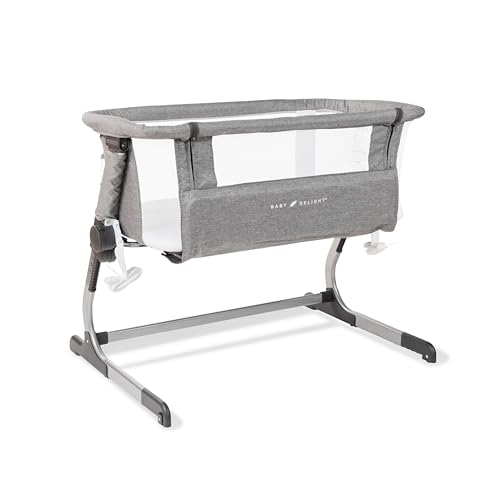
Baby Delight Beside Me Dreamer Bassinet and Bedside Sleeper
A bassinet that also works as a bedside sleeper: anchors at the bottom secure it to the adult bed, and the panel nearest the bed unzips so you can reach the baby without getting up. Breathable mesh walls on all sides, a firm mattress, and a height knob with 6 adjustable positions to match most adult bed heights. Baby Safety Alliance Certified, tool-free assembly.
- Brand
- Baby Delight
- Category
- Bassinet Example
The unzipping side panel is the feature that sells this category — you are reaching, not standing up, at 3 a.m., and the baby is still on their own separate firm surface.

Delta Children Heartland 4-in-1 Convertible Crib (GREENGUARD Gold Certified)
A full-size convertible crib that takes a standard crib mattress (sold separately) and converts to a toddler bed, daybed and full-size bed with headboard using kits sold separately. Three mattress-height positions let you drop the deck as the baby learns to sit and stand. Delta states the crib is JPMA certified to meet or exceed CPSC and ASTM safety standards and is tested for lead and other toxic elements. Dimensions 54.25 x 29.5 x 35 inches.
- Brand
- Delta Children
- Category
- Crib Example
The three-position mattress deck is not a luxury feature — the night your baby first pulls to standing, you will want to drop it, and you will want to have bought a crib that lets you.
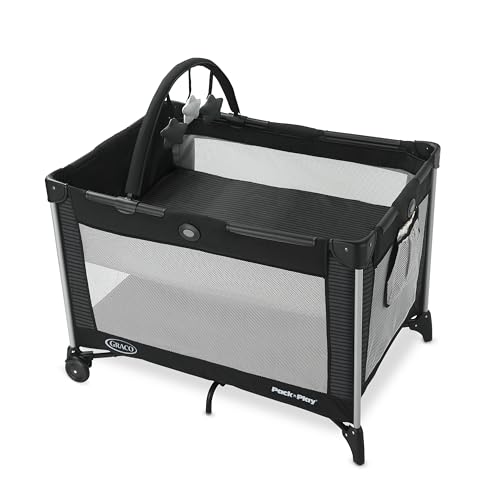
Graco Pack n Play On The Go Playard with Full-Size Infant Bassinet
The travel-and-grandparents option: a playard with a full-size infant bassinet that folds down with the frame, folding feet and wheels for a fold Graco describes as 20% more compact than its other playards, a push-button fold, and a carrying bag. A toy bar is included; fitted sheets are sold separately.
- Brand
- Graco
- Category
- Play Yard Example
One of these lives in our trunk. It is not the everyday sleep surface, but it means the sleep rules do not change just because you drove three hours to visit family.
- 01Baby DelightBassinet ExampleBaby Delight Beside Me Dreamer Bassinet and Bedside Sleeper
- 02Delta ChildrenCrib ExampleDelta Children Heartland 4-in-1 Convertible Crib (GREENGUARD Gold Certified)
- 03GracoPlay Yard ExampleGraco Pack n Play On The Go Playard with Full-Size Infant Bassinet
When should I move my baby from a bassinet to a crib?+
Can a newborn sleep in a pack n play or play yard every night?+
Do I need a bassinet at all, or can I start in the crib?+
Is a bedside co-sleeper that attaches to my bed safe?+
Can I add a softer mattress or a mattress pad to a play yard?+
Sammie Seelbach
Sammie is a mom of two and the lead reviewer at Smart Baby Reviews. Since becoming a parent she has become obsessed with researching the safest, smartest baby gear on the market — testing thermometers at 2 a.m., wrangling baby gates, and sterilizing more bottles than she can count. She shares what actually works so other parents can make confident, informed decisions for their little ones.