The Baby Thermometer I Can't Live Without

This post may contain affiliate links. Read our policy.
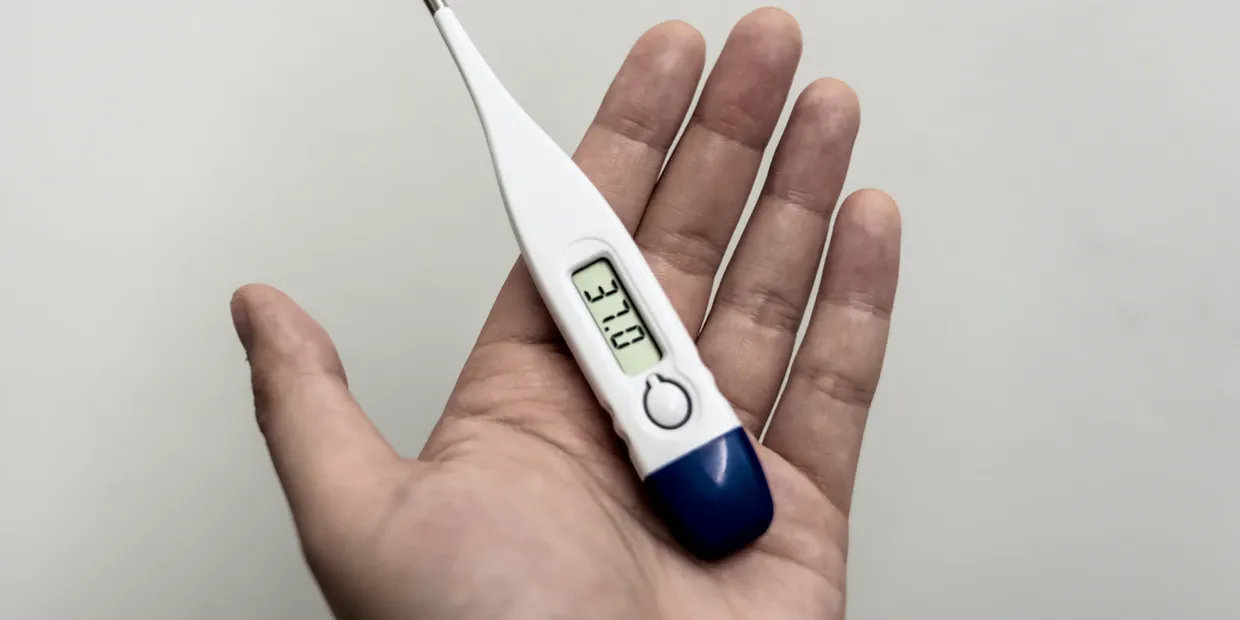
The first time my daughter spiked a fever, it was 2 a.m. and I was standing in the hallway holding three different thermometers, none of which I trusted, while she wailed and my husband Googled "is 99.8 a fever for a baby." Spoiler: we had no idea what we were doing, and the cheap thermometer in the medicine cabinet gave us a different number every single time. By the time the sun came up, I had a new mission — find the baby thermometers I could actually rely on, and figure out which kind to reach for and when.
A few years and two kids later, I keep a small lineup of thermometers in the house, each for a different situation. Here's how I think about choosing one, plus the specific models I reach for at every age and stage.
First, the rule that matters most
If your baby is under three months old, this is the part to tattoo on your brain: the American Academy of Pediatrics recommends a rectal temperature for the most accurate reading, and a rectal temperature of 100.4°F (38°C) or higher is a fever. In a baby that young, that's treated as a medical emergency — you call your pediatrician right away, even if your little one seems otherwise content. Fever can be the only early sign of a serious infection at that age, so a forehead or armpit reading is not enough to rule one out.
That single fact shapes everything else. A fancy no-touch scanner is wonderful for peace of mind, but it does not replace a good rectal thermometer in those first months. So that's where I'll start.
Rectal: the one to own first
I know — nobody is excited about a rectal thermometer. I dreaded it too. But the Frida Baby Quick-Read Rectal Thermometer is the one that finally made me comfortable. The tip is soft and flexible, and there's a built-in stopper so you physically can't insert it too far. It reads in roughly 10 seconds, it's water-resistant for easy cleanup, and it remembers your last 10 readings, which is genuinely useful when a pediatrician asks how the temperature has trended overnight. As a bonus, like most digital thermometers it's typically FSA/HSA eligible.
This is my "source of truth" thermometer. When a quick forehead scan looks high and I need to actually know, this is what I grab. If you buy only one thermometer in your baby's first year, make it a rectal one.
How to take a rectal temperature without panicking
Wash your hands, lay your baby on their back or tummy, put a little petroleum jelly on the tip, and gently insert it only about half an inch to an inch — never force it. Hold still until it beeps. That's it. Use a thermometer dedicated to this purpose only, and label it so it never gets mixed up with an oral one.
What to look for in a baby thermometer
Once you've got accuracy covered, the differences between thermometers come down to a few practical decision factors. Here's what I actually weigh:
Method vs. your baby's age
- Under 3 months: rectal, full stop, for any fever decision.
- 3 to 6 months: rectal is still the gold standard; a forehead (temporal) thermometer is a reasonable everyday screening tool.
- 6 months and up: forehead and ear thermometers both become practical options. Ear thermometers aren't recommended earlier because a young baby's ear canal is too small, and earwax or positioning can skew the reading.
Speed and silence
A reading that takes one second instead of thirty is the difference between a calm check and a meltdown. And a silent thermometer you can use mid-nap is worth its weight in gold — waking a sleeping, sick baby just to learn their temperature is its own special heartbreak.
Comfort and ease of use
When your baby is miserable and you're exhausted, you do not want to fumble with tiny buttons or decode a cryptic display. A clear screen, a fever indicator, and one-button operation matter more than any spec sheet. Saving your routines simple is the whole game here — the same reason we lean on time-savers like a bottle sterilizer and dryer and stick with glass baby bottles we actually trust for everyday feeding.
Memory and tracking
A thermometer that stores past readings makes it so much easier to answer "how high has it gotten?" honestly. During a long fever night, that history is gold for both you and your pediatrician.
No-touch and forehead: for the in-between moments
Once you're past the newborn stage, no-touch forehead thermometers are the ones I reach for most, simply because they're fast and gentle. The femometer Touchless Forehead Thermometer reads in about a second without ever touching the skin, and a three-color backlight tells me at a glance whether we're in the normal, elevated, or fever zone. It's silent, so I can check my daughter mid-nap, and it doubles as a way to check bathwater or a bottle of milk.
When I want the calmest possible check, I use the iHealth PT3 No-Touch Thermometer. Instead of beeping when it's done, it gives a soft vibration, and the large LED display is easy to read in a pitch-dark nursery. It uses three sensors and takes the reading from a short distance, which my squirmiest kid tolerates far better than anything that has to touch his forehead. If startling a sleeping baby is your nightmare, this is the no-touch pick to look at.
A quick honesty note on these: forehead thermometers are considered the next-most-accurate method after rectal, and they're great for screening at any age — but for a baby under three months, I still confirm anything concerning with the Frida Baby rectal reader.
Ear thermometers: best once your baby is older
Ear thermometers earn their keep after six months, when the ear canal is big enough for a reliable reading. My favorite is the Berrcom Ear Thermometer with Age Precision. Its Age Precision modes (0–3 months, 3–36 months, and 36 months and up) adjust how the reading is interpreted as your child grows, a pre-warmed tip helps keep readings consistent, and it holds 32 readings in memory. The detail I love most as a tired parent: a silent night mode with a built-in night light, so I'm not blinding anyone at 3 a.m. It comes with 21 disposable probe covers, which keeps things hygienic between kids.
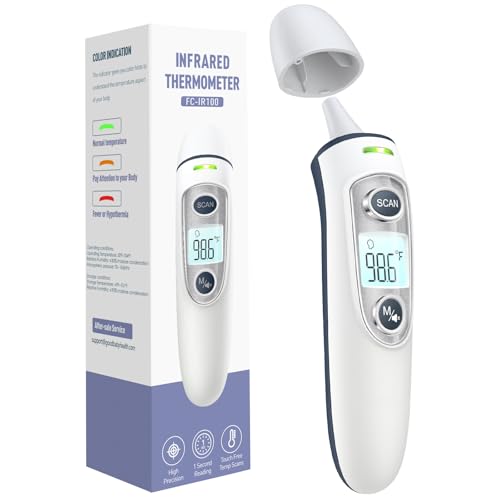
If you'd rather have one device that does double duty, the GoodBaby Ear & Forehead Thermometer reads from either the ear or the forehead in about a second, has a fever alarm, and stores up to 35 readings. It's a nice all-ages pick for a household with a baby and big kids — forehead for the little one, ear for everyone else.
Building your at-home kit
You don't need all five of these. Here's how I'd actually shop:
- One baby? A rectal thermometer for accuracy plus one no-touch forehead model for fast, gentle screening covers you beautifully.
- A house full of kids? Add a 2-in-1 ear-and-forehead unit so one device serves every age.
- Light sleeper / anxious checker (hi, that's me)? Prioritize a silent, no-touch option so a check never costs you a nap.
A reliable thermometer is one of those unglamorous purchases — like a good baby gate or the right toys — that quietly makes parenting less stressful. While you're babyproofing your routines, our guide to choosing and safely placing a baby gate is the natural next read, and on the calmer days, these developmental toys for your baby's senses and motor skills are what keep my two busy and happy.
The bottom line
If I could only keep one thermometer, it would be the rectal Frida Baby, because accuracy in the newborn months is non-negotiable. But the one I use the most day to day is a silent, no-touch forehead reader for those quick "is she warm or am I imagining it?" moments. Match the method to your baby's age, lean toward fast and quiet, and you'll spend a lot less time standing in a dark hallway second-guessing a number.
Take a look at our picks above, grab the one that fits your stage, and tuck it somewhere you can find it half-asleep. Future-you, at 2 a.m., will be so grateful.

Frida Baby Quick-Read Digital Rectal Thermometer
A quick-read digital rectal thermometer built for nervous first-timers. The soft, flexible tip has a parent-proof stopper so you can't insert it too far, it's water-resistant for easy cleaning, and it delivers a reading in about 10 seconds. Rectal readings are the method the AAP recommends as most accurate in the first year, and this one even remembers your last 10 readings. It's also typically FSA/HSA eligible.
- Brand
- Frida Baby
- Category
- Our Pick
Honestly the stopper is what sold me — I was terrified of rectal thermometers, and this one made it genuinely foolproof and fast.

femometer Touchless Forehead Thermometer
A no-contact infrared forehead thermometer that gives a reading in about a second without touching your baby's skin. A three-color backlight flags whether the temperature is in the normal, elevated, or fever range at a glance, and it switches between Fahrenheit and Celsius. It's silent, so it won't wake a sleeping baby, and it can also read object, room, and milk temperatures.
- Brand
- femometer
- Category
- Also Great
The silent mode is a lifesaver — I can check my daughter mid-nap without her ever stirring, and the color-coded fever light tells me what I need to know instantly.
GoodBaby Ear & Forehead Thermometer
A versatile 2-in-1 infrared thermometer that reads from either the ear or the forehead, giving you a result in about a second. It has a fever alarm to flag elevated readings and stores up to 35 past readings so you can track a temperature over a long night. Designed to work for the whole family, it grows with your child from infant forehead checks to ear readings later on.
- Brand
- GoodBaby
- Category
- Also Great
Love that one device covers everyone in the house — forehead for the baby, ear for the big kids and us, and the reading history made it easy to update the pediatrician.
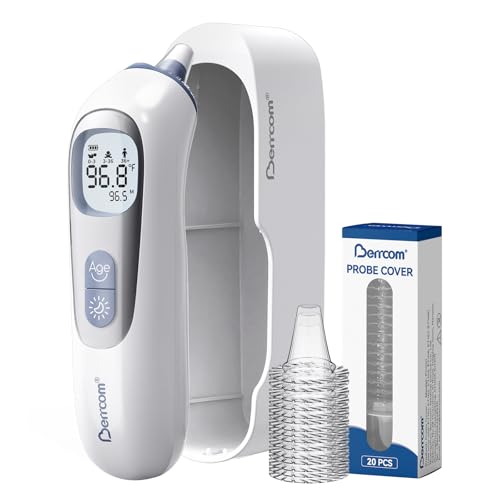
Berrcom Digital Ear Thermometer with Age Precision
A digital ear thermometer with Age Precision modes (0–3 months, 3–36 months, and 36 months and up) that adjust how a reading is interpreted as your child grows. A pre-warmed tip helps keep readings consistent, a silent night mode with a built-in night light makes 2 a.m. checks easier, and it holds 32 readings in memory. It ships with 21 disposable probe covers.
- Brand
- Berrcom
- Category
- Best Ear Thermometer
The night light and silent mode mean I'm not blinding myself or my toddler at 3 a.m., and the age modes take the guesswork out of reading the number.

iHealth PT3 No-Touch Forehead Thermometer
A no-touch forehead infrared thermometer that takes a reading in about a second from a short distance, using three ultra-sensitive sensors. Instead of beeping, it gives a gentle vibration when the reading is ready, and the large LED display is easy to read in a dark nursery. A genuinely calm tool for checking a sleeping or squirmy baby.
- Brand
- iHealth
- Category
- Best No-Touch
The vibrate-instead-of-beep feature is so smart — no startling my son awake, and the glowing display means I never have to flip on the light.
- 01Frida BabyOur PickFrida Baby Quick-Read Digital Rectal Thermometer
- 02femometerAlso Greatfemometer Touchless Forehead Thermometer
- 03GoodBabyAlso GreatGoodBaby Ear & Forehead Thermometer
- 04BerrcomBest Ear ThermometerBerrcom Digital Ear Thermometer with Age Precision
- 05iHealthBest No-TouchiHealth PT3 No-Touch Forehead Thermometer
What kind of thermometer is most accurate for a newborn?+
What temperature counts as a fever in a baby?+
Can I use a forehead or ear thermometer instead of rectal?+
Why shouldn't I use an ear thermometer on a young infant?+
Are no-touch and 'silent' thermometers worth it?+
Are baby thermometers FSA or HSA eligible?+
Sammie Seelbach
Sammie is a mom of two and the lead reviewer at Smart Baby Reviews. Since becoming a parent she has become obsessed with researching the safest, smartest baby gear on the market — testing thermometers at 2 a.m., wrangling baby gates, and sterilizing more bottles than she can count. She shares what actually works so other parents can make confident, informed decisions for their little ones.