The Best Baby Sleep Sacks and Wearable Blankets
This post may contain affiliate links. Read our policy.
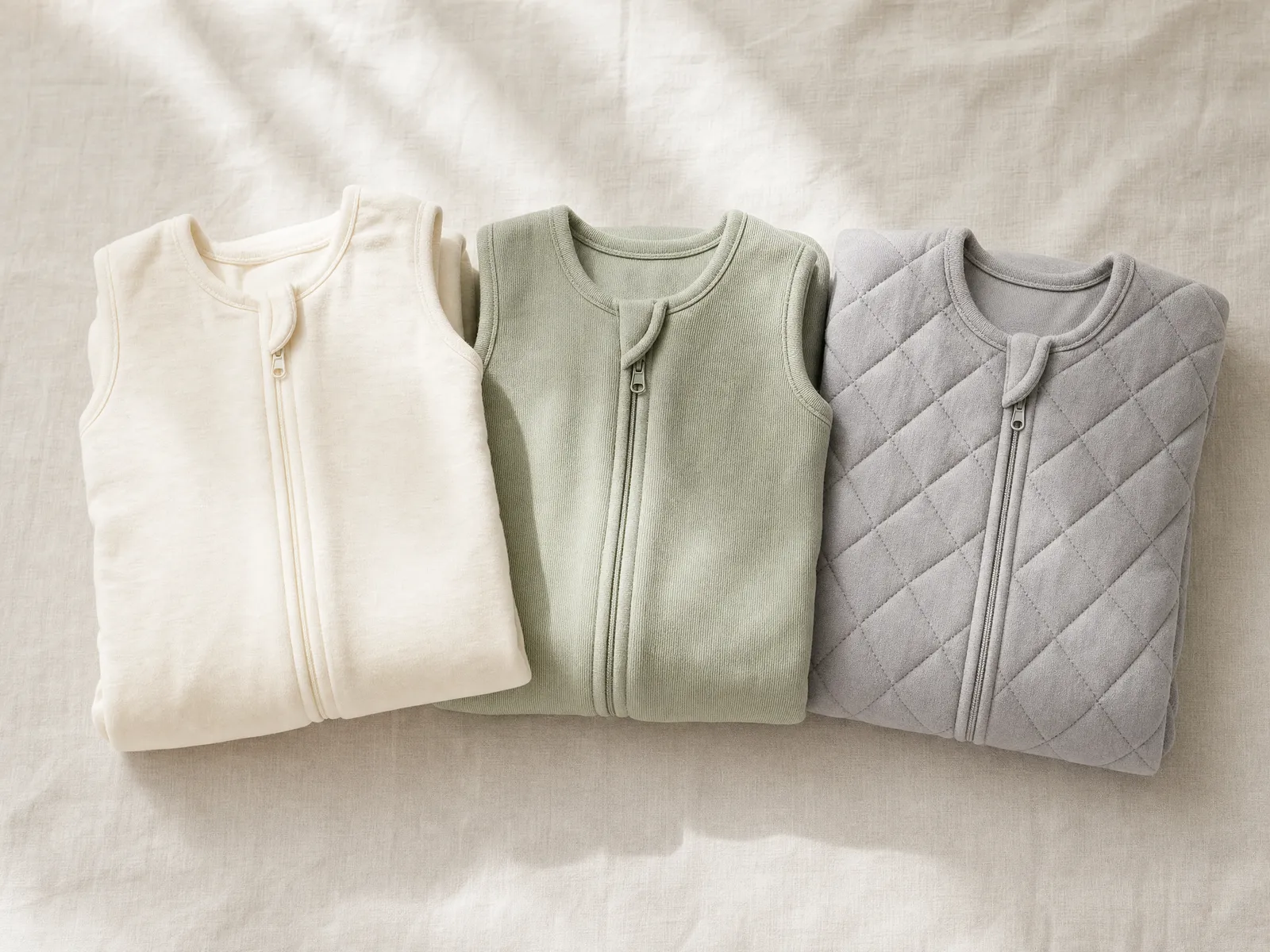
The best baby sleep sack is the lightest one that keeps your baby warm in the room they actually sleep in — usually a 0.5 or 1.0 TOG cotton or bamboo bag in the correct size, not the one with the nicest print. It is not a comfort upgrade. It is the garment that replaces the loose blanket that is not supposed to be in the crib. Some of the links below are affiliate links, and we may earn a small commission, at no extra cost to you, if you buy through them.
I learned that the way most people do. We were given a beautiful knitted blanket at a shower, I put it in the crib the first week home, and then I spent that entire night getting up to check whether it had ridden up over her face. It had, twice. The blanket went in a memory box the next morning, and a nine-dollar cotton bag with a zipper did its job every night for the following year.
That swap is the whole point of this category, and it is why sleep sacks belong in any safe sleep space rather than in the nice-to-have pile. So here is the honest version: what the guidance actually says, how to pick a weight, the six I would buy, and the two things in this aisle I would tell you to skip.
Why a Wearable Blanket Instead of a Blanket
A wearable blanket for babies solves one specific problem: your baby needs to be warm, and the sleep area needs to be empty.
Those two things are in tension, and the guidance resolves it the same way every time. The NICHD's Safe to Sleep campaign puts it in a single sentence: "Dress baby in a wearable blanket or an extra layer of clothing to keep them warm without adding items to the sleep area." The AAP's parent guide to safe sleep says the same thing from the other direction: "If you're worried about your baby getting cold, you can dress them in layers of clothing or use a wearable blanket."
The reason the loose blanket is the problem is mechanical. Safe to Sleep's sleep environment guidance groups blankets, quilts, sheepskins and other soft coverings together as items that raise risk in a baby's sleep area. A correctly sized sack cannot ride up over a face the way a loose blanket can, because it is worn, fastened, and the arms come out of it.
So do not think of this as an optional accessory. Think of it as the substitute for the item you have been told to take out.
Sleep Sack vs Swaddle: Two Different Jobs
A swaddle wraps the arms in. A sleep sack leaves them out. That is not a style preference, it is a timeline.
The AAP's guidance on swaddling is to stop when your baby looks like they are trying to roll over, which its parent guide puts at around 3 to 4 months for many babies. The logic is straightforward: a baby whose arms are wrapped and who rolls onto their stomach has no way to push back. A sleep sack does not carry that same cut-off, because the arms are free the entire time.
This is why the two garments are usually bought in sequence rather than as alternatives. Swaddle in the newborn weeks if it helps; move to a sack when the rolling signs start. The specifics of when to stop swaddling deserve their own piece, and we are writing one. For now, treat the sack as the thing that comes after, and the thing that keeps working once your baby is rolling, sitting and eventually standing up in the crib.
How to Pick a Weight: TOG and the Layers Underneath
TOG, usually expanded as thermal overall grade, is a unit of thermal resistance — a lab measurement of how much heat a fabric traps. The useful consequence is that the unit itself is defined the same way everywhere: a 1.0 TOG bag from one brand should trap roughly the same warmth as a 1.0 TOG bag from another, which is more than you can say for the words "lightweight" and "cozy" on a listing. One caveat worth carrying: TOG testing is not a US regulatory requirement, so the number on an American listing is usually the maker's own figure rather than an independently verified one.
The number that matters most in practice is not the one on the label, though. It is the total.
A sleep sack is worn over sleepwear, not instead of it, and Hudson Baby says so in its own listing. So the calculation is always sack plus pajamas plus room temperature, and the AAP's rule of thumb for the whole outfit is that "your baby only needs one more layer than you would wear in the same environment to be comfortable."
Getting that sum wrong in the warm direction is the part worth taking seriously. NICHD's risk factor guidance states that "babies who get overheated are at higher risk for SIDS," and names overbundling — "dressing baby in too many layers of clothing and bedding for the temperature of the room" — as something that can increase that risk. The AAP's signs to watch for are sweating, a hot chest, or flushed skin.
That is the entire case for buying by temperature rather than by season, and it is why the practical version of this decision — TOG ratings matched to actual nursery temperatures, with a thermometer in the room — is worth reading before you order. The short version: 0.5 TOG for warm rooms, 1.0 TOG for most of the year in most houses, 2.5 TOG only if your nursery is genuinely cold.
The Best Baby Sleep Sacks and Wearable Blankets
Six picks, arranged around the two decisions that actually matter: what weight, and what size. If you have not settled the first one yet, our guide to TOG ratings is the faster way to get there than reading six listings.
Our pick: Yoofoss Sleep Sack 3-Pack
Buying three at once is the correct move, and it is the reason the Yoofoss three-pack is our top pick rather than a single nicer bag. One is on the baby, one is in the wash, one is in the drawer. Any other number produces a 2 a.m. laundry emergency at some point in the first year.
The fabric is GOTS-certified 100% organic cotton at 0.5 TOG, which puts it at the lightweight end of the scale for warmer rooms. Two details are better than they need to be at this price: the zipper is two-way and opens from the bottom, so a night change does not mean undressing your baby from the shoulders down, and there is both an interior zipper guard and a top zipper cover between the hardware and the skin. According to Yoofoss, the roomy leg area lets the hips sit in a frog-legged position. Sizes run S (0-6 months) through XL (18-24 months). About $25.19 for all three as of August 2026.
Best value: Burt's Bees Baby Beekeeper
The Beekeeper is the one I hand people at showers, at roughly $11.99 as of August 2026. It is 100% organic cotton at 0.5 TOG with the same bottom-opening zipper, an interior zipper guard and a pull cover, and it is rated for cold machine wash and tumble drying low, which is what you want from something in weekly rotation.
What makes it the value pick is the size range. It spans 0-6 months, starting from 10 lbs, all the way to 18-24 months and up to 36 lbs, so the same product follows you through the entire period you will use one. If you want to buy three of something and stop thinking about it, buy three of these.
Best for newborns: Hudson Baby Long-Sleeve Wearable Blanket
Newborn sizing is where this category most often fails. Most sacks start at a size that swallows a seven-pound baby, and a bag that is too big is not the bag you want. The Hudson Baby long-sleeve sack is cut for 0-3 months in 100% cotton, with sleeves — which matters for small babies who lose heat quickly but should not be under a loose covering. Around $12.99 as of August 2026.
Hudson Baby is explicit that the sack goes over sleepwear rather than instead of it. Take that literally when you are doing the layer math above, because long sleeves plus a footed sleeper plus a warm room is easy to overshoot.
Best mid-weight: PurComfy 1.0 TOG Sack
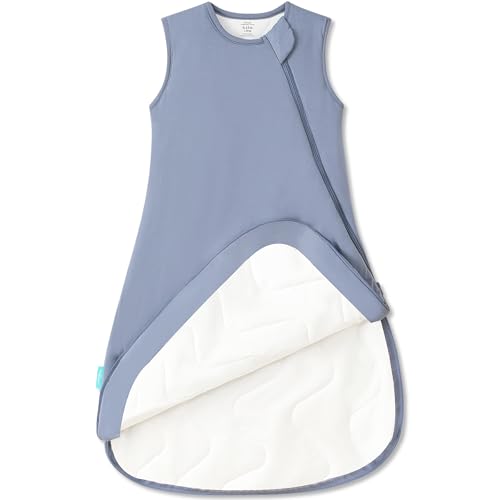
If you only ever own one weight, this is probably the one. The PurComfy 1.0 TOG bag is 96% viscose and 4% spandex with a 100% polyester wadding certified to Oeko-Tex Standard 100 Class 1, the tier for baby products. It is sized 6-15 months and runs about $30.59 as of August 2026, making it the second-priciest pick here.
PurComfy is unusually straightforward about the construction difference: the 1.0 and 2.5 TOG versions carry wadding and the 0.5 does not. That is the honest explanation of why a heavier bag costs more, and I wish more brands stated it. The two-way J-shaped zipper opens like a book rather than a straight line, which is meaningfully faster at 3 a.m.
Best for cold rooms: BubblePanda 2.5 TOG Sack
At the warm end, the BubblePanda bag is 97% rayon made from bamboo with 3% spandex, sized 6-12 months, at about $35.00 as of August 2026. That is the most expensive pick on this page, and it is also the one the largest number of readers do not need — see the section below on skipping things.
If your nursery genuinely runs cold, two design choices are worth knowing about. BubblePanda says the neckline is deeper and narrower specifically to keep loose fabric away from the face, and there is a zipper protector at the chin. The two-way side zipper handles changes, and the maker says the extra leg room allows the frog-legged position.
Most versatile: amo nenes Convertible Sack
The clever one. The amo nenes sack is a combed-cotton 2.5 TOG bag whose long sleeves detach, so one garment covers a cold room with sleeves on and a milder one with them off. Size S covers 0-6 months and size L covers 6-18 months, and it is about $17.99 as of August 2026. There is a double zipper with a protector for changes.
This is the pick for a house whose nursery swings — an upstairs room that bakes in August and chills in January, or a rental where you do not control the thermostat. One sack instead of two is a real saving, and it is a genuinely better answer than buying a 2.5 TOG bag you use six weeks a year.
A Word on Weighted Sleep Sacks
You will see weighted sleep sacks and weighted swaddles marketed on the same shelf as everything above. The AAP's position on them is not ambiguous.
Its parent guide to safe sleep says: "Don't use weighted blankets, sleepers, swaddles or other weighted objects on or near your baby." It makes the same point again in the swaddling section, adding weighted objects such as rice bags placed inside a swaddle.
None of the six picks in this guide is weighted, and we would not add one. If a product's selling point is that its weight helps a baby settle, that is the specific claim the AAP is advising against, however soothing the marketing photography looks.
Fit, Hips and Zippers: The Details That Separate Them
Once you have the weight right, three things decide whether a sack is good or merely fine.
- Leg room, not just length. Several makers here — Yoofoss and BubblePanda among them — describe roomy leg areas that let the hips sit frog-legged. That language traces back to the International Hip Dysplasia Institute, whose hip-healthy guidance says commercial swaddling products "should have a loose pouch or sack for the baby's legs and feet, allowing plenty of hip movement," with the hips in slight flexion and abduction. A sack that tapers to a narrow bottom is working against that. Note that the makers' hip claims are the makers' own unless a product carries the institute's acknowledgment.
- Which way the zipper opens. A bottom-opening or two-way zipper means a night diaper change happens from the waist down, in the dark, without waking a baby who was mostly still asleep. Five of the six picks here specify one — Hudson Baby's listing does not describe its closure — and PurComfy's J-shape is the fastest of the group. A guard between the zipper and your baby's skin is listed on the Yoofoss, Burt's Bees, BubblePanda and amo nenes bags; check for one if you shop outside this list.
- Size by weight, not by hope. Where a maker publishes a weight range as well as a month range, the weight is the one to trust. Burt's Bees Baby starts its smallest size at 10 lbs and its largest ends at 36 lbs. Buying a size up "to last longer" produces a bag your baby can slip down inside, which is the failure mode the fit specs exist to prevent.
Organic Cotton, GOTS and Oeko-Tex: What the Labels Buy You
Two certifications appear on this page, and they are not the same claim.
GOTS is the Global Organic Textile Standard, which describes itself as covering "every step of production, from fibre processing and spinning to wet processing, manufacturing and trading," including chemical inputs, wastewater and human rights criteria. It is a supply-chain claim. Our top pick, the Yoofoss organic cotton sleep sack, is GOTS-certified; Burt's Bees Baby states 100% organic cotton without naming that standard.
Oeko-Tex Standard 100 is a different test: it checks the finished textile for harmful substances, against a list the organization describes as over 1,000 of them. Its product classes are graded by skin contact, and Class 1 is defined as "products for babies and children up to 3 years" with "the strictest requirements and limit values." That is the tier PurComfy's wadding is certified to.
Neither label is a safety feature in the safe-sleep sense — the TOG and the fit are what matter for that. They are chemical and supply-chain assurances, worth something to some families and worth nothing to others. Decide accordingly, and do not pay a large premium for a heavier certification on a bag that is the wrong weight.
What I Would Skip
Two things, said plainly.
A second weight you do not need. If your house holds a steady temperature — many modern homes do — a 1.0 TOG bag will carry you through the entire year, and the 2.5 TOG will sit in the drawer through its whole size range. Put a cheap thermometer in the nursery, watch it for a week, and buy the second weight only if the number tells you to. A thermometer is a better purchase than a spare sack, and it is the one piece of hardware a safe sleep space genuinely benefits from that nobody puts on a registry.
Anything the AAP has advised against, whatever else it does. Weighted products are the clearest example, but the general test is worth carrying: if a feature exists to make a baby sleep more deeply, ask what it is doing to achieve that.
And a note on timing rather than product. A sleep sack outlasts the crib-only phase, and by the time your baby is standing in the crib and cruising the furniture, the risks in the room have moved from bedding to everything else. That is the point to look at when to start baby-proofing, and to run a floor-level pass while baby-proofing your home. The nursery is usually the last room people get to, and it is often the one with the most hours in it.
The Bottom Line
Buy three of one light-to-mid weight and stop there. For most families that is three Burt's Bees Beekeepers or one Yoofoss three-pack for a warm room, a PurComfy 1.0 TOG for a house that runs average, and a newborn-sized Hudson Baby for the first three months if your baby arrives small. Add a 2.5 TOG bag only after a thermometer has told you to, and take the convertible amo nenes over a second sack if your nursery swings.
Then check the sum, not the sack: one more layer than you would wear in that room, and no loose blanket anywhere in the crib. That single trade — a wearable blanket in, a loose one out — is the reason this product exists, and it is the cheapest safe-sleep decision you will make all year.
When you are ready for the rest of the sleep space, our complete safe sleep guide walks through the crib, the mattress, the room and the first six months in the same order. Start with the sack, though. It costs about twelve dollars as of August 2026, and it replaces the one item you have been told to remove.

Yoofoss Baby Sleep Sack 3-Pack (0.5 TOG, Organic Cotton)
A three-pack of GOTS-certified 100% organic cotton wearable blankets rated 0.5 TOG, which is the lightweight end of the scale and suited to warmer rooms. A two-way zipper opens from the bottom for night diaper changes, and both an interior zipper guard and a top zipper cover sit between the hardware and your baby s skin. The roomy leg area lets the hips sit in a frog-legged position, which is what hip-healthy design means in practice. Sizes run S (0-6 months) through XL (18-24 months); the three-pack means one is always clean.
- Brand
- Yoofoss
- Category
- Our Pick
Three in rotation is the number that actually works — one on the baby, one in the wash, one in the drawer — and at 0.5 TOG they never left our summer nursery feeling stuffy.

Burt s Bees Baby Beekeeper Wearable Blanket (0.5 TOG, Organic Cotton)
A 100% organic cotton wearable blanket at 0.5 TOG, built around the idea that a sleep bag replaces the loose blankets the American Academy of Pediatrics says do not belong in a crib. The zipper opens from the bottom for late-night changes and comes with an interior zipper guard and a pull cover. Sizes span 0-6 months (from 10 lbs) up to 18-24 months (to 36 lbs), and it machine washes cold and tumble dries low.
- Brand
- Burt s Bees Baby
- Category
- Best Value
This is the one I hand new parents at showers — it is cheap enough to buy three, it washes forever, and the bottom-opening zipper is the feature you appreciate at 3 a.m.

Hudson Baby Cotton Long-Sleeve Wearable Blanket (0-3 Months)
A 100% cotton wearable blanket with long sleeves, sized for newborns from 0-3 months. The sleeves matter for small babies who lose heat fast but should not be under a loose blanket. Hudson Baby is explicit that the sack is meant to be worn over sleepwear rather than instead of it, so treat it as the outer layer when you are working out how to dress your baby for the room temperature.
- Brand
- Hudson Baby
- Category
- Best for Newborns
Newborn sizing is where most sleep sacks fall down, and this one actually fit our 7-pounder instead of swallowing her.
PurComfy Supersoft Sleep Sack (1.0 TOG, Bamboo Viscose, 6-15 Months)
A mid-weight 1.0 TOG bag in 96% viscose and 4% spandex with a 100% polyester wadding certified to Oeko-Tex Standard 100 Class 1 (the tier for baby products). PurComfy notes the construction difference plainly: the 1.0 and 2.5 TOG versions carry wadding and the 0.5 does not. The two-way J-shaped zipper opens like a book for changes. Sized 6-15 months.
- Brand
- PurComfy
- Category
- Best Mid-Weight
1.0 TOG turned out to be the weight we reached for most of the year, and the book-style zipper is genuinely faster than a straight one when you are half asleep.

BubblePanda Bamboo Viscose Sleep Sack (2.5 TOG, 6-12 Months)
The warm end of the range at 2.5 TOG, in 97% rayon made from bamboo with 3% spandex. Two design details are worth noting for safety: a deeper, narrower neckline meant to keep loose fabric away from the face, and a zipper protector at the chin. The two-way side zipper handles changes, and the extra leg room allows the frog-legged position. Sized 6-12 months.
- Brand
- BubblePanda
- Category
- Best for Cold Rooms
We only needed 2.5 TOG for the coldest stretch of winter, but on those nights it was the difference between one wake-up and four.

amo nenes Sleep Sack with Removable Sleeves (2.5 TOG, 0-6M)
A combed-cotton 2.5 TOG bag whose long sleeves detach, so the same garment works as a long-sleeve sack when the room is cold and a sleeveless one when it is not. That is a useful hedge in a house where the nursery temperature swings between seasons. Double zipper with a protector for changes; size S covers 0-6 months and size L covers 6-18 months.
- Brand
- amo nenes
- Category
- Most Versatile
Being able to pull the sleeves off in April instead of buying a whole second sack is the kind of small thing that adds up over a first year.
- 01YoofossOur PickYoofoss Baby Sleep Sack 3-Pack (0.5 TOG, Organic Cotton)
- 02Burt s Bees BabyBest ValueBurt s Bees Baby Beekeeper Wearable Blanket (0.5 TOG, Organic Cotton)
- 03Hudson BabyBest for NewbornsHudson Baby Cotton Long-Sleeve Wearable Blanket (0-3 Months)
- 04PurComfyBest Mid-WeightPurComfy Supersoft Sleep Sack (1.0 TOG, Bamboo Viscose, 6-15 Months)
- 05BubblePandaBest for Cold RoomsBubblePanda Bamboo Viscose Sleep Sack (2.5 TOG, 6-12 Months)
- 06amo nenesMost Versatileamo nenes Sleep Sack with Removable Sleeves (2.5 TOG, 0-6M)
When can a baby start wearing a sleep sack?+
Can my baby sleep in a sleep sack every night?+
What TOG sleep sack do I need?+
Are weighted sleep sacks safe?+
What is the difference between a swaddle and a sleep sack?+
How many sleep sacks do I need?+
Sammie Seelbach
Sammie is a mom of two and the lead reviewer at Smart Baby Reviews. Since becoming a parent she has become obsessed with researching the safest, smartest baby gear on the market — testing thermometers at 2 a.m., wrangling baby gates, and sterilizing more bottles than she can count. She shares what actually works so other parents can make confident, informed decisions for their little ones.