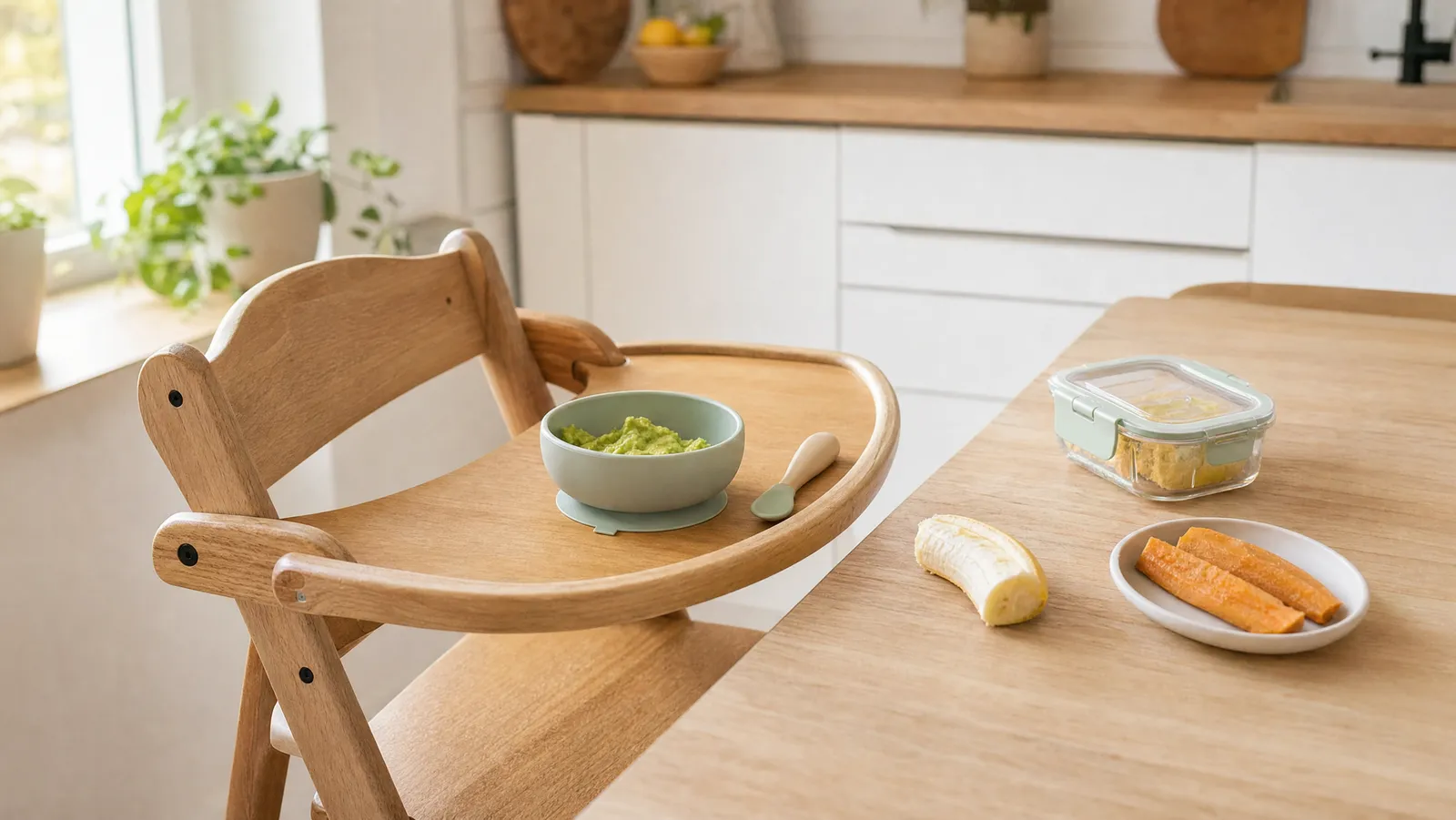
The Best High Chairs for Starting Solids

This post may contain affiliate links. Read our policy.
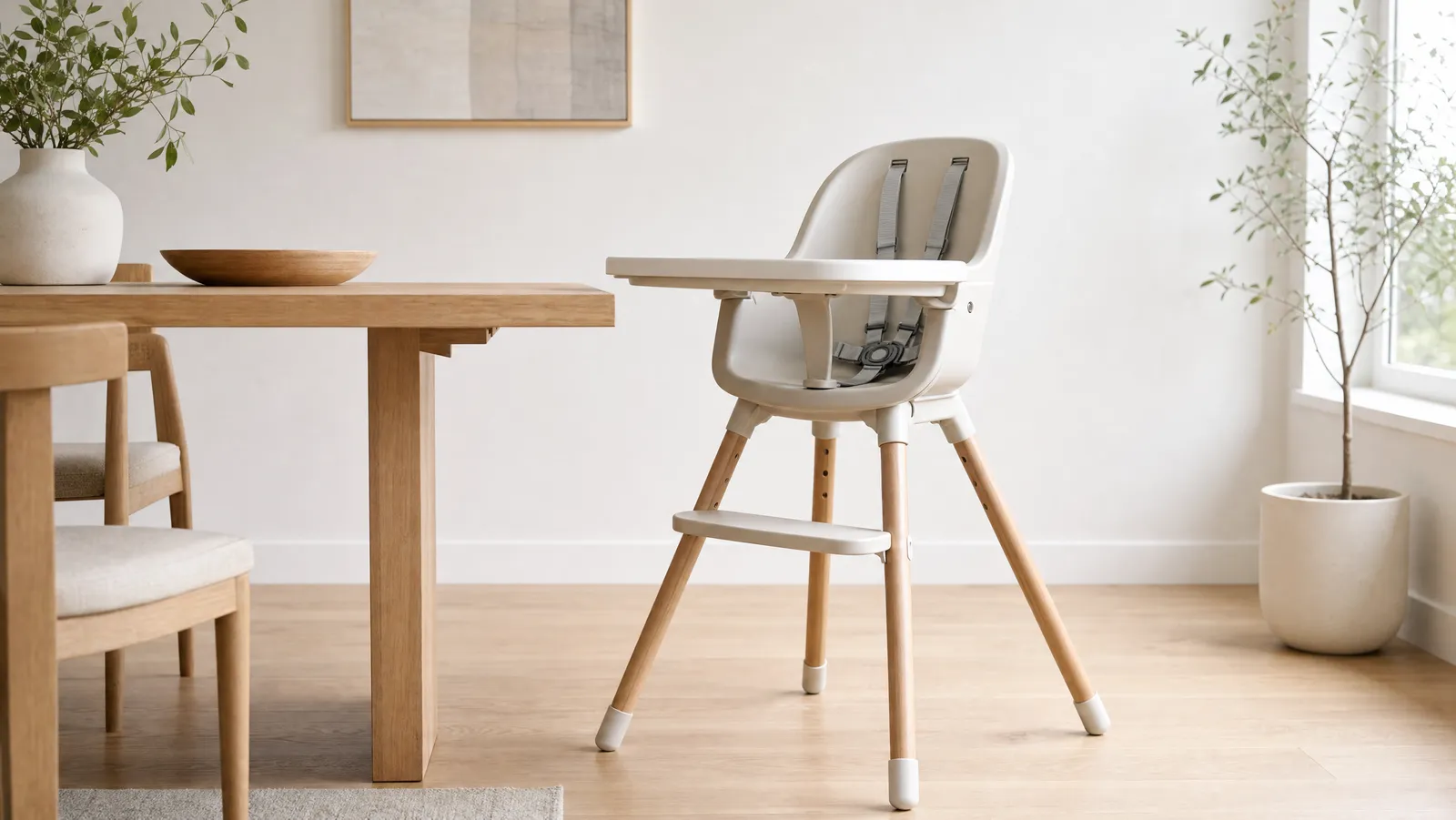
The best high chair for baby is the one with a harness you can genuinely adjust, a footrest, and the fewest seams for food to hide in. Everything else — four modes, eight modes, a colour that matches the kitchen — is marketing. Our pick is the Century Dine On 4-in-1, at about $115.99 as of September 2026. Some of the links below are affiliate links, and we may earn a small commission, at no extra cost to you, if you buy through them.
I bought our first high chair on a phone, in four minutes, because it was grey and the photo looked nice in a kitchen that was not mine. It had a quilted seat with piping and a five-point harness whose straps threaded through four slots in that fabric. Sweet potato got into every one of them. I took that cover off and washed it weekly for a year, and never thought about the colour again.
That is the thesis of this guide: a high chair is bought for looks and lived with for cleaning, and the specs that decide whether you are still happy in six months are boring ones.
Which seat you need at all depends on how well your baby sits — one of the signs your baby is ready for solids, and worth settling before you order furniture. The American Academy of Pediatrics puts the requirement in one line in its guide to starting solid foods: "Your baby should be able to sit in a high chair, a feeding seat or an infant seat with good head control." The AAP recommends only breast milk for approximately 6 months after birth, with solids from about 6 months. Settle that first, then the chair, then your baby's first solid foods. Babies reach steady sitting on their own schedule, so ask your pediatrician about your baby's individual readiness rather than working from a date.
The Four Specs That Actually Decide It
Not modes. These, in order.
- The harness, and whether it really adjusts. Five points beat three because the shoulder straps stop a baby sliding down and a toddler standing up. But "five-point" is not the whole spec — the useful question is whether the shoulder height moves. A harness fixed at one height can stop fitting well long before your baby outgrows the chair.
- The footrest. A baby whose legs hang has nothing to brace against, and in my experience is a less settled eater than one whose feet are supported. It is also the spec the category skips most often: of the six seats below, exactly one lists a footrest.
- Seat height, and whether it reaches your actual table. Family meals are the point of the exercise, and a chair that parks six inches below the table edge — or a hook-on seat that will not clamp your table's thickness — quietly turns every meal into a separate event.
- Seams, folds and fabric. Every quilted panel, piped edge and harness slot is somewhere food goes and stays. The fastest chairs to clean have a wipeable frame and one removable insert. The slowest have a padded cover you will be unthreading from a harness at 8pm.
High Chair Safety: The Harness Is the Restraint, Not the Tray
This section comes first rather than last because falls are not an edge case here. They are the category's main injury.
Researchers at the Center for Injury Research and Policy at Nationwide Children's Hospital published a study in Clinical Pediatrics in December 2013 covering children aged 3 and under treated in US emergency departments between 2003 and 2010. Their findings: more than 9,400 children a year were treated for an injury associated with a high chair or booster seat — about one an hour nationally — and 93 percent of those injuries involved a fall. The most common diagnosis was a closed head injury, at 37 percent, and the annual number of these injuries overall rose 22 percent across the study period, from 8,926 in 2003 to 10,930 in 2010. The US Consumer Product Safety Commission cited its own surveillance in 2019: "In a recent 2-year period, there were an estimated 18,500 high chair-related injuries treated in U.S. hospital emergency departments."
Study author Gary Smith made the point that reframes the whole product: the tray was not designed as a restraint, so use of the safety straps is essential. CPSC says the same in its consumer guidance, in two sentences worth taping inside a cupboard door:
"Always use the safety straps and adjust to fit the child snugly."
"If a high chair includes a tray, do not use the tray to hold the child in the high chair. Instead, use the restraints."
A tray is a table, not a seatbelt. A baby held in only by a tray can slide down underneath it — and in the same Nationwide Children's data, two-thirds of the injured children were climbing or standing in the chair when they were hurt, which is precisely what a buckled harness is there to prevent.
What the federal standard covers, and what it does not
High chairs sold in the US fall under a mandatory federal standard, 16 CFR part 1231, which incorporates the ASTM F404 consumer safety specification by reference; CPSC's business guidance identifies ASTM F404-21 as the version applying to chairs manufactured after July 23, 2022. The rule took effect on June 19, 2019, and CPSC describes what it requires: "High chairs must meet requirements for stability and restraint systems, as well as include warning statements printed on high chairs about how to avoid fall hazards." CPSC's checking tip is to confirm the manufacture date on the label is on or after June 19, 2019.
Two things follow that are easy to get wrong.
No chair is "CPSC certified" or "ASTM certified." That is not how this works. A mandatory standard applies to the whole category; it is not a badge an individual model earns, and a listing waving one at you is selling a feeling. What you can check is the manufacture date on the label.
Compliance is not automatic. CPSC recalled the Bicystar high chair on February 26, 2026 because the chairs "violate the mandatory standard for high chairs because they were sold without the required attached crotch restraint, posing a deadly fall hazard for children," and because a child's head could become trapped between the seat and the side of the chair. Sold on Amazon. The standard is the floor, not a guarantee — and a crotch restraint, the strap between the legs that stops a baby sliding forward, is required equipment rather than a feature.
One honest limitation of this roundup: three of the six listings below do not state a harness type, including our top pick. That is not a claim those seats lack a restraint — the standard requires one — but it does mean the harness is the first thing to look at in the manual, and the first thing to adjust.
The Best High Chairs for Baby: Six Picks for Starting Solids
Six seats, judged against the four specs above. Prices are as of September 2026 and move constantly.
Our pick: Century Dine On 4-in-1
The Century Dine On 4-in-1 is our pick for one unglamorous reason: it is the only seat here that lists a footrest. Century describes that footrest as helping give stability and providing a place to rest active feet — the maker's framing, and it matches what I see at our table.
The rest of the six-month spec list is present too. Three recline positions, which matter at the very beginning when a baby is newly upright. A three-position tray that removes with one hand — a feature I did not know to want until I was holding a baby in one arm and trying to free the other. A dishwasher-safe GoPlate tray insert that doubles as a plate, a machine-washable seat pad, and two wheels.
It runs four modes — infant high chair, tot booster, child stool, big-kid chair — which I would treat as a bonus rather than a reason to buy. About $115.99 as of September 2026 — the second-priciest seat here, four dollars under the SmartClean. The one spec our source data does not state is the harness type, so check the manual when it arrives.
Easiest to clean: Ingenuity SmartClean Trio Elite
The SmartClean Trio Elite is built around the seams problem, and it is what I would buy if the harness is your first criterion, because it has the best-documented restraint here: a 5-point harness with three adjustable shoulder heights. That is the spec separating a harness that is outgrown quickly from one on a seat the maker rates from 6 months to 5 years.
Then the cleaning story. There is no fabric seat cover at all — just a wipeable frame and a removable EVA foam insert — and the dishwasher-safe tray detaches one-handed. Fabric covers are where dried yogurt goes to live forever. Wiping a frame instead took our post-meal routine from about ten minutes to about ninety seconds.
It covers 6 months to 5 years across three modes — high chair, chair-top booster, standalone toddler seat — with three reclining positions. The one caution is footprint: assembled it measures 32.2 x 21.6 x 42.1 inches, so measure your corner before you order. About $119.99 as of September 2026.
Best for small spaces: Inglesina Fast Table Chair
The Inglesina Fast Table Chair clamps to the table itself, the right answer when there is no floor space to give up. It fits tables up to 3.5 inches thick using twist-tight couplings, is rated for 6-36 months and up to 37 pounds, folds into a built-in carry bag, and has a rear storage pocket. The seat lining machine washes on a delicate cycle, and it is free of regulated BPA, lead and phthalates. About $79 as of September 2026.
Now the trade-off, said plainly: the restraint is a 3-point harness, not a 5-point. That is the format's compromise, and it is the reason this is our small-space pick rather than our overall one. If your baby is at the wobbly end of sitting, that matters more than it will in six months.
Hook-on seats are regulated separately. CPSC's guidance on portable hook-on chairs puts them under 16 CFR part 1233, incorporating ASTM F1235, describes the category as "a seat made expressly to seat and hold children who can sit up on their own," and says the regulation "seeks to prevent deaths and injuries by preventing falls when the chair detaches from the table or breaks, or when the table and chair tip over together." Read that as your installation checklist: right table thickness, couplings genuinely tight, and a table heavy enough that it cannot go over with the seat.
Best budget convertible: Kinder King 8-in-1
The Kinder King 8-in-1 is the cheapest way into a seat that keeps working after the high-chair year, at about $79.99 as of September 2026 — forty dollars less than the SmartClean. It converts between high chair, booster, kids' study table and chair, building-block table and stool, and is rated 6-36 months and up to 55 pounds, the highest weight limit stated by any seat here.
The specs that matter hold up better than the price suggests: an adjustable five-point harness with shoulder pads, a fixed safety baffle, a three-position dishwasher-safe PP tray, and a removable wipeable seat cover. We bought it as the cheap option and it outlasted the high-chair stage entirely — it is a craft table in our kitchen now.
Two caveats. Eight modes is the most aggressive count here, and modes are not the reason to buy it — the harness and the price are. And stock has been thin: the listing showed only 12 left when we sourced it, so check availability before you plan around it.
Best booster for a chair you own: OXO Tot Nest Booster Seat
The OXO Tot Nest is for families who would rather bring the baby up to the table they already own than add furniture. High back and sides cradle the child on most grown-up chairs, the back and bottom straps both adjust to fit different chair styles, non-slip feet keep it stable and protect the chair from scratches, and two side-release buckles hold the child in. The cushion comes out. About $55.99 as of September 2026.
Be clear about what it is not. This is a booster for a child who already sits well — no recline, no tray. It is not a newborn-capable seat, and not where I would start a five-month-old. Bought at the right moment, it is the seat that disappears into a cupboard.
Best floor seat: Ingenuity Baby Base 2-in-1
The Baby Base 2-in-1 is the in-between answer: your baby can sit, you are not ready to commit to furniture, and the first month of solids is a few spoonfuls a day. It works on the floor or straps to most dining chairs, supports up to 33 pounds, and converts to a toddler seat by removing the foam insert. The BPA-free tray is dishwasher-safe and stores underneath. Assembled it is 17.25 x 15.25 x 11.75 inches, and at about $39.99 as of September 2026 it is the cheapest seat here.
The maker specifies it is for babies who are already sitting up, and that is the line to take literally. Used on a dining chair rather than the floor, the straps and the chair you attach it to are doing the safety work, so check both every time.
How the Six Compare
| Seat | Harness | Footrest | Age / weight | Converts to | Cleaning story |
|---|---|---|---|---|---|
| Century Dine On 4-in-1 | Not stated in listing | Yes | Not stated | Booster, stool, big-kid chair | Dishwasher-safe GoPlate insert; machine-washable seat pad |
| Ingenuity SmartClean Trio Elite | 5-point, 3 shoulder heights | Not listed | 6 months to 5 years | Chair-top booster, toddler seat | No fabric cover; wipeable frame, removable EVA insert, dishwasher-safe tray |
| Inglesina Fast Table Chair | 3-point | No (hook-on) | 6-36 months, to 37 lbs | Nothing; folds into carry bag | Machine-washable seat lining, delicate cycle |
| Kinder King 8-in-1 | 5-point, adjustable, shoulder pads | Not listed | 6-36 months, to 55 lbs | Booster, study table and chair, block table, stool | Removable wipeable cover; dishwasher-safe PP tray |
| OXO Tot Nest Booster | Two side-release buckles; adjustable back and bottom straps | No | Not stated; sitting children only | Nothing; booster only | Removable cushion |
| Ingenuity Baby Base 2-in-1 | Not stated in listing | No (floor seat) | To 33 lbs; sitting babies only | Toddler seat, insert removed | Removable dishwasher-safe BPA-free tray |
Where a cell says "not stated," that is our source data being silent rather than the seat being deficient — check the manual.
Where the Chair Goes
Placement is free, and almost nobody thinks about it before delivery day. Put the chair where a baby's feet, hands and pushing arms cannot reach anything solid: not against the counter, not against a wall, not against the table edge unless the seat is designed to be there. A braced foot is leverage, and leverage is how a stable-looking chair ends up on its side. CPSC's use tips are short — stay near and watch the child during use, and do not let children climb into or stand on the high chair.
A high chair also puts a curious baby at counter height for the first time, within reach of kettle cords, toaster leads and anything hot — a different set of hazards from the ones you baby-proofed at floor level. If you have not done that pass, baby-proofing your kitchen covers the cords, the latches and the appliance zone in the order you need them.
The First Few Weeks of Meals
Three practical notes.
Set the harness before the first meal, not during it. Shoulder straps at the right height, crotch strap through, snug enough that you can slip no more than a finger or two between the strap and your baby's chest — CPSC's instruction is simply to adjust the straps to fit the child snugly. Re-check it every few weeks — babies grow out of a harness setting faster than they grow out of the chair.
Feet on something. If the chair has a footrest, set it high enough that the knees are not hanging. If it does not, a firm box under the feet costs nothing to try.
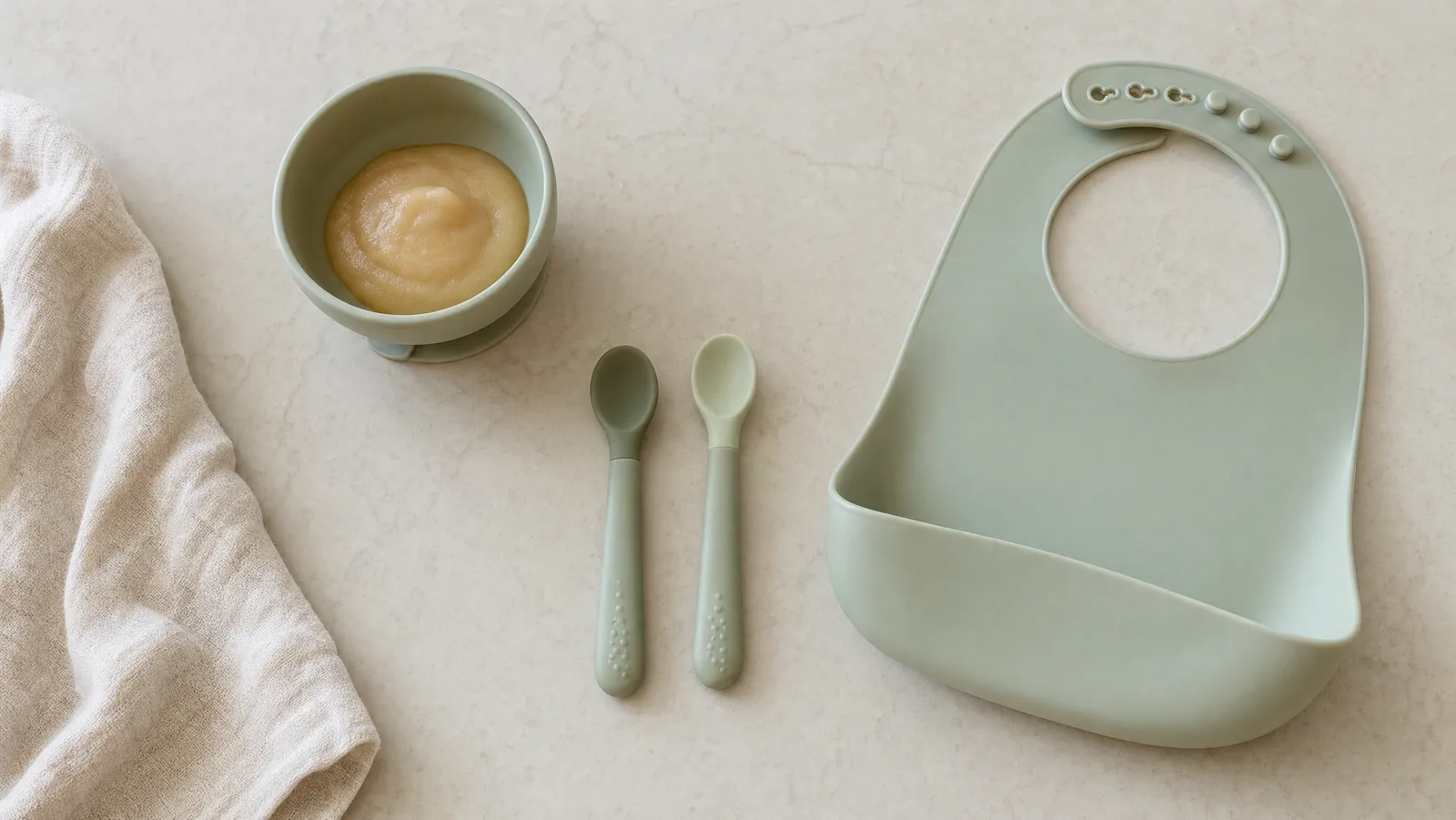
Own the mess instead of fighting it. A splat mat, a wipeable bib, and the acceptance that the first month is more paint than nutrition. What goes on the tray is its own decision — we have a piece coming on baby plates, bowls and spoons, and another on gagging and choking, two different things that deserve more room than a paragraph here.
What I Would Skip
Modes you are buying on faith. Ask whether you would still buy the chair if it only did the first mode. If the answer is no, the extra modes are doing sales work rather than kitchen work.
Quilted, piped, multi-panel fabric. It photographs beautifully and it is a food trap with a zip. If two chairs are otherwise equal, buy the one with less fabric — that is the entire argument for the SmartClean.
A second seat you have not needed yet. Plenty of families buy a floor seat, a high chair and a travel hook-on inside three months. Start with one, live with it a fortnight, and let the friction tell you what the second should be.
The Bottom Line
Buy for the harness, the footrest and the seams, in that order, and treat the mode count as decoration.
For most families that is the Century Dine On 4-in-1 at about $115.99, because it is the only seat here that lists a footrest. If cleaning is what will grind you down — and it grinds most people down — take the Ingenuity SmartClean Trio Elite at about $119.99 instead, and get the best-documented harness on this page with it. Small kitchen, no floor space: the Inglesina Fast Table Chair at about $79, knowing it is a 3-point restraint. Tight budget, long horizon: the Kinder King 8-in-1 at about $79.99, while stock lasts.
Then do the free part, every meal: buckle the harness, and never let the tray do the job the straps are for. That one habit is aimed squarely at the 93 percent of injuries in this category that are falls.
When the seat is sorted, how to start solids walks through the first foods, the first textures and the first month in order. The chair is the easy half. You've got this.

Century Dine On 4-in-1 High Chair
A four-mode chair that runs from infant high chair to tot booster to child stool to big-kid chair. The details that matter at six months are all present: a footrest, which the maker describes as helping give stability and providing a place to rest active feet; a three-position recline; and a three-position tray that removes with one hand. The GoPlate tray insert is dishwasher-safe and doubles as a plate, and the seat pad is machine-washable and wipeable. Two wheels let you move it between rooms.
- Brand
- Century
- Category
- Our Pick
The one-handed tray release is the feature I did not know to want until I was holding a baby in one arm and trying to free the other.

Ingenuity SmartClean Trio Elite 3-in-1 High Chair
Built around the cleanup problem: there is no fabric seat cover to trap food, just a wipeable frame and a removable EVA foam insert, and the dishwasher-safe tray detaches one-handed. It covers 6 months to 5 years across three modes — high chair, chair-top booster, then standalone toddler seat. The restraint is a 5-point harness with three adjustable shoulder heights, and there are three reclining positions. Assembled it measures 32.2 x 21.6 x 42.1 inches, so measure your corner first.
- Brand
- Ingenuity
- Category
- Easiest to Clean
Fabric high-chair covers are where dried yogurt goes to live forever. Wiping a frame instead took our post-meal routine from ten minutes to about ninety seconds.

Inglesina Fast Table Chair
A hook-on seat that clamps to the table itself, which is the answer when there is no floor space to give up. It fits tables up to 3.5 inches thick using twist-tight couplings, is rated for 6-36 months and up to 37 pounds, and folds into a built-in carry bag. The restraint is a 3-point harness rather than a 5-point, which is the trade-off for the format. Free of regulated BPA, lead and phthalates; the seat lining is machine washable on a delicate cycle.
- Brand
- Inglesina
- Category
- Best for Small Spaces
It lives in the boot of the car and turns any restaurant table into a high chair, which in a small apartment is worth more than a fourth conversion mode.

Kinder King 8-in-1 Convertible Baby High Chair
The cheapest way into a chair that keeps working after the high-chair year: it converts between high chair, booster, kids' study table and chair, building-block table and stool, and is rated 6-36 months up to 55 pounds. The tray has three positions and is dishwasher-safe PP. The restraint is an adjustable five-point harness with shoulder pads, plus a fixed safety baffle. Stock has been running thin, so check availability before you plan around it.
- Brand
- Kinder King
- Category
- Best Budget Convertible
We bought it as the cheap option and it outlasted the high-chair stage entirely — it is a craft table in our kitchen now.

OXO Tot Nest Booster Seat with Removable Cushion
For families who would rather bring the baby up to the existing table than add a piece of furniture. High back and sides cradle the child on most grown-up chairs, and both the back and bottom straps adjust to fit different chair styles. Non-slip feet keep it stable and protect the chair from scratches, and two side-release buckles hold the child in. Note this is a booster for a sitting child, not an infant seat — it has no recline and no tray.
- Brand
- OXO Tot
- Category
- Best Booster for a Chair You Own
Our kitchen is too small for a high chair. This turns a dining chair into one and then disappears into a cupboard.

Ingenuity Baby Base 2-in-1 Booster Feeding and Floor Seat
A seat for the in-between stage, when a baby can sit up but you are not ready to commit to a full chair. It works on the floor or straps to most dining chairs, supports up to 33 pounds, and converts from baby booster to toddler seat by removing the foam insert. The BPA-free tray stores underneath and is dishwasher-safe. Assembled it is 17.25 x 15.25 x 11.75 inches. The maker specifies it is for babies who are already sitting up.
- Brand
- Ingenuity
- Category
- Best Floor Seat
It got us through the messy first month of solids without buying furniture, and it packs for a weekend at my parents'.
- 01CenturyOur PickCentury Dine On 4-in-1 High Chair
- 02IngenuityEasiest to CleanIngenuity SmartClean Trio Elite 3-in-1 High Chair
- 03InglesinaBest for Small SpacesInglesina Fast Table Chair
- 04Kinder KingBest Budget ConvertibleKinder King 8-in-1 Convertible Baby High Chair
- 05OXO TotBest Booster for a Chair You OwnOXO Tot Nest Booster Seat with Removable Cushion
- 06IngenuityBest Floor SeatIngenuity Baby Base 2-in-1 Booster Feeding and Floor Seat
When can a baby start using a high chair?+
Do I need a five-point harness in a high chair?+
Can I use the tray to hold my baby in the high chair?+
Are high chairs regulated in the United States?+
Do I need a footrest on a high chair?+
High chair or booster seat for starting solids?+
Sammie Seelbach
Sammie is a mom of two and the lead reviewer at Smart Baby Reviews. Since becoming a parent she has become obsessed with researching the safest, smartest baby gear on the market — testing thermometers at 2 a.m., wrangling baby gates, and sterilizing more bottles than she can count. She shares what actually works so other parents can make confident, informed decisions for their little ones.