Introducing Peanut, Egg, and the Other Common Allergens

This post may contain affiliate links. Read our policy.
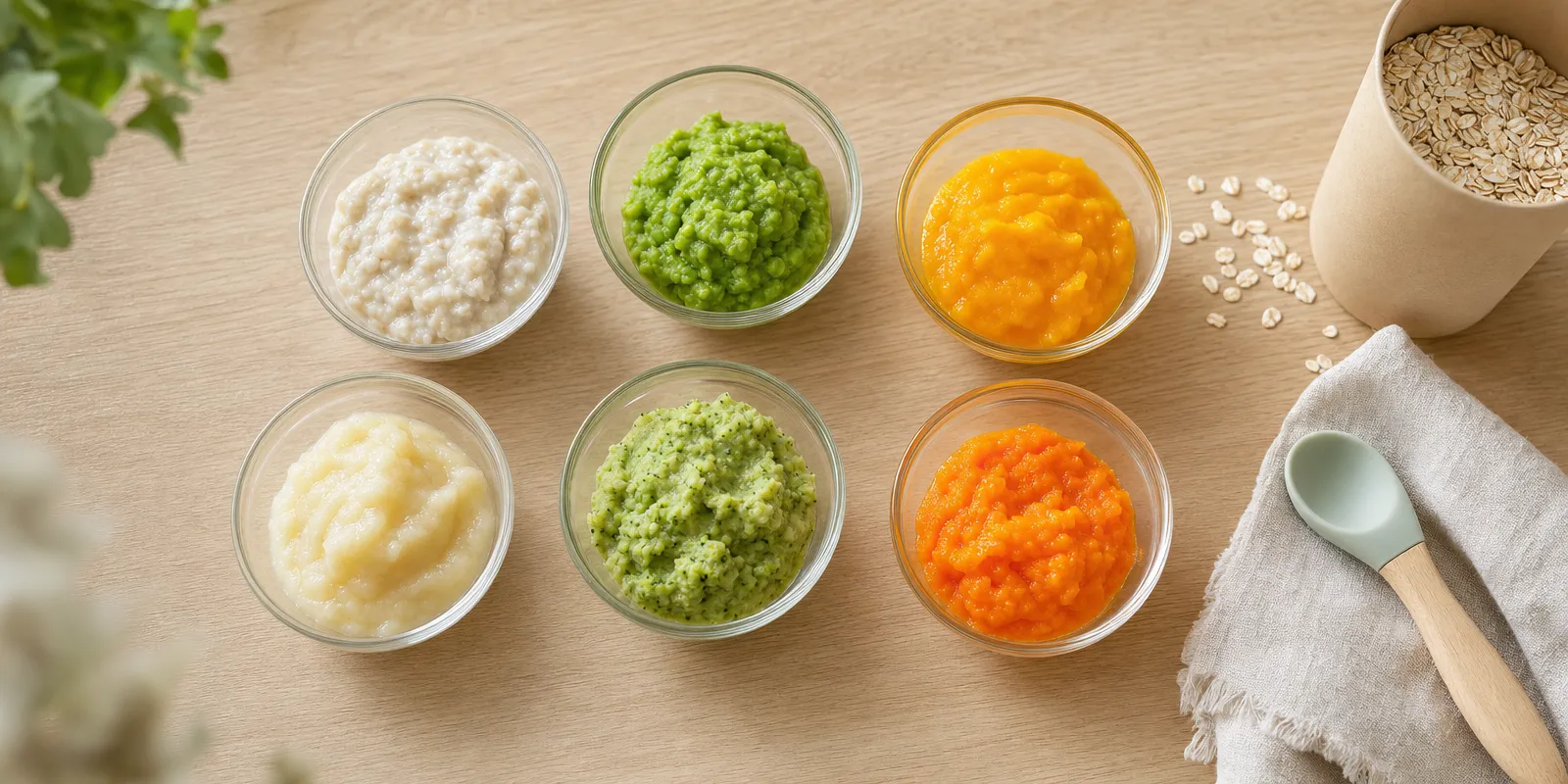
Introducing allergens to baby is an early job now, not a late one. Current US guidance is to offer peanut, egg and the other common allergens alongside ordinary first foods from around six months — as early as four to six months for the highest-risk babies — and then keep them in the diet regularly rather than ticking them off a list. Some of the links below are affiliate links, and we may earn a small commission, at no extra cost to you, if you buy through them.
My mother watched me thin a spoonful of peanut butter into my daughter's oatmeal and went quiet in the way that means something is coming. She had been told to keep peanuts away from me until I was three. She was not misremembering. That was the advice, and she followed it.
That is the whole emotional problem with this topic. The guidance did not drift. It inverted. And a parent who does not know why is being asked to do the one thing every instinct argues against: hand a known allergen to a seven-month-old, deliberately, with no doctor in the room.
So this does both halves. Why the advice changed and how good the evidence actually is — because that is what makes the second half survivable. Then the practical part. If you are still at the beginning of all this, starting solids covers the wider ground.
The Advice Reversed Inside One Generation
In 2000 the American Academy of Pediatrics recommended delaying peanut until age three for infants considered at high risk, with similar waits attached to egg, tree nuts and fish. A review of early food introduction in the National Library of Medicine's PubMed Central is blunt about where that came from: the recommendation "was based on expert opinion rather than on prospective clinical trials, and likely contributed to the increase in the prevalence of peanut allergy in recent decades."
The same review notes that in 2008 the AAP partially reversed itself, stating that the introduction of allergenic foods "should not be delayed" — but without strong evidence about what to do instead. For most of a decade the official position was a shrug.
Food allergy is not a small problem to shrug at. According to the CDC's National Center for Health Statistics, 5.8% of US children aged 0–17 had a diagnosed food allergy in 2021.
The LEAP Trial, and What It Does and Does Not Prove
Then came a single randomized trial that moved the whole field. Learning Early About Peanut, published in the New England Journal of Medicine in February 2015, enrolled 640 infants between 4 and 11 months of age in the UK. They were not typical babies. Every one of them was already high-risk, enrolled because they had severe eczema, egg allergy, or both.
Half were randomized to eat peanut regularly — at least 6 grams of peanut protein a week across three or more meals — and half to avoid peanut completely, both until age five.
At five years old, in the intention-to-treat analysis, 17.2% of the avoidance group had peanut allergy against 3.2% of the consumption group. Among the infants who started the trial with a negative skin-prick test, it was 13.7% versus 1.9%. Among those who started already mildly sensitised, with a positive skin-prick test, it was 35.3% versus 10.6%. NIAID summarises the headline as an 81 percent relative reduction in the development of peanut allergy.
Now the sentence that usually goes missing. That 81 percent belongs to high-risk infants — severe eczema and/or egg allergy — because those are the only babies the trial enrolled. It is a reduction in risk within a studied population, not a guarantee for every child. Three point two percent of the consumption group developed peanut allergy anyway. Early introduction is the best available bet, not an inoculation, and anyone selling it to you as prevention full stop is overselling it.
The durability question got answered later. LEAP-Trio, published in NEJM Evidence in June 2024, went back to the same children at about age 12 and found peanut allergy in 15.4% of the original avoidance group versus 4.4% of the consumption group. The protection held into adolescence.
Current Guidance: Allergens Ride Along, They Do Not Queue
The AAP's 2019 clinical report in Pediatrics, The Effects of Early Nutritional Interventions on the Development of Atopic Disease in Infants and Children, is the current position, and it is stated as a negative — which is how you can tell it is answering an old rule. There is no evidence that delaying the introduction of allergenic foods such as peanuts, eggs or fish beyond 4 to 6 months of age prevents atopic disease. On HealthyChildren.org, the report's co-author Dr. Scott Sicherer puts it in one line: "There is no reason to delay giving your baby foods that are thought of as allergens like peanut products, eggs or fish."
The CDC gives the positive version. Its guidance on introducing solid foods says plainly: "Introduce potentially allergenic foods when you introduce other foods." Not after. Not once the safe foods are established. When.
That is the mental model worth adopting. Allergens are not a second, scarier course that begins after the vegetables are done. They ride along with the first foods to offer, in the same weeks, from the same high chair.
Two caveats on timing. First, the baby has to be developmentally ready — the guidelines assume other solid foods have gone in first, partly as proof of readiness, which is why the signs your baby is ready for solids matter before any of this applies. Second, four months is a floor that exists for a specific group, not an open invitation. The FDA's qualified health claim, effective December 2021 and based on the Dietary Guidelines for Americans 2020–2025, permits exactly one framing of the early end: that for babies with severe eczema, egg allergy or both, introducing age-appropriate peanut-containing foods as early as 4 months may reduce the risk of peanut allergy — and it requires the sentence telling caregivers to check with the baby's healthcare provider first.
If Your Baby Is High-Risk, the First Step Is a Phone Call
The 2017 Addendum Guidelines for the Prevention of Peanut Allergy in the United States sort infants into three tiers, and the tier changes the plan.
| Tier | Which babies | What the guideline recommends |
|---|---|---|
| Guideline 1 | Severe eczema, egg allergy, or both | Strongly consider evaluation with peanut-specific IgE and/or skin prick test, and an oral food challenge if needed. Depending on results, introduce age-appropriate peanut-containing food as early as 4 to 6 months |
| Guideline 2 | Mild to moderate eczema | Introduce peanut-containing foods around 6 months |
| Guideline 3 | No eczema and no food allergy | Introduce peanut-containing foods as age appropriate, in accordance with family preferences and cultural practices |
Read the first row carefully, because it is the one that gets mangled. It does not say high-risk babies should start earliest and move fastest. It says they get tested first, and the test result decides. For some of those babies the first feeding happens in a medical setting rather than a kitchen. If your baby has severe, persistent eczema, an existing egg allergy, or has ever had an immediate reaction to a food, talk to your pediatrician before you introduce peanut at home. That is the single line in this article I would call non-negotiable.
A sibling with a serious food allergy is the case parents ask about most. It does not automatically put your baby in the top tier — NIAID defines that tier by the baby in front of you, not by family history. It is still worth raising at the visit. It is not a reason to wait.
The Nine Major Allergens, and What a First Serving Looks Like
The US recognises nine major food allergens. Sesame is the newest: the FASTER Act, signed in April 2021, added it as the ninth, and the FDA's labelling requirements for sesame took effect on January 1, 2023. Together the nine account for most food allergies in the US.
Texture is a separate safety problem from allergy, and it is the one that gets people hurt. The CDC's choking hazard list includes "whole or chopped nuts and seeds" and "chunks or spoonful of nut and seed butters, such as peanut butter." Every serving below is built to get the protein in without the lump.
| Allergen | A first serving at a safe texture | Worth knowing |
|---|---|---|
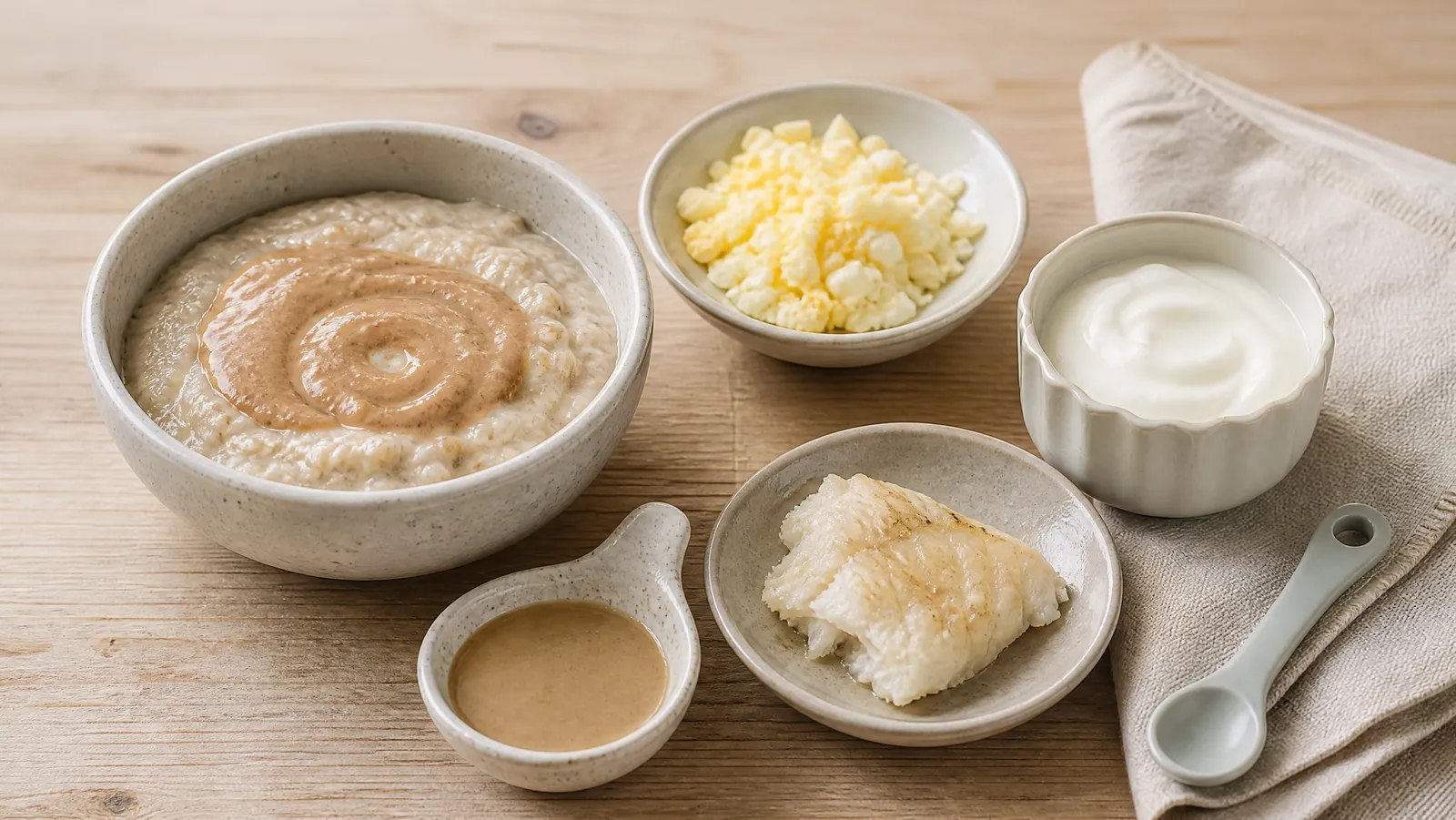
| Peanut | Smooth peanut butter thinned with warm water, breast milk, formula or puree to a thin sauce, or fine peanut powder stirred in | HealthyChildren.org also suggests dissolving a small amount in breast milk or formula and feeding by spoon |
| Egg | About one third of a well-cooked egg, scrambled or hard-boiled and mashed fine | HealthyChildren.org names the amount. Cooked through, never raw or runny |
| Milk | Plain whole-milk yogurt, or a soft cheese | The CDC says whole cow's milk as a drink waits until 12 months, but dairy foods are on the AAP's allergen list to introduce |
| Tree nuts | Smooth almond, cashew or other nut butter, thinned exactly like peanut | The CDC lists whole and chopped nuts as choking hazards for young children, and says choking hazards persist well past infancy |
| Sesame | Tahini thinned to a sauce and stirred into puree or spread thinly | The newest major allergen, and one of the ones most often skipped |
| Soy | Soft tofu mashed, or plain soy yogurt | Silken tofu mashes to about the consistency of a thick puree |
| Wheat | Iron-fortified wheat infant cereal, or well-cooked soft pasta | Often already in the house as the first cereal |
| Fish | Well-cooked flaky white fish or salmon, bones checked, flaked into a vegetable | Cook fully; check obsessively for bones |
| Shellfish | Well-cooked shrimp minced very fine, mixed into a puree | Cook fully; mince smaller than you think is necessary |
The peanut and egg rows come directly from HealthyChildren.org's guidance on introducing allergens, which lists egg, nut products, yogurt and other dairy, wheat, sesame, soy, fish and shellfish as the foods to get in. The rest follow the same two rules: soft enough to mash between your fingers, and thin enough not to clump.
None of this changes much whether you are spoon-feeding or doing baby-led weaning and purees. A finger-food household spreads tahini thinly on a strip of toast; a puree household stirs it into sweet potato. The protein is identical, and the guidelines do not care which route it takes.
The Mechanics: One at a Time, Early in the Day, and Keep It In
One new food at a time. The CDC's advice is to let your child try one single-ingredient food at a time and wait 3 to 5 days between each new food, so that a problem has an obvious cause. Keep that cadence for the allergens even if you loosen it for vegetables.
Earlier in the day. IgE-mediated food allergy reactions typically begin within minutes and up to about two hours after eating. That short window is the practical argument for a morning or midday first taste rather than a 6pm one: you want to be awake, unhurried and watching during the hours when something would actually show up.
Small, then more. Start with a taste on the tip of a spoon, wait, then give the rest if nothing happens. Then build to a normal serving over the following days.
Then keep it in — this is the part everyone drops. The evidence is about sustained exposure, not a single successful spoonful. For peanut, the NIAID addendum sets the target at roughly 6 to 7 grams of peanut protein per week across three or more feedings, echoing the LEAP protocol. For allergens generally, the Canadian Society of Allergy and Clinical Immunology's position statement is titled "Early introduction is not enough," and recommends regular ingestion of age-appropriate amounts of all common allergens multiple times per month, with a goal of at least once each week. It also flags the failure mode: in Australia, peanut introduction rates tripled while peanut allergy prevalence stayed relatively unchanged, and the statement attributes that to only about 30% of infants going on to eat peanut two or more times a week.
In practice that means a rotation, not a checklist. Peanut in Monday's oatmeal, egg Wednesday, tahini on Friday's toast, fish on Sunday. Keeping track gets easier once you have a feel for portions overall — our separate guides on how much solid food by age and on baby food pouches cover that side of it.
Reaction Signs: What Calls the Pediatrician, and What Calls 911
Most first tastes are uneventful. Know both lists anyway.
Milder signs. HealthyChildren.org tells parents to watch for diarrhea, rash or vomiting, and if any appear, to stop using the new food and consult your child's pediatrician. Hives around the mouth, a few spots, an unhappy stomach — stop the food, do not re-offer it, and call. Do not diagnose it yourself and do not quietly try again next week.
Anaphylaxis. This is a different category. The AAP describes it as a rapid and severe allergic reaction that is a life-threatening emergency, with symptoms appearing within minutes or several hours of exposure. The signs it lists include shortness of breath, wheezing, coughing or tightness in the chest; weak pulse or symptoms of shock; rash, redness or hives and a pale or bluish colour; and dizziness or fainting. In infants specifically it adds irritability, fussiness or inconsolable crying, and sudden drooling. The AAP's instruction is direct: epinephrine should be given immediately to anyone experiencing symptoms of anaphylaxis if it is available, followed by a call to 911.
Two things worth internalising. Babies cannot tell you their throat feels strange, so the infant signs are behavioural — a baby suddenly inconsolable minutes into a new food is giving you information. And this article does not do doses: any epinephrine plan comes from your pediatrician or allergist, in writing.
Powders and Kits: What a Hundred Dollars Actually Buys
Here is where I have to be careful, because this is where the evidence gets used to sell things.
The trials tested allergen protein reaching a baby regularly. They are agnostic about the delivery vehicle. Thinned peanut butter from a jar, a fine powder stirred into oatmeal, a pre-measured packet — the immune system does not read the label. Anything a powder does, a supermarket can do for a few dollars. What the products sell is convenience and one less decision.
That said, the convenience is real, and the texture problem is real. Lil Mixins Peanut Powder runs 39.99 dollars as of September 2026 for 8.5 oz of organic ground peanut milled fine enough to disappear into cereal or yogurt without the gumminess that makes a baby reject the whole spoon. According to Lil Mixins, the directions are two scoops into 4 oz of food, one to two times a week, continuing to a year. The egg version is the same price and the same format, and it is sold separately on purpose — one allergen at a time is the guidance, and a blend makes a reaction impossible to attribute.
Ready, Set, Food! Stage 2 is 99.97 dollars as of September 2026 for thirty daily packets of organic peanut, egg and milk, aimed at the maintenance phase rather than the first taste. That is an honest read of where families fail, and it is also a hundred dollars for something a jar of peanut butter and a calendar reminder will do. If your weeks are chaotic enough that "keep three allergens in rotation" will not survive contact with reality, a packet on the counter is a reasonable thing to buy. If they are not, spend nothing.
One caveat applies to all three. Both makers state their products are not intended for infants already diagnosed with an allergy to those foods. A child with a known peanut or egg allergy is managed by an allergist, not by a powder.
If You Waited
You have not missed a deadline. NIAID's third guideline, for infants with no eczema and no food allergy, sets no date at all — it says to introduce peanut-containing foods as age appropriate and in accordance with family preferences and cultural practices. The prevention evidence comes from infancy, so a later start is less likely to deliver the specific benefit the trials measured. That is a smaller claim than harm, and it is not a reason to keep waiting.
If your child is past their first birthday and genuinely has never had peanut, egg or the others, make it a conversation with your pediatrician rather than an improvisation at snack time.
What This Looks Like on a Tuesday
Nine foods, one at a time, a few days apart, earlier in the day, at a texture that cannot clump. Then the boring half: keeping them in, roughly weekly, for a long time. That is the whole protocol, and most of the difficulty is emotional rather than logistical.
The part I wish someone had said to me while my mother stood there looking worried: the reversal is not a fashion. It rests on a randomized trial with a hard endpoint, and it has now been checked again at age twelve. You are not gambling with your baby by following it. You are following the best evidence anybody has.
Then talk to your pediatrician — especially if there is severe eczema or a known egg allergy in the picture — and start. For the rest of the first six months of eating, from readiness signs to gear to how the days actually go, our starting-solids guide is the place to go next.

Lil Mixins Early Allergen Introduction Peanut Powder, 8.5 oz
Organic ground peanut milled fine enough to stir into cereal, yogurt or a puree without changing the texture much — which is the practical problem, since whole nuts and thick gobs of nut butter are choking hazards and never belong in an infant's mouth. Non-GMO, no sweeteners, no added sugar. According to Lil Mixins, the directions are two scoops into 4 oz of food, one to two times a week, continuing to a year. The maker states it is not for babies already diagnosed with a peanut allergy.
- Brand
- Lil Mixins
- Category
- Our Pick
It disappears into oatmeal. Thinned peanut butter never quite does, and a baby notices the difference on the spoon.

Lil Mixins Early Allergen Introduction Egg Powder, 8.5 oz
The same format for the other allergen with the strongest early-introduction evidence behind it. Sold separately from the peanut powder on purpose — the guidance is to introduce one allergen at a time so a reaction has an obvious cause, and a combined product makes that impossible. Non-GMO, no sweeteners, no colouring. Again, not for a baby with a known egg allergy.
- Brand
- Lil Mixins
- Category
- For Egg
Buying them separately is the right call even though it costs more. A blend tells you nothing when something goes wrong.

Ready, Set, Food! Stage 2 Baby Food Mix-Ins, 30 Packets
Thirty pre-measured daily packets of organic peanut, egg and milk, designed for the maintenance phase rather than the first taste. That is the part most families drop: the trial evidence is about sustained regular exposure, not a single successful spoonful. Stir into warm breast milk, formula or food. Expensive per month, and honestly optional if you can keep real food in rotation yourself. The maker states it is not intended for infants already diagnosed with food allergies.
- Brand
- Ready, Set, Food!
- Category
- For Keeping It Going
You are paying for the packet to be pre-measured and unavoidable on the counter. Whether that is worth a hundred dollars depends entirely on how your week goes.
- 01Lil MixinsOur PickLil Mixins Early Allergen Introduction Peanut Powder, 8.5 oz
- 02Lil MixinsFor EggLil Mixins Early Allergen Introduction Egg Powder, 8.5 oz
- 03Ready, Set, Food!For Keeping It GoingReady, Set, Food! Stage 2 Baby Food Mix-Ins, 30 Packets
When should I introduce peanut butter to my baby?+
How much peanut does my baby actually need, and how often?+
What are the signs of a food allergy reaction in a baby?+
Do I really have to wait three to five days between each new food?+
My older child has a food allergy. Does that make my baby high-risk?+
We waited. Is it too late to introduce allergens now?+
Sammie Seelbach
Sammie is a mom of two and the lead reviewer at Smart Baby Reviews. Since becoming a parent she has become obsessed with researching the safest, smartest baby gear on the market — testing thermometers at 2 a.m., wrangling baby gates, and sterilizing more bottles than she can count. She shares what actually works so other parents can make confident, informed decisions for their little ones.