How Many Ounces Should a Newborn Drink? Ounces Per Feed by Age

This post may contain affiliate links. Read our policy.
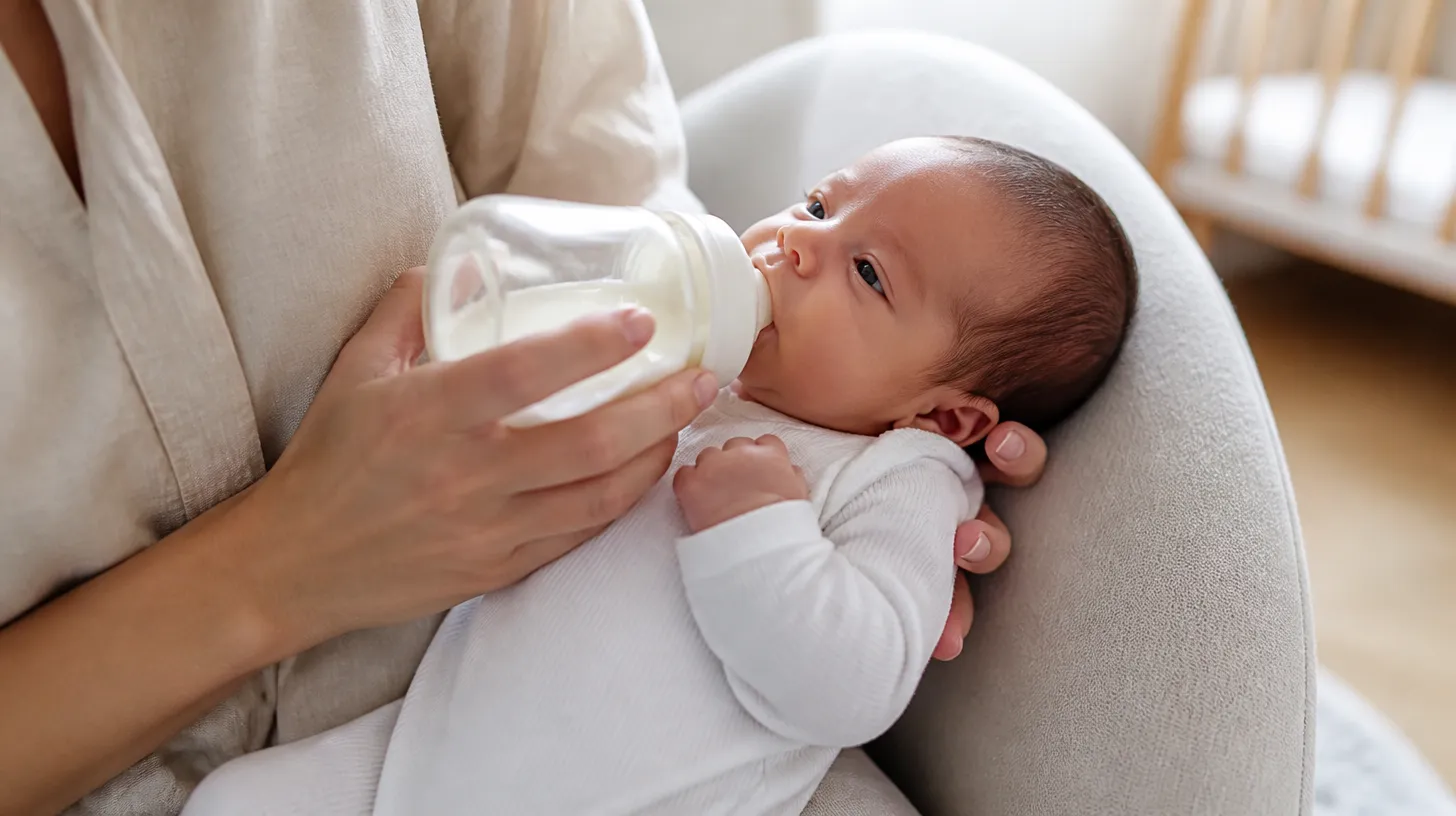
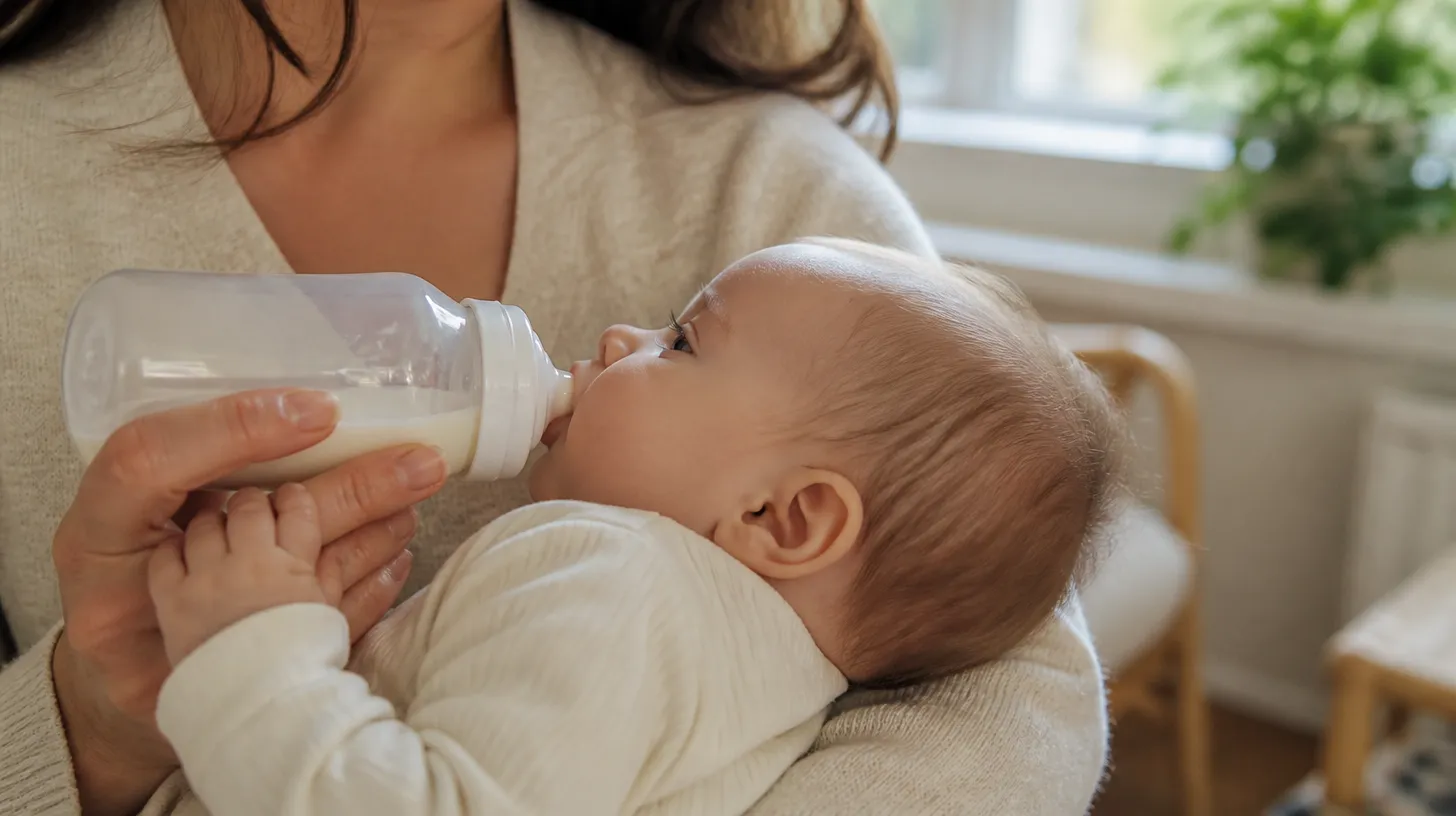
How many ounces should a newborn drink? In the first few days, the CDC says to offer a formula-fed newborn 1 to 2 ounces every 2 to 3 hours, eight to twelve times in 24 hours. By the end of the first month the AAP puts most babies at 3 to 4 ounces a feed, roughly every three to four hours. We earn a commission from links on this page, at no cost to you.
That is the answer. The rest of this article is about the two things the answer leaves out. The newborn numbers are far smaller than the bottles sold to hold them, and no table on the internet has met your baby. If you are still working out the mechanics — hold, nipple flow, burping, what to do with a refused bottle — our full guide to bottle feeding a newborn covers those. This one is only about volume.
Ounces Per Feed by Age: The Table
Here is every band on one screen. Each row is a published range with its source named, because the ranges differ slightly between authorities and you should be able to see which one you are following.
| Age | Ounces per feed | Feeds per 24 hours | Source |
|---|---|---|---|
| Day 1 to 3 | 1 to 2 oz | 8 to 12 | CDC |
| Day 4 to 7 | 1 to 2 oz as a ceiling; 1.5 to 3 oz average | 8 to 12 | AAP, Nemours KidsHealth |
| Weeks 2 to 4 | 2 to 4 oz | 8 to 12 | Nationwide Children's |
| 1 to 2 months | 3 to 4 oz, reaching 4 to 6 oz near 2 months | 6 to 8 | AAP, Nationwide Children's |
| 2 to 4 months | 4 to 6 oz, reaching 6 to 7 oz near 3 months | 5 to 8 | Nationwide Children's, Nemours |
| 4 to 6 months | 6 to 7 oz, about 28 to 32 oz a day | 5 to 6 | Nationwide Children's |
| 6 to 9 months | 6 to 8 oz, about 28 to 32 oz a day | 3 to 6, falling | AAP, Nationwide Children's, CDC |
| 9 to 12 months | 6 to 8 oz, about 24 to 32 oz a day | 3 to 5 | Nationwide Children's, AAP |
Two things to notice before you use it. The per-feed figure climbs for about six months and then stops, while the number of feeds falls the whole way — which is why the daily total barely moves after four months. And the last two rows are the loosest in the whole table, because by then intake depends on how solids are going. The CDC says plainly that as solids increase, the amount of formula needed each day will likely start to decrease.
The per-feed and per-day columns are also not meant to be multiplied together. Do that at six months and you can reach 40 ounces, which is above the ceiling the AAP publishes. More on that below.
Day One Is Smaller Than the Bottle in Your Hand
A first-day feed is tiny, and the single most common misreading of these charts is treating the newborn row as a minimum. The CDC frames it as a starting offer: 1 to 2 ounces every 2 to 3 hours, with more offered if the baby shows hunger. The AAP frames the same figure as a cap, saying babies in the first week should be eating no more than about 1 to 2 ounces, or 30 to 60 ml, per feed. Nemours KidsHealth gives the broader newborn average as about 1.5 to 3 ounces, or 45 to 90 millilitres, every 2 to 3 hours, and says bottles in the first few weeks are typically 2 to 3 ounces.
You have probably also seen the chart that maps a newborn's stomach to a marble on day one, a walnut by day three and a golf ball by day ten. We could not find those volumes in AAP or CDC guidance, and the parenting sites that publish them do not agree with each other on the days. Skip it. The published per-feed numbers above do the same job without the pretend anatomy.
Two practical notes from the AAP for this first stretch. If a newborn sleeps more than 4 to 5 hours in the first few weeks and starts missing feedings, the AAP says to wake them and offer a bottle. And when you are unsure how much to put in, its feeding guidance gives the cleanest rule in infant feeding: it is better to offer less, since you can always give more if your baby wants it.
The Two Rules of Thumb Worth Knowing
There are only two numbers you need to carry around, and both come from the same AAP page.
About 2 and a half ounces per pound of body weight per day. The AAP says that on average, your baby should take in about 2 and a half ounces, or 75 mL, of infant formula a day for every pound of body weight. A 10-pound baby lands near 25 ounces a day. That is a daily total, not a bottle size, so divide it by however many feeds you actually do. Our formula feeding calculator runs that arithmetic, including the first-week exception.
No more than about 32 ounces in 24 hours. The same AAP page says babies should usually drink no more than an average of about 32 ounces, or 960 mL, of formula in 24 hours, and that consistently wanting more or less than these amounts is worth discussing with your pediatrician. The ceiling applies to the day, before you split it into bottles.
A useful cross-check from outside the US: NHS Healthier Together bases its formula quantities on exclusively formula-fed infants under 6 months taking about 150 ml per kilogram per day, and notes that some babies, including those with faltering growth, may need more and that intake varies a lot between babies. That works out close to the AAP's figure, which is reassuring — two health systems, same ballpark.
The weight rule has one hard limit worth repeating: it does not describe the first week of life. Run a day-two baby through it and you will get a bottle bigger than the AAP's first-week cap.
Feeds Per Day Move As Much As Ounces Per Feed
Parents fixate on the per-feed number, but the frequency column is where most of the change happens. The CDC puts most formula-fed newborns at 8 to 12 feeds in 24 hours, spacing out to roughly every 3 to 4 hours over the first weeks and months, and notes you may need to wake a sleepy baby to feed. The AAP treats 8 feeds in 24 hours as the general minimum for a bottle-fed newborn.
Nationwide Children's feeding guide for the first year shows the whole slope: 8 to 12 feedings at 1 month, 6 to 8 at 2 months, 5 to 6 at 3 months, and 3 to 4 by 10 to 12 months. The nights go first. The AAP says that between 2 and 4 months of age, or once a baby weighs more than 12 pounds, most no longer need a middle-of-the-night feeding, and daytime gaps may occasionally stretch to 4 or 5 hours.
So if your four-month-old suddenly takes a smaller bottle, check whether they have simply added a feed. The day's total is the number that matters.
The Bottle Sizes That Match These Numbers
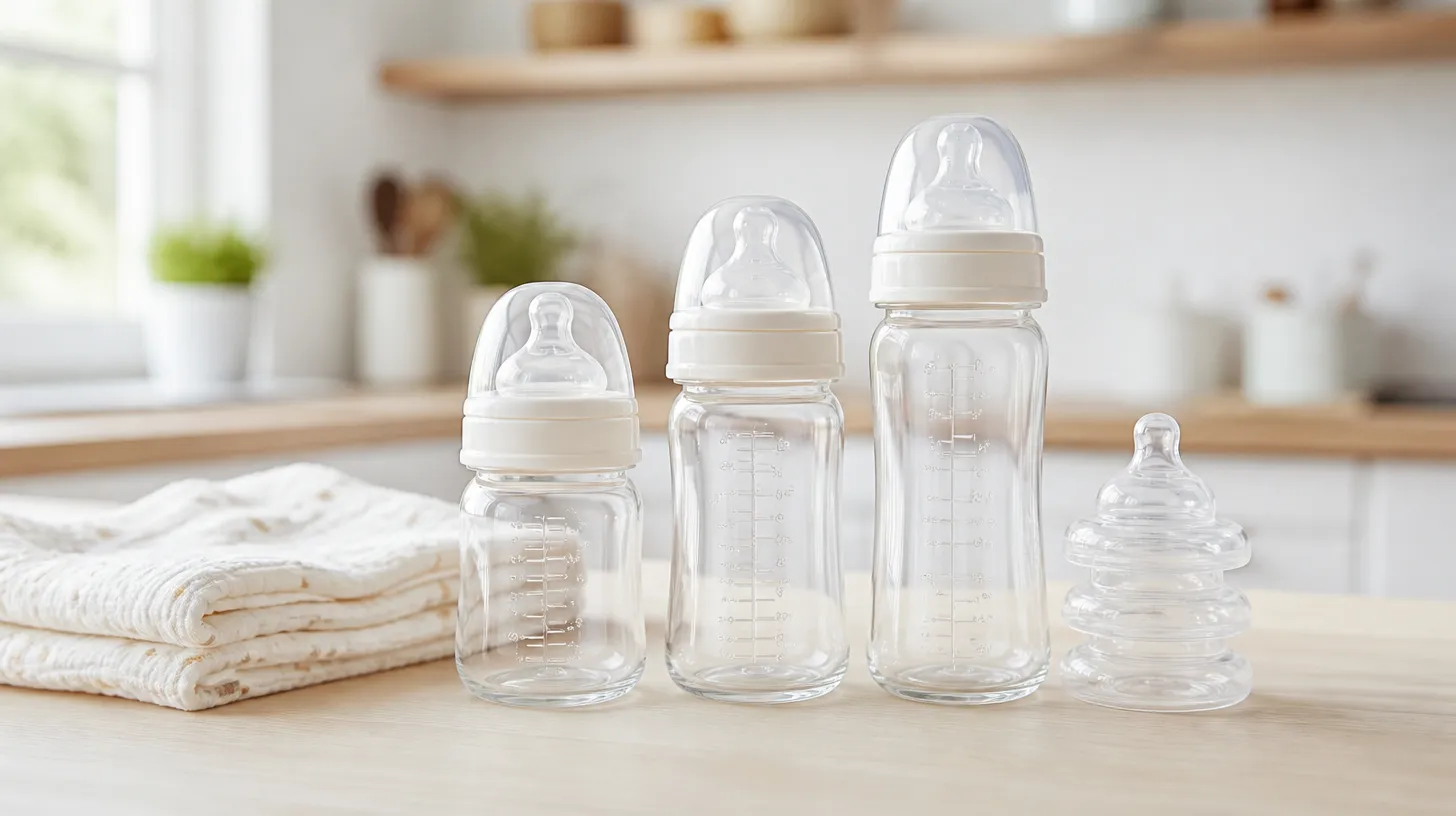
Volume is the one thing that should drive your bottle buying, and plenty of starter kits get it backwards by shipping 9 oz bottles to a household whose baby takes 2 oz.
For the first weeks, a 4 oz bottle is the right vessel. The Philips Avent Anti-Colic bottle with AirFree vent is a 4 oz BPA-free bottle with a slow Flow 1 nipple rated 0m+, and Philips states the AirFree vent keeps the nipple full of milk rather than air even when the bottle is held horizontal, which allows upright feeding. That claim is the maker's, but the geometry is the useful part: small feeds in a small bottle, held level.
Buy two, not twelve. The NUK Perfect Match 2-pack in 5 oz is about $15 as of October 2026, which is the right amount of money to risk before you know which nipple your baby accepts. NUK states a 98% baby acceptance rate and describes the nipple silicone as 2x softer than the leading brands' average; treat both as marketing until your own baby votes. If the first nipple is rejected, you have lost fifteen dollars rather than a hundred.
Once feeds settle into a rhythm at 4 to 6 ounces, four bottles in rotation beats washing the same two all day. The MAM Easy Start Anti-Colic+ 4-pack in 5 oz runs about $30 as of October 2026. MAM states the vented base is clinically proven to reduce colic symptoms in 80% of babies and that the base self-sterilises in three minutes — again, the maker's claims, and we would buy it for the four-bottle count and the slow-flow nipple rather than the colic figure.
What we would not buy: a nipple-flow ladder in advance. Flow upgrades are cheap and your baby will tell you when one is needed.
Why a Bottle-Fed Baby Often Takes More Than They Need
This is the part the charts never explain. The AAP notes that bottle-fed infants may not pull away or raise their hands to show they are full, and may keep sucking. A bottle held upright also delivers milk whether or not the baby is working for it, so the sucking that would have been comfort at the breast becomes volume in a bottle.
Slowing the delivery is the fix, which is the whole point of paced bottle feeding — holding the baby upright, keeping the bottle level, and pausing. Colorado WIC tells caregivers to hold the bottle in a flat, horizontal position so the nipple is only half full of milk, which slows the flow and hands the pace back to the baby. A slow-flow nipple rated for 0m+ does the same job through hardware.
The CDC says babies generally take what they need and stop eating when full. That is true, and it is also conditional on the feed being slow enough for the signal to arrive before the bottle is empty.
One more variable sits outside this article: mixing. Adding extra water or extra powder changes the calories in every ounce you count, so how to prepare and store formula safely deserves its own careful read — follow the label on your tin and anything your pediatrician has told you.
Diapers, Cues and the Scale Beat Any Table
If you only track one thing, track output. The AAP says newborns should have 2 to 3 wet diapers a day in the first few days, and that after the first 4 to 5 days a baby should have at least 5 to 6 wet diapers a day, with at least 4 stools a day by day four. Those are the numbers a pediatric nurse will ask you for, and they do not require you to have measured a single ounce.
Cues are the second instrument. The AAP lists early hunger signs as licking lips, sticking the tongue out, opening the mouth, rooting and sucking on nearby objects, plus fussiness, and says crying is a late sign of hunger. For the other end of a feed, the AAP suggests that a baby who becomes fidgety or easily distracted during a feed is probably finished, while one who empties the bottle and keeps smacking their lips may still be hungry. Nemours KidsHealth describes a full baby as sucking with less enthusiasm, stopping, or turning away from the bottle.
The third instrument is the scale at your pediatrician's office, and it is theirs rather than yours. We would not weigh a baby at home to referee a feeding plan.
Signs of Overfeeding, and Signs of Not Enough
The AAP is blunt about why this is worth watching, warning that sometimes patterns of obesity begin during infancy, so it is important not to overfeed your baby. It does not publish a spit-up threshold, and we are not going to invent one. What it does say is that consistently wanting more or less than these amounts should be discussed with your pediatrician — which makes a persistent pattern across a week, rather than one enormous bottle on one bad evening, the thing worth reporting.
In the other direction, the signal is the diaper count rather than the bottle. A baby past day four or five who is not making at least 5 to 6 wet diapers a day is worth a same-day call to your pediatrician rather than a wait-and-see. The AAP is also direct about babies who are having trouble gaining weight, advising that you not wait too long between feedings even if it means waking your baby. Babies born early are a separate case entirely, and the AAP says their pediatrician should set the feeding schedule.
We are not your clinician, and none of the above replaces a weight check. If the question in your head is "is this enough", that is a question for the practice, and they would rather hear it at week one than week six.
Six Months: Where the Volume Stops Climbing
Here is the handoff most parents are not warned about: milk volume plateaus rather than continuing to climb. The AAP puts 6 months at 6 to 8 ounces at each of 4 or 5 feedings in 24 hours. Nationwide Children's lists 28 to 32 ounces a day at 6 months, 30 to 32 at 7 and 8 months, then 24 to 30 ounces across 3 to 4 feedings at 10 to 12 months. The line flattens and then dips.
Solids are the reason, and they add nutrients rather than replacing milk. CHOP says solid foods should not be started for infants younger than age 6 months, and that you continue breastfeeding, breast milk or formula until at least 12 months to provide the necessary nutrients. The CDC says most 6 to 12 month olds need infant formula or solid foods about 5 to 6 times in 24 hours, with formula needs likely decreasing as solids increase.
So from six months the question changes shape, and the numbers you want are portion sizes rather than bottle sizes. Our guide to how much solid food by age has the sourced meal counts and tablespoon figures for every band from six to twelve months, and starting solids covers first foods, allergens and the first fortnight at the high chair.
Twelve Months: What Changes
At around 12 months the milk itself changes. The CDC says you can switch from infant formula to plain, unsweetened, pasteurized whole cow's milk or a fortified unsweetened dairy alternative at that point, and CHOP says cow's milk should not be added to the diet until the baby is age 12 months. The CDC's milk alternatives guidance says plant drinks such as soy should also wait until 12 months, unflavoured and unsweetened. CHOP also notes that infants under 1 should not be given juice, and that healthy babies do not need extra water because breast milk or formula supplies their fluids.
Switching what is in the bottle and retiring the bottle are two different projects on two different timelines, and when to stop bottle feeding is a separate conversation with its own readiness signs.
The Bottom Line
Start at the CDC's 1 to 2 ounces every 2 to 3 hours. Expect the AAP's 3 to 4 ounces a feed by the end of month one, 4 to 6 ounces through months two and three, and 6 to 8 ounces at four or five feeds by six months, with a 24-hour total the AAP puts at no more than about 32 ounces on average. Multiply weight in pounds by 2.5 for a daily estimate and divide by your own number of feeds.
Then put the table down. The diaper count, the cues at the end of a feed and the weight at your next visit are better instruments than any chart, including this one, and all three are free. If you want the mechanics behind the numbers — positions, pacing, nipple flow and the first awkward fortnight — read our guide to bottle-feeding a newborn from day one next, and take any number that worries you to your pediatrician rather than to a search bar at 4 a.m.

Philips Avent Anti-Colic Baby Bottle with AirFree Vent, Slow Flow, 4 oz
A BPA-free 4 oz bottle with a slow Flow 1 nipple rated 0m+, which is the size and flow that match newborn volumes rather than dwarfing them. Philips states the AirFree vent keeps the nipple full of milk rather than air, and keeps it full even when the bottle is held horizontal, which allows upright feeding. Wide neck, few parts, and a one-piece vent that cleans without special tools. The vent is optional, so the bottle still works without it.
- Brand
- Philips Avent
- Category
- Our Pick
A 4 oz bottle is the right vessel for newborn volumes, and the AirFree vent keeps the nipple full when held level, so small feeds do not become air.

NUK Perfect Match Natural Transition Baby Bottle, 5 oz (2-Pack)
Two 5 oz bottles with a nipple shape designed to adapt to the baby's mouth and an anti-colic vent. NUK describes the medical-grade silicone nipple as 2x softer than the leading brands' average, and states a 98% baby acceptance rate. Those are the maker's figures, not ours, but the two-pack size is the sensible bet before you know which nipple your baby will actually take.
- Brand
- NUK
- Category
- Best Small Set
Two bottles is the honest number for the first fortnight, before you know what your baby takes or which nipple they accept.

MAM Easy Start Anti-Colic+ Vented Baby Bottle, 0+ Months, 5 oz (4-Pack)
Four vented 5 oz bottles for 0+ months, made in Europe, compatible with all MAM nipple sizes and flows. MAM states the vented base is clinically proven to reduce colic symptoms in 80% of babies, says the SkinSoft slow-flow nipple lets babies feed at their own pace, and reports a 94% nipple acceptance rate. MAM also states the base self-sterilises in three minutes and stays clean up to 48 hours if left untouched in the self-sterilising position.
- Brand
- MAM
- Category
- Best Multi-Pack
Once feeds settle into a rhythm you want four bottles in rotation, not two — this is the volume-step-up pack for 5 oz feeds.
- 01Philips AventOur PickPhilips Avent Anti-Colic Baby Bottle with AirFree Vent, Slow Flow, 4 oz
- 02NUKBest Small SetNUK Perfect Match Natural Transition Baby Bottle, 5 oz (2-Pack)
- 03MAMBest Multi-PackMAM Easy Start Anti-Colic+ Vented Baby Bottle, 0+ Months, 5 oz (4-Pack)
How many ounces should a newborn drink in the first week?+
How much formula does a baby need per pound of body weight?+
Can you overfeed a bottle-fed baby?+
How many ounces should a 6 month old drink?+
How do I know my baby is getting enough milk?+
Sammie Seelbach
Sammie is a mom of two and the lead reviewer at Smart Baby Reviews. Since becoming a parent she has become obsessed with researching the safest, smartest baby gear on the market — testing thermometers at 2 a.m., wrangling baby gates, and sterilizing more bottles than she can count. She shares what actually works so other parents can make confident, informed decisions for their little ones.